Corporate Venture – A Survival Strategy for Dinosaurs and Unicorns

The digital era has already managed to sweep away some of the long-established market players, giving birth to new powerful and global acting ventures: From Uber to Tesla via Airbnb – the digital age distinguishes itself by it’s unique potential for scalability. A lesson the media industry learned the hard way. To quote one example: While the over 160 years old newspaper New York Times has a current valuation of about $2 Billion, the nine years old microblogging service Twitter enjoys the fifteenfold of it (about $30 Billion). And other industries are bound to follow. Astonishingly, Innosight estimates that more than two out of three S&P 500 companies will be replaced in the next 12 years. Moreover, the average lifespan of a company listed in the S&P 500 index has already declined by more than 50 years during the last century. So, how do such companies go from most performant or largest in their sector to shutting down completely? Why does it seem to be so difficult for them to implement new business models and foster innovation? The answer lies within the traditional big corporations themselves.


Note:
Agreeing on a valuation is one of the most critical point for a good corporate startup relation. We developed a startup valuation tool to help with that.

[hubspot type=cta portal=5314519 id=bc2a7bcd-bcee-4a08-960b-b43a6cea4bfe]


Shift from innovation to sales

As related by Walter Isaacson, Author of Steve Jobs biography, Apple’s late CEO explained the decline of large corporations as a logic suite of phases which every company is inclined to go through. At first, the company enjoys growth and financial success in a certain field, where some of its products become profitable cash cows. Throughout the years, the power progressively shifts from a product and design centered culture towards a sales driven focus. This inevitably leads to slowly switch off product and design innovation, as their teams feel no longer at the epicenter of the company. Rather than trying to create or add new value, milking the cash cow takes all of the management’s attention.

One day however, markets will change drastically, depriving companies from their main stream of revenue and sentencing them to inevitably fade away until eventually shutting down completely. That day will probably even come sooner than expected, as explained by our Managing Partner Martin Steininger in a previous article on technological innovation. Remember: it took about 2000 years before the Bronze Age was fully replaced by the Iron Age, but not even three hundred years for humanity to transit between the Industrial to the Digital Age!


Corporate Venturing as a corporate survival strategy

In order to prevent such catastrophic scenario to occur, companies have to plan and anticipate early on.  This topic is discussed in details by Richard Foster and Sarah Kaplan in their Business Manual “Creative Destruction”. The authors explain why companies, initially built to last, usually underperform the market. In order to survive, corporates must undertake a transformation process, which holds on three management essentials:

  1. Operations must be run effectively
  2. Businesses that do not meet the firms needs for growth and return should be cut off
  3. Concentrate on creating new businesses which meet customers’ needs

The third point is where Corporate Venturing kicks in. In complement to in-house technology R&D, companies more frequently invest or cooperate with innovative startups in their respective field. In fact, Corporate Venture capital allows companies to gain in flexibility on a small scale, leading to faster innovation, and therefore give big structures a chance to keep up with the market’s paste. Going one step further, some may argue that corporations can even use their venture arms to influence their industry’s ecosystem itself, by identifying new markets and building up their existing businesses.

Far away from a random alternative investment approach, investing in startups is therefore nothing other than a survival strategy for several coporations, in order to face the fast changing market pace. Take the energy sector for example: confronted to several completely disruptive market dynamics, utilities are now forced to rethink their business models from scratch. While this process can’t be undertaken easily, many turn to Corporate Venture, in particular Corporate Accelerators, as one of their main strategies to create products and models which fit their customers’ needs.

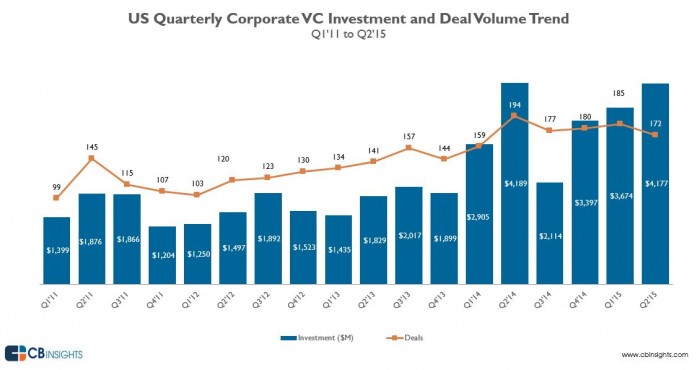
Corporate Venture Investments seem to have bright years in front of them. According to CB Insight, Corporate VCs participated in almost $8B of US-based financings in the first half of 2015, maintaining their investment level into VC-backed companies, taking just under a quarter of total deals for the past four quarters.
 

cvcoverall


Corporate Venture Programs boost Startups

The classical form of startup investment, Venture Capital, can be described as the capital invested in a project which holds a substantial element of risk in exchange of a portion of equity. This definition perfectly applies to both Corporate and Private Venture. Nevertheless, a significant difference must be drawn regarding the respective objectives of these two forms of funding. While return on investment remains the main objective for both forms of funds, as related in the The Oxford Handbook of Venture Capital by Douglas Cumming, Corporate Venture follows a much more diverse set of objectives than a purely financial exercise.

Corporate Venture is an efficient way for companies to explore potential acquisition targets. Based on Crunchbased data, Rami Rahal, Co-Founder and General Partner of Blue Cloud Ventures, calculated in an article that about one out of three corporate venture-backed startups has been acquired, in comparison to only 10 percent which had managed to raise funding from private venture capital.

Overall, it seems Corporate Venture is not a one-way relationship, but instead a bilateral strategy, both for Dinosaurs and Unicorns.

500k Investment for Updatemi

Great news for Updatemi! The media startup gets 500,000 euros in a seed round. Updatemi filters and summarizes relevant news and information into updates consisting of six bullet points. The transaction was structured and executed by Venionaire Capital.

News reports
Managing to close half a million euro in funding is a great step foreword for Updatemi. As a result, several media outlets reported on the deal (in German): Futurezone mentioned that Updatemi wants to enhance its artificial intelligence technology. Horizont (online as well as print) explained how Venionaire supports Updatemi with business development, the private equity story, fundraising and deal structuring. Börse Express described the plans of Updatemi to enter the US market, while the Private Banking Magazin highlighted the investment of a member of the Manz family. The Swiss Online Magazine Moneycab addressed the expansion of the B2B-Business and the German Webmagazin did a short interview with the two founders Michael Hirschbrich and Andreas Schietz.

Innovate or die – why industries have to adapt fast

“The only constant in the universe is change”, stated philosopher Heraclitus of Ephesus. And change is constantly getting faster: It took about 2000 years before the Bronze Age was fully replaced by the Iron Age, but not even three hundred years for humanity to transit between the Industrial to the Digital Age.

In a phase of transition, the new and old economy can greatly profit from each other. One good example is the invention of modern telecommunication satellites in the 1950s. This technology evolved due to important investments made by the Soviet Union and the United States. In the following years, the knowledge transfer of the state-operated industry to the private sector enabled new products and businesses to flourish. Take for instance a look at the Startup Spire, founded by Austrian-born physicist Peter Platzer. It completely revolutionized the industry by producing small low budget satellites out of common consumer electronics. The Spire satellites provide now the best real-time global cargo tracking data for the maritime industry.


Note:
Agreeing on a valuation is one of the most critical point for a good corporate startup relation. We developed a startup valuation tool to help with that.

[hubspot type=cta portal=5314519 id=bc2a7bcd-bcee-4a08-960b-b43a6cea4bfe]


How to make the right investment decision

But the speed of change also implies new challenges for investors. Today, business models get created and evolve faster than ever – so how should one decide which is worth perusing? Our approach is not to focus too much on an industry. We believe investors should rather analyze how a specific technology can contribute to solve great human challenges and how it can be adapted for different use cases.

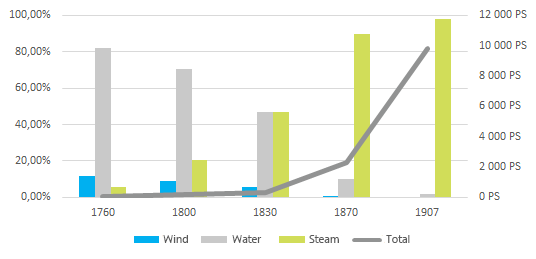
A truly disruptive technology will always affect many industries. Just remember the birth of steam engines: Originally, they were invented to pump out water from mines but later were used to power ships and trains. Steam became quickly the almost only source for energy production and enhanced massively the overall energy output.

Timeline of UK's power capacity and power sources.

Timeline of UK’s power capacity and power sources.


But the steam engine was such a new thing that people had difficulties to imagine it’s value. Scottish engineer James Watt used a clever trick by comparing the output of steam engines with the power of draft horses. He made it understandable that one steam engine could achieve the same as thousands of horses.

Curious to find out how Venionaire identifies Game Changer? Check out this short presentation.

Founders, Investors and Tyrolean Alps

“No matter what, stick to your idea”, was one crucial tip for founders from Hans-Dieter Toth, CEO of Eurotours International. Last Friday he was one of the speakers sharing his entrepreneurial experience at the Business Angel Summit in Kitzbühel.

The summit offered selected startups the opportunity to pitch their business to Investors. Hotel Kitzhof, the event location, was filled with great ideas. For example Rainer Philippeit develops Software and Hardware for palm vein recognition, making the identification of a person faster, easier and more secure. The Mikme Microphone app records wireless studio-quality audio with a single push of a button. The startup Freeze produces a unique heart catheder helping patients with atrial fibrillation. Anyline is an App which identifies text, codes or numbers taken with your smartphone, Coolcare is a device to cool down body parts and thus reducing swellings and Mattro built a cool new electric-powered vehicle.


Venionaire Marketing & PR Manager Fabian Greiler on a Ziesel by Mattro.

Venionaire Marketing & PR Manager Fabian Greiler on a Ziesel by Mattro.


It is great to see that the Austrian startup ecosystem is on the political agenda. In his keynote, State Secretary Harald Mahrer stressed out how important innovation is for Austria, especially as our prosperity relies on innovative and high quality products.


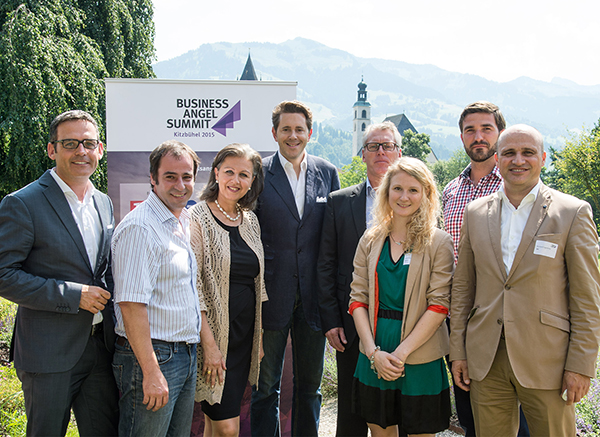
from left: Harald Gohm (Standortagentur Tirol), Alois Bauer (Mattro Production GmbH), LRin Patrizia Zoller-Frischauf (federal state government Tyrol), State Secretary Harald Mahrer (BMWFW), Jürgen Popp (Capani Capital), Carina Wetzlhütter (Anyline), David Dengg (Anyline) und Bernhard Sagmeister (aws). Copyright: Georg Schönwiese / Standortagentur Tirol

from left: Harald Gohm (Standortagentur Tirol), Alois Bauer (Mattro Production GmbH), LRin Patrizia Zoller-Frischauf (federal state government Tyrol), State Secretary Harald Mahrer (BMWFW), Jürgen Popp (Capani Capital), Carina Wetzlhütter (Anyline), David Dengg (Anyline) und Bernhard Sagmeister (aws). Copyright: Georg Schönwiese / Standortagentur Tirol


The Summit was organized by Business Angel Jürgen Popp, Standortagentur Tirol and the Austrian development and financing bank AWS (Austria Wirtschaftsservice). Venionaire happily hosted the Reception Evening on Thursday with Champagne sponsored by Stift Klosterneuburg and Winery Neumann.

Venionaire CEO Berthold Baurek-Karlic and Peter Koch (Martin Holding)

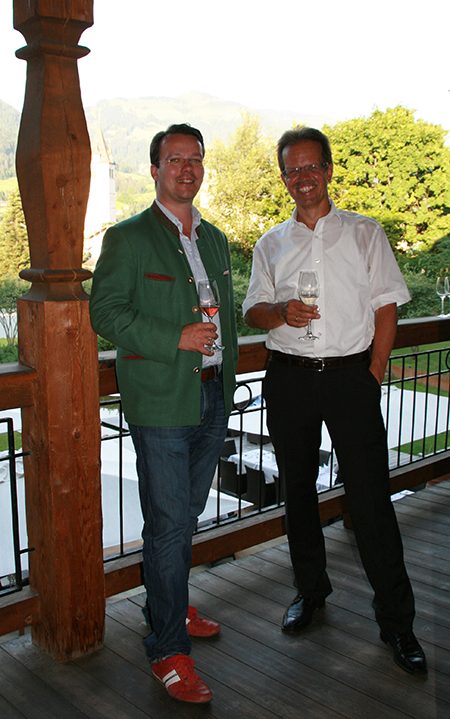
Venionaire CEO Berthold Baurek-Karlic and Peter Koch (Martin Holding)

More pictures on our Facebook-Page.

Hipsters collaborating with Suits: 3 tips how generations can work together

Now that the Generation Y is taking over as the main workforce in our economy, it is time for managers and companies to overcome long maintained stereotypes. Our guest author Martin Giesswein, Co-Founder of Digital City Vienna, explains why it doesn’t matter anymore if you wear a suit or tight jeans.


Stop quarreling about the bearded men with tattoos and their Generation Y colleagues (people between 18 and 35 years) working with you. They are up to 25 percent of the current workforce and the biggest single age group of the U.S. population already. They are natural born digital pros – unlike the Generation X (people 40 years old or older). That means they don’t just smartly apply digital technology to their lives and businesses but are rather interwoven in their thinking, living and business DNA. Most importantly, they are able to understand what young to middle aged customers expect from life and how they make their buying decisions. Essentially, they know how to approach their pairs and therefore can transform declining businesses into a zero-margin-cost buzz.


Youngsters make your business ready for the digital age

Some years ago, grey-haired CEOs got applause from shareholders when they argued how that internet thing does not affect their company. Today, realism is seated in the board room, with 77 percent of business leaders rating digital transformation as biggest single immediate business issue. Now companies know that having the Generation Y staff in transformation projects, cooperating with startups and allowing venturing outside of current cash cow products might be the only chance they have not to be swept away be the digital wave.


#1 Do not ask for conformism

Generation Y are striving for meaning, fun and balanced lifestyle more than for an old fashioned car allowance program. Many cherish a non-conformist lifestyle and do not hesitate to leave a company when asked to wear a tie and show up every day at nine o’clock at the office no matter what. Management needs to grant them access to corporate IT systems 24/7 accessible from any device they fancy to use.

The good thing is, that a lot of those loose guns are as business focussed and career orientated as the Suits. As studies show, 60 percent of the young belong to adaptive-pragmatic or conservative segments and they are not reality-rejecting punks. They simply use their own way to reach the business goal.


#2 Encourage emotional leadership

For a long time, management aimed to structure workforce and optimize output, not focusing much on individuals. It  seems however we finally need to follow the Harvard Business Review advices on emotional leadership. Indeed, leading Generation Y means individual attention to all team members. Proclaiming the corporate strategy in an all-hands call is not enough anymore. We suit-wearing leaders need to find a person-by-person overlap of companies goals and the personal motivation of every single employee. The lifetime relationship with Generation Y pros last as long as the overlap is bigger than the pain of aligning with the corporate structure. If not, they will move on to the next more „meaningful“ job.


#3 Be nice – they might be your customer soon

„Generation Y are illoyal job-hoppers“ is one stereotype we often hear in the news. That is as wrong as the belief that a career has to consist of one or maximum two companies from cradle to grave. It is perfectly normal to have ten or more employers in your life and to switch between employments, freelance, part-time, pro bono work and capitalistic entrepreneurship. The only one holding back in that development are laws and social insurance systems looking at possible abuse instead of chances of an (European) society in the international war for talents.


Martin Giesswein

Martin Giesswein

Martin Giesswein is Co-Founder of the Digital City Vienna Initiative and a freelance business designer. He is an expert in smart city development, growth strategies, startups & exit management. Previously Martin worked 15 years in the IT-sector. Among others he held positions as CEO of immobilien.net and General Manager at Nokia Austria/Adriatics. Web: giesswein.org

Startup Funding – five tips to improve your chances

Raising capital for your startup can be critical, considering a startups runway – mistakes could kill your project for good! External funding (Venture Capital) will enable you to grow your company much faster, more professionally and globally competitive. All of the startups which made it to the unicorn club in the first quarter of 2015, have been backed by several Venture Capital Funds and Business Angels, as stated in the CB Insights Blog Article.

Money alone never made a Unicorn out of a startup- it most definitely needs much more! Still if your business is in need of risk-taking investors, you should make sure to attract the right ones, at the right time, with a reasonable amount of money to gain enough traction, improve your product and eventually make it to the next stage. So, what are the best tips to get funding for your startup? Here’s five of them to remember.


#1 Plan your financing round in advance

One of the most common mistakes is that too many startups start looking to raise money once they have spent all of their cash. This is too late: once you are desperately looking for money, you end up in a very weak negotiation position, and therefore are tempted to accept any investment offer, under any circumstances or conditions.

A good timeline would be to start searching for investment at least 6 to 9 months in advance, even if you do not currently need cash at this moment. Per example, if you have just closed a seed investment round of 50K EUR, which represents a 9 months runway for your company, start planning the next round right away by setting objectives. If you announce tangible KPIs for the next three months in terms of traction, you will have solid numbers which will show investors your progress, achievement (even over achievements) and overall management capabilities. Don’t forget: working with investors requires relationship building, which takes time and trust.


#2 It is all about Smart Money

Many founders believe that raising money is just about filling your bank account and having a great burn-rate running “happily ever after”. This is obviously not true! Money alone keeps your project alive for another couple of months, but smart money gives you wings to fly! You could also think about it in this way: Money is just like petrol for a car – without a vehicle it will still burn, but at the end of the day will not take you anywhere.

Smart money also means that a startup doesn’t only apply to an investor: An investor also applies to be part of a startup’s growth because he or she can bring special added value to the startup. In fact I have realized that the best investors are willing to fight for a shot at the best startups. With the right investor you will feel like in a rocket launch – forget about cars and petrol, if you have the chance to reach for the stars!


#3 Profile your potential Investors

Venture Capitalists and Business Angels screen hundreds of startups per year, and quickly develop a set of criteria which help them judge if a startup is interesting to invest in or not. Getting to know-how an investor ticks is crucial, as you can nail your pitch right at this point.

According to the Angel Resource Institute, most investors base themselves on the following factors as being Best Practices in Dealscreening

  1. Region: Most Investors have a strong preference to Ventures which lay less than two hours flight from their offices.
  2. Technological/Industrial Focus: Investors tend to finance startups in industries where they have strong knowledge and expertise. Don’t pitch your Biotech startup to VC with focus on e-commerce.
  3. Growth potential: Investors rate market growth potential as top factor when considering a company. This means for some that the startup is already generating revenue and for others that the startup has a viable competitive edge which will lead to fast market capture.
  4. Management Team: Here, basic criteria often include trustworthy and commitment. Furthermore, the team has to be balanced, which means a founding team which includes technical, managerial and sales knowledge.


#4 A rocking pitch deck

The fundament for raising capital is a killer pitch deck, or in other words a document presenting your company in a simple and understandable way. Remember: the aim here is to hook the potential investor from the very first look. The pitch deck needs therefor to be extremely clear and concise, one which can be understood by everyone, especially if this person is not familiar with the companies sector. Ten slides are usually more than enough to give the overall picture. Realize that professional Investors and Analysts do not have more than 10 Minutes to decide, if your project is worth to dig deeper, or not – as they see a huge amount of deal-flow every day! I really think Guy Kawasaki’s nailed it in his article the only ten slides you need for a pitch.


#5 Take the most out of NO’s

Let’s face it: you will most probably get several rejections during your finding process. Fundraising is just like a sales process, so you will get to be familiar soon with the 10-3 -1 ratio: it will take you on average 10 meetings to get to three leads, and of these you may eventually get one investment. According to the Harvard Business Review, Venture Capital is even tougher. Only a tiny fraction of the total amount of startups applying for Venture capital money got investments, lower than 1%! You will probably fall several times in the 98 or 99% of startups rejected. And there is a lot to learn out of it. Does the investor see a problem in the team, market or strategy? Or is it just a misfit regarding the fund focus?

A good way to approach this is to get as much investor feedback as possible and aggregate them. You will probably very soon notice a clear pattern, which will teach you a lot about how your startup is perceived by externals.


Overall, it is crucial not to underestimate the fundraising process, which requires a lot of effort, time, network and specific expertise. From our experience, three to six months of intense fundraising has an opportunity cost which is always higher compared to hiring a professional advisory team to work on it. We are proud to have advised successfully more than 50 Startups and closed transactions with an overall volume of about 350 Million Euros over the last two and a half years.

To find out more how Venionaire can help your startup in fundraising, get in touch.

BFI Wien setzt mit courseticket auf Vergleichbarkeit

Startschuss für eine starke Kooperation am heimischen Bildungsmarkt: Über 4.000 Kurse und Lehrgänge bietet das BFI Wien jährlich an und seit heute ist eine Vielzahl davon auf www.courseticket.com gelistet. Das Berufsförderungsinstitut Wien stellt sich damit der Vergleichbarkeit von 16.000 Veranstaltungen von über 2.800 Anbietern. Das Bewertungssystem von courseticket lässt zudem Nutzer über das beste Angebot entscheiden.


Automatisierung von Marktplatzprozessen

Mit der Kooperation spricht das BFI Wien neue Kundengruppen für das breite Bildungsangebot an, das von Zustelllogistik, über Pflegehilfe und professioneller Fotografie bis hin zum Hotelmanagement und Controlling reicht. Für courseticket-Gründer und Geschäftsführer Alexander Schmid ist damit ein strategischer Meilenstein erreicht: „Das BFI Wien ist laut SORA-Studie die bekannteste Wiener Marke in der Erwachsenenbildung mit jährlich über 45.000 Kunden und Kundinnen. Das riesige Kursangebot stärkt unsere Position als größter österreichischer Marktplatz für Aus- und Weiterbildung, umgekehrt suchen und finden schon heute tausende bildungshungrige Menschen bei uns ihr ideales Kursangebot – egal ob von zu Hause am PC oder im Schwimmbad mit dem Smartphone. Ziel unserer Lösungen ist die komplette Automatisierung bekannter Marktplatzprozesse – von der Vermarktung, über Bezahlung bis zur Teilnehmerverwaltung und Buchhaltung.“


Digitalisierung in der Erwachsenenbildung

Das BFI Wien setzt vor allem auf die Vermarktungsstärke des Wiener Startups, das vom TV-Moderator Christian Clerici als Business Angel und Markenbotschafter unterstützt wird: „Die Zusammenarbeit mit courseticket steht am Anfang einer neuen Ära für das BFI Wien“, sagt Valerie Höllinger, Geschäftsführerin des BFI Wien. „Am Thema Digitalisierung kommt man auch in der Erwachsenenbildung nicht mehr vorbei. Wir haben mit unserem Online-Relaunch schon einen ersten wichtigen Schritt in Sachen Online-Kundenorientierung gesetzt und das Auffinden und Buchen unserer Bildungsangebote optimiert. Die Kooperation mit einem innovativen Startup wie courseticket ist aus unserer Sicht die logische Fortführung dieser Bestrebungen“, ist Höllinger überzeugt. „Die beiden Marken ergänzen sich perfekt: Beide Partner vereint der Wille, den Zugang zu Aus- und Weiterbildung so einfach wie möglich zu gestalten und durch Innovation und Kundennähe neue Zielgruppen für das Bildungsthema gewinnen zu können.“


Bildung ist ein starker Wachstumsmarkt

Auch der an courseticket beteiligte Wiener Unternehmensberater und Venture Capital Investor Berthold Baurek-Karlic sieht das Unternehmen am richtigen Weg: „Der Bildungsmarkt ist weltweit einer der größten Industriezweige mit enormen Wachstumsraten. Auch in Österreich ist das ‚Lebenslange Lernen‘ längst ein Thema: Wer viel Geld für Weiterbildung ausgibt, möchte sich mit Transparenz und Vergleichbarkeit vor Fehlinvestitionen schützen und genau das steckt hinter der Erfolgsgeschichte von courseticket.com.“


Über das BFI Wien
Das BFI Wien beschäftigt zusammen mit seinen Tochterunternehmen rund 900 Mitarbeiterinnen und Mitarbeiter sowie über 600 selbständige Trainerinnen und Trainer. Gut 45.000 Menschen nehmen jährlich an den Lehrgängen, Kursen und Seminaren des Erwachsenenbildungsinstituts teil. Zu den Tochterunternehmen des BFI Wien zählen die Fachhochschule des BFI Wien mit ihren sieben Bachelor- und sechs Masterstudiengängen, die Schulen des BFI Wien (HAK/HAS) und die gemeinnützige Job-TransFair GmbH, die am Arbeitsmarkt benachteiligte Menschen bei der Suche nach dem richtigen Job unterstützt.

Weitere Informationen zum BFI Wien: www.bfi.wien


Über die courseticket GmbH
Die Webplattform courseticket.com konnte sich seit 2014 mit über 2.800 verschiedenen Anbietern und 16.000 Veranstaltungen als führender Online Marktplatz für Aus- und Weiterbildung in Österreich etablieren. Courseticket bietet Übersicht und Transparenz – Kurse verschiedenster Anbieter können gesucht, verglichen, direkt gebucht und bewertet werden. Für Kursveranstalter kann der gesamte Anmeldeprozess inkl. Bezahlung, Teilnehmerverwaltung, Ticketing und Buchhaltung automatisiert werden. 2015 wurde das Projekt beim Staatspreis Multimedia & eBusiness (BMWFW/FFG) in seiner Kategorie ausgezeichnet (Finalist, Top 3) und verfolgt verstärkt den „Marketplace-as-a-Service“-Ansatz im Firmenkundensegment.

Weitere Informationen zu courseticket: info.courseticket.com

Rotary Charity – Vollgas für die gute Sache

Der Blick gespannt, das Lenkrad fest umklammert, der Fuß am Gaspedal – dann schaltet die Ampel endlich auf Grün und plötzlich ist nur mehr das Knattern der Motoren zu hören.


Der Rotary Club Wien-Hietzing lud zum sechsten Mal zu einer ganz besonderen Benefiz-Veranstaltung ein: Beim Rotary Charity Kart Race in der Liesinger MONZA Kart-Bahn gab es für die Teilnehmer statt Rosen und klassischer Musik quietschende Reifen und Action pur. Manager, Unternehmensgründer und Promis trafen sich, um gemeinsam Gas für die gute Sache zu geben. Martin Steininger, der das Rennen bereits zum sechsten Mal organisierte, konnte am Ende des Tages eine neue Rekordsumme von 13.500 Euro an „kinderhände“ übergeben. Der Verein unterstützt gehörlose und schwerhörige Kinder sowie deren Angehörige mit Kursen in Gebärdensprache.


Zuvor aber kämpften 21 Teams mit jeweils vier Rennfahrern in zwei Vorläufen sowie einem finalen Durchgang um den Sieg. Das Teilnehmerfeld war bunt durchmischt: Vom routinierten Erste Bank Team um Teamkapitän und Landesdirektor Stephan de Giacomo über eine Mannschaft des Wiener Gehörlosen Sportclubs 1901 bis hin zu den Gründern des Weiterbildungsmarktplatzes Courseticket mit Rennsportenthusiast Christian Clerici als Trumpf mit an Board. Den begehrten ersten Platz sicherte sich schließlich in einem knappen Finale das Team des Beratungsunternehmens Nerom & Partner unter Führung von Geschäftsführer Roman Nedwed. Philipp Pertl, Moderator des Abends, merkte bei der Siegerehrung lachend an, dass sich das Nerom-Team dank des heurigen Siegerpreises, einer City Tour im Hot Rod, bereits gut auf das nächste Rotary Charity Kart Race vorbereiten könne.


Hochzufrieden mit dem Event zeigte sich Organisator und Venionaire Investment Managing Partner Martin Steininger: „Mit unserem Kart Race erreichen wir von Jung bis Alt ein breites Publikum. Der karitative Gedanken lässt sich auch mit enorm viel Spaß verbinden und genau das ist unsere Idee hinter der Veranstaltung“. Für kinderhände-Geschäftsführerin Andrea Rohrauer ist der Rotary Club bereits seit langem einen wichtige Stütze: „Nicht nur schwerhörige Kinder müssen mit der Gebärdensprache eine vollkommen neue Fremdsprache erlernen auch deren Eltern brauchen Hilfe beim Lernen. Wir unterstützten diese Familien mit bilingualen Gebärdensprachkurse, die aber sehr zeit- und ressourcenaufwendig sind. Umso mehr freuen wir uns über den großen Zuspruch für unsere Arbeit, besonders vom österreichischen Rotary Club, deren Mitglieder für uns nicht nur Sponsoren sondern vielmehr Freunde geworden sind.“


Gesehen wurden beim Race unter anderem: Alexander Scholz (Immobilieninvestor und UNITA-Vorstand), Robert Meier (Gründer und CEO von CeloNova BioScience), Rotary Club Wien?Hietzing Präsident Hans Jerabek, Oliver Suchocki (Managing Partner Eblinger Executive Search), Primarius Michael Rauchenwald, Christoph Rudolf (Österreich Geschäftsführer des Beratungsunternehmens FAS), Helmut Pöllinger (Geschäftsführer Brainloop CEE), Roland Tremmel (CEO Apple Österreich), Alexander Schmid (Gründer Courseticket), Rupert Rieder (Landesdirektor Erste Bank), Leo Fasbender (Gründer ChatGrape), Axel Schuster (Head of Family Office der Capital Bank), Hietzing-Bezirksräte Niki Ebert und Michael Gorlitzer, Georg Muzicant und Thomas Rohr (Gründer MRP Investmentmanagement GmbH), Berthold Baurek-Karlic (CEO Venionaire Capital), Martin Steininger (Organisator des Kartrennens und Managing Partner von Venionaire Investment) Christian Clerici (TV-Moderator und Filmemacher), Richard Köhler (Köhler Draskovits Unger Rechtsanwälte), Entertainer Philipp Pertl sowie kinderhände-Geschäftsführerinnen Andrea Rohrauer und Barbara Schuster.


Der Dank geht an die vielen Unterstützer des Events die Zeit, Geld, Arbeits- und Sachleistungen sponserten: „HotRod City Tour“ für den Preis des Siegerteams einer Hot Rod Sightseeing-Tour, Courseticket für die Zurverfügungstellung der Buchungsplattform, tipp3 für die Versteigerung zweier Karten für das Fußballspiel Österreich gegen Moldawien, Philipp Pertl für die Moderation des Abends, Conny Bohnstingl für die Begleitung des Events als Fotografin, Martin Platzer für die finanziellen Unterstützung bei der Anmietung des Eventzelts, Juraczka GmbH für die Tontechnik und Venionaire für die Organisation.

Foto: © Conny Bohnstingl

Hotel vernetzt Ausseerland mit Formel 1

Stars, spannende Überholmanöver, quietschende Reifen und Action pur bot das vergangene Wochenende den Fans des Formel 1 Grand Prix in Spielberg. Das sportliche Großereignis ist aber auch ein wichtiger Impulsgeber für den Tourismus in der Region. Das Hotel „Der Hechl“ im über eine Stunde Autofahrt entfernten Tauplitz hat sich dieses Jahr ein besonderes Programm überlegt, um seine Gäste möglichst schnell zum Rennen zu bringen: Mit einem eigens eingerichteten Hubschrauber-Transfer flogen Fans in unter 20 Minuten vom Garten des Hotels zum Red Bull Ring. Rund 50 zahlungskräftige Gäste des Hotels kauften Grand Prix Tickets im Wert von über 20.000 Euro und verstärkten damit die schwierige Vorsaison.


Die Hoteliers-Familie Hechl-Lindemann setzt damit auf einen merkbaren Trend: Für Top-Manager, prominente Persönlichkeiten und Unternehmer zählen nicht mehr Design-Hotels oder große 5 Sterne Häuser, sondern die Entschleunigung in beschaulicher Umgebung und ein Hotel, das den österreichischen Charm mit dem internationalen Aufgebot der Formel 1 verbindet. „Man muss innovativ sein und sich etwas Besonderes einfallen lassen. Getreu dem Motto – Red Bull verleiht Flügel – haben wir uns entschlossen heuer erstmals Hubschrauber bei uns im Garten starten zu lassen. Die Organisation der Helikopter und Grand Prix Tickets waren eine Herausforderung und ein finanzielles Risiko, aber letztlich war es ein voller Erfolg, den wir in den nächsten Jahren wiederholen werden”, sagen Marlene und Marcel, die Besitzer des Hotels „Der Hechl“.


Unter den Gästen waren die Venture Capital Firma Venionaire, die Softwareschmiede Newcon aus Wien, sowie Grömer Stahl. “Wir waren begeistert von der Organisation, dem familiären Rahmen und der entspannten Atmosphäre und werden nächstes Jahr gerne wieder mit Kunden und Partnern nach Tauplitz kommen”, erklärt Berthold Baurek-Karlic, Geschäftsführer von Venionaire. “Technologie der Spitzenklasse mit der Tradition und Bodenständigkeit von Tauplitz zu verbinden, begeistert uns seit Jahren – wir sehen das als wichtiges Marketing für den Wirtschaftsstandort Österreich”, bestätigt Gerald Haidl, CEO von Newcon.

Austria: The Nation of Hidden Champions

Picture from left: Christoph Hechenblaikner CrossCloud, Jane Davies International Association of Science Parks, Thomas Bluth tiramizoo and Venionaire Investment Manager Alexander Rapatz.


Last Tuesday Venionaire was invited to the 6th Founders Evening of Science Park Graz, which took place in the historic auditorium of the main building of University of Graz and encouraged around 120 interested people to listen about stories of entrepreneurial freedom and the question, why Start-ups are the new darlings of the nation.

An international panel of experts from founders, consultants and Venture Capital investors delivered in a panel discussion inputs and advice for sustainable success as young entrepreneur. Passion for the cause, team cohesion and the reduction of bureaucratic hurdles were the focus. Venionaire was represented by its Investment Manager Alexander Rapatz, who was talking about Hidden Champions in Austria and why they have a huge impact on the local economy.

For instance, due to a recent report of the Austrian Federal Economic Chamber, 19% of Austrian companies hold a global market share of more than 20% in the field of their core activities. Furthermore Austria counts an impressive 15.6 hidden champions per one million inhabitants, which brings it to the second position in Europe. Basically hidden champions share the same traits that can make Start-Ups highly successful: outstanding quality products which have proven to be hard to imitate, high vertical integration and strong research and development.

We at Venionaire share the opinion, that start-ups will restructure the entire economy and are the future motor of innovation. Of course, established companies have the advantage of being stable, having financial capacity, knowledge and resources. But at the break of the fourth industrial revolution, sectors are changing one by one. Thus, they will also have to adapt their business model, or very fast they will not be able to compete with the innovative new business models of Start-ups.

Check out the report of the event on sciencepark.at.

WHERE TO FIND US

VIENNA, OFFICE (HQ)

Babenbergerstraße 9/12,
A-1010 Vienna, Austria (EU)
office@venionaire.com

SAN FRANCISCO, USA

1355 Market St. #488
San Francisco CA 94103
sfo@venionaire.com

NEW YORK CITY, USA

122 East 37th Street
First Floor
New York, NY 10016
nyc@venionaire.com

LONDON, UK

Gable House, 239 Regents Park Road
London N3 3LF
office@venionaire.com

Luxembourg, LUX

28, Boulevard F.W. Raiffeisen
2411 Luxembourg
office@venionaire.com

LOOKING FOR FUNDING?

FOR STARTUPS

Venionaire Capital exclusively invests through the European Super Angels Club, for more information and application please go to the website. We do not accept direct investment proposals via this website.