Corporate Venturing: Managing the Digital Transformation

Corporate Venturing found its way to the forefront. But how can corporates manage the digital transformation process? Our CEO Berthold Baurek-Karlic wrote an article about this topic for the finance & controlling journal “CFO aktuell“, published by “Linde Verlag”.

In his article he emphasized the need for more institutionalized cooperations between startups and big companies, which can be summarized as Corporate Startup Engagement (CSE). Normally, corporations begin their engagement with a sort of “innovation radar” – screening existing startups. At the same time (or later on) they enter a “Trail-and-Error”-Phase followed by a consolidation period, in which they develop a mix of measures and finally incorporate them.


Note:
One of the most critical for accelerators and corporates are negationations about the startup valuation. We developed a startup valuation tool to help with that.

[hubspot type=cta portal=5314519 id=bc2a7bcd-bcee-4a08-960b-b43a6cea4bfe]


Read the article (in German) for more details about corporate startup engagement or simply contact us. We are more than happy to help!


Download the article.


Drone Wars – 3 Ways to Look at Drones

Generally, innovation comes about when that which is invented either solves a problem that hasn’t been solved before (cars revolutionized mobility), is cheaper in solving it than previous efforts (Uber vs Taxi), or provides us with an entirely new tool or gadget that we happily include in our lives (we didn’t need iPads). Drones, or unmanned aircraft system (UAS), can have the ability to do all three, which is why they potentially are such a valuable invention.


The Good: Opportunities

To remain in sync with the opening argument, drones have a vast array of applications that solve severe issues (US fighter drones prevent risking pilots’ lives); are cheaper (Chile and Peru can now monitor their maritime borders and fishing rights via drone applications instead of sending expensive observation teams via boats or planes). If thus another example is needed please change to the following: Peru’s Ministry of Culture can now monitor its archeological sites from the sky instead of sending expensive observation teams and the new drone-camera gadget all of a sudden has allowed my friend’s wedding pictures to be taken from the most surprising angles.

To understand the value of drones, PWC did a great effort in aggregating markets with a high potential of operations to be replaced by drone powered solutions: infrastructure, transport, insurance, media & entertainment, telecommunications, agriculture, security and mining can achieve a total aggregate of 127,3$ bn USD (approx. 112€ bn).

With over 35% of this aggregate, infrastructure is by far the largest sector to benefit from drones as investment monitoring, maintenance and inventory management can now be done remotely. Agriculture fares about 25%, the transport sector just over 10% and security around 8% (see PWC). Currently the US security sector is assumed to be the largest worldwide user of current drone solutions. However, as security related billing in connection with the use of drones currently only amounts to 50% of invoices extended for the use of drones, these figures provide us with a fair idea of the strong opportunity that lies in those still unexplored waters when after maximum exhaustion the security sector will be a mere 8% of the drone use.

According to the market research company Drone Industry Insights, there are already 711 UAS companies worldwide, developing from platforms, components and systems to even drone insurance. Whilst more than half of these companies are based in the US, a good 30% are in Europe, making both markets key arenas for its development and application.


The Bad: Regulations & Risks

The key issue: EU-wide rules for UAS might give Europe a competitive advantage but it is hard to arrive there – 18 EU countries already have national rules in place and EASA, the European Aviation Safety Agency, which has released a technical opinion on the operation of drones in December 2015, does not yet have the legal authority to regulate the use of drones. The European Commission has adopted a proposal for the revision of EASA’s basic regulation which would introduce an EU-wide regulation to cover drones of all sizes. However, currently the use of drones under 150kg is regulated at national level.

Changes for the regulation on common EU rules in the field of civil aviation must be adopted by the European Parliament Transport Committee – at present it is not clear, when such steps will be taken. Meanwhile the US applies federal legislation for amateur small drones, but pilot requirements for larger UAS are not yet available.

The reason it is so complicated to draft regulation is because there are high risks and legitimate issues concerning the privacy (i.e. is a drone allowed to fly over my property?), safety (drones have already dangerously grazed comercial flights), security (drones could fly say close to a presidential home) and the need for air traffic separation (flight routes need to be respected), which are all worlds of their own. And then, it is an inevitable reality that by the time regulation catches up with the new technology needs, the next invention is impatienty waiting at the door ready to be regulated.


The Ugly: regulatory solutions take time – but the ugly duckling can turn into a swan

There is no pretty way to say this: the timeliness, thoroughness and universality of the application of regulations – at least in the EU – will determine whether the EU can seize the opportunity to be at the forefront of the DronEvolution or not, and how this market will develop. By experience we know that EU regulation, which in all cases needs to be proposed by the European Commission, takes time as, depending on whether it is a mere EU matter, or a matter of mixed EU and national competence (then also the national parliaments of EU member states need to ratify). But once it stands- as with so many other issues (think: EU environmental policy is the most extensive world wide policy), the EU can be the welcome primary innovator.

For European investors, drone developers and drone users, this is a key moment: the use of drones could become an exponentially growing market (as we believe it should) revolutionizing industries and services, guided by reasonable and forceful regulation, or alternatively grow slowly and precariously as the necessary guiding regulation is not there to safely support the unpathed waters and their unexplored shores.

Corporate Venture Capital (CVC) – The Empire Strikes Back

Those Star Wars aficinados among you may well remember the episode: Darth Vader captures Han Solo and Princess Leia on Cloud City (please note how appropriate the name is in today´s era) to bait Luke Skywalker to come to the rescue which, unsurprisingly, he does. As Luke is a young and unexperienced Jedi, he loses the duel but he manages to escape – finally defeating Vader in the last episode. As morals of stories go, it was the principles, challenge and learning process which made Luke a stronger Jedi. Luckily, CVC can be the Force in our version of Star Wars, providing benefits to both the Empires (corporations) and the Skywalkers (start-ups), allowing them to grow with each other.

So what is CVC? In short, when a corporate fund directly invests in an external start-up, classically by taking an equity stake in the company (through a company-internal or external fund). However, the galaxy of involvement can be very broad: from corporation funded incubators and accelerators, or to start-ups which can even be incubated in the parent company (thus making it an R&D hybrid), to strategic alliances and collaborations, all of which is referred to as “corporate venturing”.


Changing times they are

Corporate Venture activities started before the 1970’s as a niche investment strategy with few players who had a strong technological background: however, this never became a market standard, spilling over to other industry sectors. But now, in Yoda’s words, “the time is commander”. The digital revolution or transformation is challenging every field of business, changing the way we collaborate at work, the way we organize and manage company structures and value chains. Demands and habits of employees and clients have been changing as well. The difference to the changes which occurred 20 years ago is the speed behind these developments – innovation was never so fast and companies have never before been forced to be as agile as they need to be today. Start-ups have been at the forefront of this technological evolution, disrupting the established ways how large companies are operating. For instance, it is no surprise that Hewlett Packard recently split its technology business from the PC and printer business, as the latter is expected to fade out eventually. Margins are under pressure, new products are needed and technologies are driving changes in many fields, too many to solve all of them internally, and if so, by assuming considerable opportunity costs. The consequence: large corporates are finally stepping again into the arena of Venture Capital, which means that there is a lot of capital paired with strategic interests on the rise. According to a report by 500 Startups (see Hubspot,  p. 25 and 30), more than half of the 500 largest public companies are engaged in some way of corporate venturing, with three European countries in the lead: France with 23 out of 25 companies, Germany with 15 out of 21 and Switzerland with 10 out of 14. According to Global Corporate Venturing, over 1790 CVC deals were executed in 2015 totalling a worth of 75,4 billion USD, five times the amount executed in in 2012 (see www.globalcorporateventuring.com). The Force is already visibly at work!


Corporations – benefit they will

“To be or not to be” – as a company, if someone does more effectively what I do, I seize to be relevant. Alas I can research and try to outrun the others, and or, be involved in the ecosystem of my market by investing in the right start-ups, partake and sponsor the right incubators and accelerators to find the technologies which can enhance my product/ supply chain/ route to market / market infrastructure. That very much depends on the corporate’s investment priorities.

It’s in the numbers: it is well understood that the “next new thing” can happen anywhere within and outside of the corporations as such. Maintaining a long-term investment in the internal R&D not only is costly and might also be risky – they simply might not find that precious next new thing. In comparison, CVC operates under a mid-term perspective, with lower costs and average risks, allowing corporations to essentially externalized their R&D. They can cherry pick whom to invest in and it diversifies the winning options and risks as it can very much be kept independent from the core business without limiting potential high returns. Also, it most certainly may help to keep oversight if your M&A team decides to strike.

Jedi practice: chances are, when you practice something with someone else, you’ll put in more effort. Start-ups are lean – if they have to fail, they better do it fast – being tight on capital means becoming very creative in how to reach targets. Having a younger fitter Jedi partner keeps us in shape simply because we need to adjust to their (faster) speed. Engaging with start-ups, investing in talents and innovations, leads to faster reactions and helps to succeed in direct competition within a sector.


“Unlearn you must, do or not do, there is no try.”

Yoda encourages young Skywalker to undo old paradigms. We have experienced a true rise in acceptance of innovations, understanding of the digital economy and willingness to engage with start-ups. As part of a holistic digital innovation strategy, Corporate Venture Capital has become a must in 2016 with respect to our core markets Austria, Switzerland and Germany (ASG), particularly if we regard the abovementioned numbers. In its recent publication of 10 Big Venture Capital Trends by Inc Magazine, an increase in Corporate Deals and sprouting of Incubators and Accelerators (usually lead or sponsored by corporates) are among the first two most important trends mentioned. Alas, we are already unlearning the old ways: Do you must, may the Force be with you!

For more infos about Corporate Venturing and how we can support you in this area, please contact us directly.

A glimpse on the Iranian startup ecosystem

When we talk in Austria about innovation and startups, we almost always reference to Silicon Valley, London or Berlin. However, the startup ecoystem is gathering speed in other parts of the world as well. Take Iran as an example. The oil rich country is still struggling with economic growth, but on the plus side Iran has a highly educated and young population, hungry for success and in high demand for new products and services.


Visit to Teheran
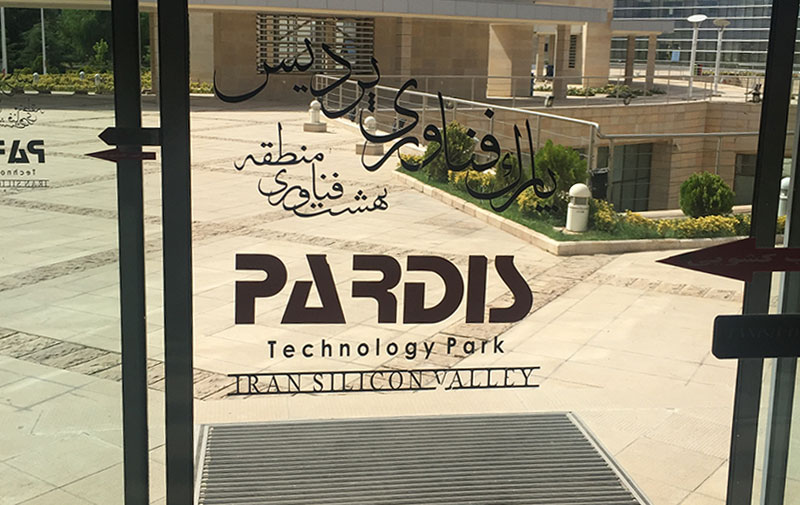
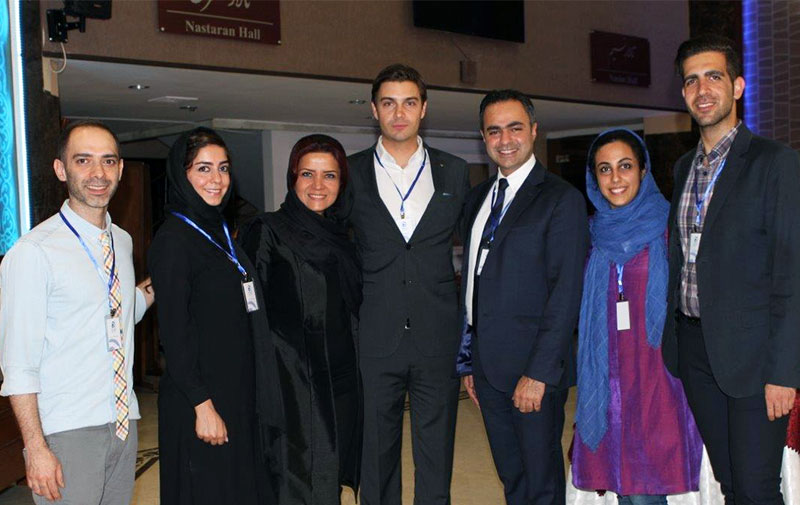
Therefore we were more than happy to accept the invitation to the 1st International Marketing Conference on knowledge-based industries in Teheran, which took place last week. The conference was held by the Iranian Marketing Research Association (IMRA) and Innovative Consultants in cooperation with the European Society for Opinion and Marketing Research (ESOMAR), the Iran Vice-Presidency for Science and Technology and the Center for Innovation and Technology Cooperation of Iran Presidency (CITC) with the aim of transferring marketing knowledge to knowledge-based companies and promoting the necessity of market research. Our partners Alexander Rapatz and Sasan Hashemi attended the conference, with Alexander holding a keynote about venture capital investments as a go-to-market approach. On the following panel discussion he was joined by Sasan, Farhad Rasouli from the Danish platform Venture Cup and Dr. Amir Albadvi, Faculty member at the Tarbiat Modares University. The conference was co-hosted by Pirooz Malekzadeh, CEO of Innovate Consultants and Board Member of Iran Marketing Research Association, who also organized and supported Venionaire in attending side-events, such as visits to the PARDIS Technology Park and the FINEX 2016  – Iran Exhibition of Bank, Exchange & Insurance.

pardis


Big market with high potential
Iran may not be the first destination investors would think of when it comes to startups, but its track record is huge. Iran is one of the world’s biggest emerging markets and the startup and venture capital ecosystem is growing fast. 120-130 Million people are talking Farsi, with borders to huge and untapped countries in the Middle East and Asia. Therefore it is definitely worthwhile to keep an eye on this region.

teheran-marketing-conference


Pictures provided by Innovate Consultants / Alexander Rapatz


How Startups profit from the Business Angel Summit

There are thousands of startup events, but often founders as same as investors are disappointed by the outcome. The problem is, if you actually want things to get moving you need time and the right setting. The Business Angel Summit in Kitzbühel – organized by the Austrian Wirtschaftsservice as well as Standortagentur Tirol and co-initiated by Venionaire – offers precisely this opportunity.


Dealmatrix convinces Business Angels
This year even contracts were signed at the Summit! Dealmatrix CEO Christoph Drescher (picture: second from left) was able to close a deal with AAIA (Austrian Angels Investors Association) “Super Angel 2015” Markus Ertler (founder of immobilien.net) and today fintech expert Michael Müller (founder paysafecard and CEO of mPAY24) joined the cause. Both Business Angels will support Dealmatrix with cash, know-how and their network. Among the earlier investors are Venionaire Capital and Kalbeck Media. All together Dealmatrix has raised almost 300.000 Euros since the foundation in November 2015.

So what do they do? The startup has developed a unified solution for the venture industry. Their first product is Pitchscoring, a mobile app for evaluating startups during an event and delivering results in real time. The app was already used at several big conferences around Europe. In Kitzbühel the app was in action to select the best startups for the Pitching Days in New York.


Personal talks with Investors
Besides the pitching events, the Summit offered founders great opportunities for one-to-one talks with investors such as Heinrich Prokop (Clever Clover), Peter Koch (Martin Global), Charlie O’Donnell (Brooklyn Bridge Ventures), Luigi Amati (Meta Group), Harald Oberrauch (Tyrolean Business Angel) or Baruch Gindin (Club 100 Plus). The Startup Yodel was even able to win Philippe Gluntz, former CEO of Alcatel and President of Business Angel Europe (BAE), as advisor and promoter!


If you are an investor or founder we highly recommend you to save the date for the Summit next year! You can apply for participations at www.businessangelsummit.at. For more pictures check out the Business Angel Institute Facebook Page and see who attended the welcome evening, sponsored by Venionaire.

Thomas Kühr joins the Advisory Board of Venionaire Investment

Thomas Kühr, a forerunner of german venture capital, has joined the Venionaire Investment team and will from now on accompany us as member of our advisory board.

Mr. Kühr is a VC expert, recognized business angel and coach for both startups and international investors. Furthermore he is the founder and CEO of the VC/PE consulting firm equity4ventures. He will assist and support us with his in-depth expertise in the startup and venture capital industry as well as with his extensive network.


Experienced Venture Capital Expert

Mr. Kühr began his career in 1976 as authorized officer of the “Deutsche Wagnisfinanzierungsgesellschaft (WFG)”, a joint venture of the German Ministry of Research and Science as well as 27 banks.

As managing partner and CFO of GENES, a startup and management consulting firm, he was co-founder of two venture capital funds. Mr. Kühr was also one of the initiators of the german venture capital association (DVCV), of which he was elected president in 1987. After the merger of DVCV and BVK (german venture capital and private equity association) he became vice chairman of BVK in 1989 (until 1993) and chairman in 2003 (until 2005). Before that, he was CEO of T-Venture Holding, the corporate VC subsidiary of Deutsche Telekom AG, which he developed to one of the leading corporate venturing firms in Europe.

Differences of an IPO in Germany, Europe and USA

Last week, Venionaire Partner Martin Steininger (on the left) and Alexander Rapatz (at the center) participated at the 3rd IPO conference in Munich, which was hostet by FCF Fox Corporate Finance. The conference addressed corporate executives and their shareholders, as well as investors from the venture capital and private equity industry.

This year’s presenters included several investment banks, such as Deutsche Bank, Oddo Seydler Bank, KBC Securities NV and Stifel Nicolaus & Company, which provided deep practical insights on listing implications from a technical and strategic perspective. Furthermore the stock exchanges NYSE, NASDAQ, Deutsche Börse AG and Euronext explained their individual listing requirements, specific benefits and advantages. Legal and regulatory topics were illustrated by the international law firms Hogan Lovells, Latham & Watkins and Paul Hastings.

In addition, FCF published its annual market study „IPO valuation – comparison in the US and EU“, which analyses the different valuation regimes in the US and Europe, based on historic IPO activities. Key findings were in particular, that the US IPO market generally offers higher IPO valuations than the UK, Europe and German markets. The US market shows in particular strength in small and mid cap IPOs, while European exchanges have rather micro caps (smaller than EUR 30m offerings). The valuation and performance gap is particularly large in growth industries, such as consumer discretionary, consumer staples, healthcare, information technology and industrials, making the US the premier listing location for these sectors. However, going and being public in the US is generally – with respect to underwriting fees, legal costs, etc. –  more expensive than in Europe.

The IPO Conference gave us the opportunity to strengthen our ties with key players in the German financial market. If you want to know more about how to tell a great equity story and convince investors from your company, please contact us now.

purchased.at: An easy solution for selling digital goods

On Monday, purchased.at launched its new online payment platform at the tech fair Money 20/20 Europe. The idea is to enable easy and cost efficient integration of professional payment methods for online shops specialized on digital goods.


purchased.at currently enables access to 200+ online and mobile payment methods and is constantly expanding its portfolio. This includes popular payment methods such as eps, Mastercard, Visa or paysafecard. Starting immediately, companies of all sizes can use purchased.at to market digital products and services worldwide and gain access to new markets. A simple technical integration (API) makes this possible within just a few hours. Online shop operators need only choose which payment methods and currencies they wish to offer. The platform then takes care of time- and cost-intensive issues such as country-specific taxation rates (e.g.: EU tax regulations) or payment support. The multilingual support team answers all customer queries seven days a week. An optimized user experience and user-friendly checkout process further encourages a high conversion rate.

The platform removes the usual hurdles and obstacles global payment processing involves. With the push of a button, additional statistics, reports and business-relevant figures can be recalled. Moreover, payment processes are protected by an ingenious “fraud prevention system” that interdicts payment fraud. Usage is free of advertising and waives any and all setup or monthly fees. For the duration of their service use, online shop providers are merely charged a small platform fee and reasonable rates of the chosen payment methods.

Strong partners in the background. The payment platform was jointly founded by the Austrian IT service provider IXOLIT and the American payment company Skol LLC. Wishing to rapidly expand internationally with purchased.at, growth is driven by an experienced developer team and a six-figure seed investment.


Venionaire is proud to support this startup in matters of PR.

Find out more on www.purchased.at.


Dealmatrix: App conquers international events

Even in the high-tech world of startups, juries still use pen and paper to score companies at pitch competitions. With its jury app, the Austrian startup DealMatrix, an incubation project by Venionaire Capital, introduces a better way: The jury scores all pitches straight via the app along such criteria as team, market or scalability. The final ratings are automatically calculated so the ceremony can commence without any delay. This means less hassle and stress for the event organizers, who receive a detailed evaluation of the scores in real-time.


DealMatrix conquers European Startup-Superevents

In the coming week, the DealMatrix Jury App is implemented at Exec FinTech, the largest invitation-only FinTech Conference in Europe. 30 carefully selected entrepreneurs will be pitching in front of the jury; the six best startups get to the finals, where they have the chance to present in front of the jury and the public. With the DealMatrix Jury App, the event organizers receive the results from the semi-finals and finals straight in their dashboard. Hence, the pitches can go on to the award ceremony without pause. In 2016, DealMatrix works together with events all over Europe. Just last week the jury app was used at the pitch competitions of 4 Years from Now (4YFN), the fourth largest startup-conference in Europe and part of the Mobile World Congress. One day later the app was implemented at an elevator pitch in the closest sense of the word: The Pitch im Paternoster in the Viennese House of Industry, where startups presented their concepts during an elevator ride. Next to providing their solution, DealMatrix sponsored a business analytics workshop as an audience prize.


DealMatrix was implemented at the "Pitch im Paternoster" event.

DealMatrix was implemented at the “Pitch im Paternoster” event.


Software Solutions for Screening and Evaluation of Startups

The Jury App is not the only solution that DealMatrix has in store. With its unified approach, DealMatrix offers solutions for all players in the venture ecosystem. For investors and corporates the DealMatrix launches a SaaS platform that provides an all-in-one approach that radically optimises the screening process of venture investments as well as corporate scouting by combining workflow, market data, network and further tools. Event organizers, accelerators and incubators receive a streamlined solution for the application, screening and rating process. “Venture is a dynamic environment that requires a smart and time-efficient tool for the interaction between its participants. The demand in the past months has confirmed the need for a software that can meet the requirements of the venture world”, says DealMatrix CEO Christoph Drescher.


DealMatrix CEO Christoph Drescher at the <a href="https://www.facebook.com/ABCaccelerator/">ABC Accelerator</a> "PitchOff Vienna" event.

DealMatrix CEO Christoph Drescher at the ABC Accelerator “PitchOff Vienna” event. picture © ABC Accelerator


Do you want to stay up to date whats happening next at DealMatrix? Follow DealMatrix on Facebook!


Western und Eastern VCs gathering in Vienna

„Banks and insurance companies will die a death of thousand cuts”, said Martin Hauge in his keynote at the first Up Venture Conference in Vienna.  The Creandum board member and new partner at Fluent Digital Capital (Fund of Fund under establishment) was referring to the raise of fintech companies and how they are changing the financial industries.

Serial Entrepreneur and Venture Capitalist Martin Hauge

Game changing ventures and how to finance them was naturally a dominant topic at the first Up Venture Conference in Vienna last Friday. Aim of the conference is to connect LPs and GPs from the Western and Eastern VC Ecosystem, and the organiser surely succeeded. Venture Experts such as Nikolas Samios (General Partner at German Startups Group), Peter Schwanitz (Portfolio Advisors), Speedinvest CEO Oliver Holle, Michael Gastauer (Founder & President Gastauer Family Office) and many more attended the event. The team of DealMatrix, led by Christoph Drescher, had some highly interesting conversations while introducing their SaaS solution for venture capital, startup events and investors.

alex-rapatz_christoph-drescher

From left: Venionaire Capital Partner Alexander Rapatz and DealMatrix CEO Christoph Drescher.

The Conference was organized by Rubixlab, a Slovakian accelerator and incubator and they already announced to repeat the event next year. There is good news for Austrian Startups as well: Rubixlab is thinking about opening a new office in Austria – a warm welcome from our side!

WHERE TO FIND US

VIENNA, OFFICE (HQ)

Babenbergerstraße 9/12,
A-1010 Vienna, Austria (EU)
office@venionaire.com

SAN FRANCISCO, USA

1355 Market St. #488
San Francisco CA 94103
sfo@venionaire.com

NEW YORK CITY, USA

122 East 37th Street
First Floor
New York, NY 10016
nyc@venionaire.com

LONDON, UK

Gable House, 239 Regents Park Road
London N3 3LF
office@venionaire.com

Luxembourg, LUX

28, Boulevard F.W. Raiffeisen
2411 Luxembourg
office@venionaire.com

LOOKING FOR FUNDING?

FOR STARTUPS

Venionaire Capital exclusively invests through the European Super Angels Club, for more information and application please go to the website. We do not accept direct investment proposals via this website.