
Posts

Crypto in a Risk-Off Market: What Comes Next?

Global markets are facing an unusual combination of pressures. Energy supply disruptions, geopolitical tensions and tightening financial conditions are all hitting at the same time. Crypto is moving within this environment, not outside of it.

In the latest Crypto Insights episode, Igor Hadziahmetovic, Investment Director of the Venionaire Web3 Fund, analyzes what is happening across Bitcoin, Ether and major altcoins, and why the current setup may be more constructive than it looks.

ETF Flows Signal Caution

Market sentiment has clearly softened. US spot ETF flows for both Bitcoin and Ether have turned negative, reflecting reduced short-term conviction.

When adjusted for market size, Ether stands out with relatively stronger outflows compared to Bitcoin. At the same time, futures positioning shows a familiar pattern. Institutional players are increasingly hedged, while retail participants are leaning more long.

This combination typically signals caution in the near term, with markets lacking strong directional conviction.
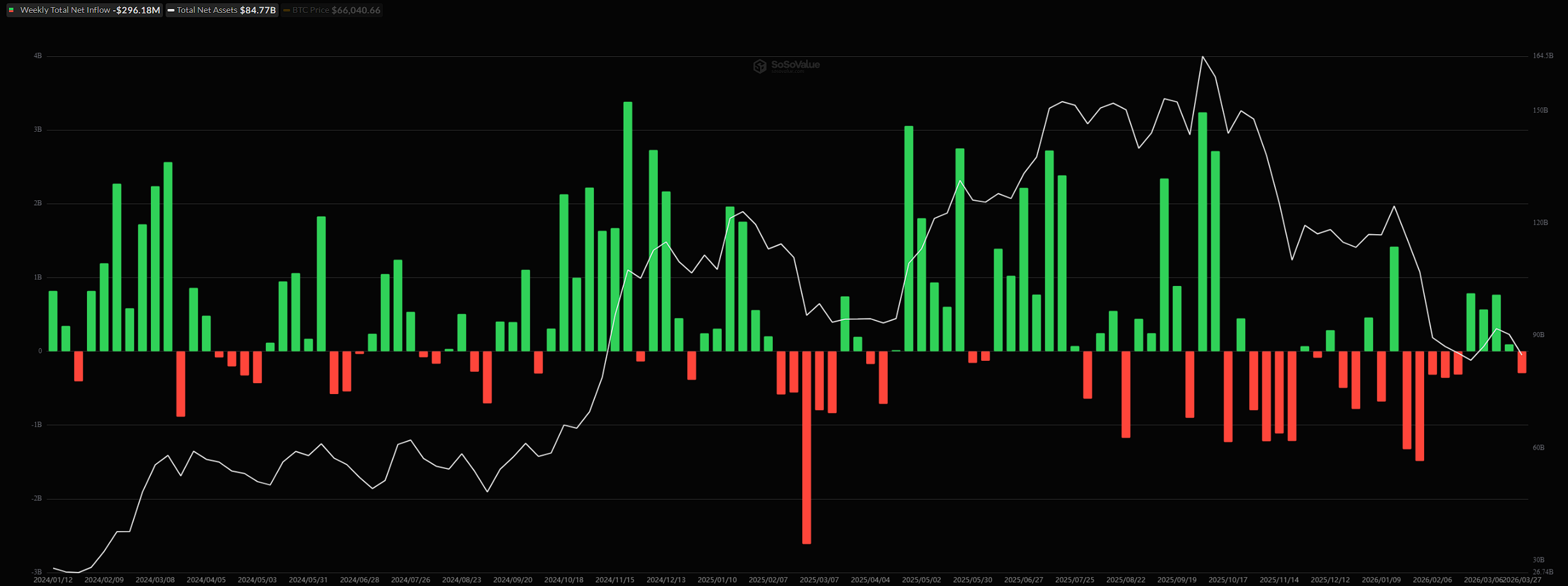
Fig. 1: ETF-BTC: Weekly Total Net Inflow

Macro Pressure Is the Dominant Force

To understand the current market, it is essential to look beyond crypto itself.

A severe disruption in global energy supply is driving much of the current volatility. With key supply routes constrained and production imbalances persisting, inflationary pressure remains elevated while liquidity tightens. The IMF has described the situation as a global shock with asymmetric effects across economies.

This backdrop makes it difficult for risk assets to sustain rallies. Any short-term upside driven by macro data is likely to remain fragile as long as structural uncertainty persists.

Bitcoin Holds Ground Despite Market Stress

Against this backdrop, Bitcoin is behaving in a way that stands out.

While it continues to move broadly in line with risk assets, it has not shown the kind of breakdown one might expect given the macro pressure. Instead, it has held key levels and even outperformed traditional assets such as equities and gold on a relative basis since the escalation of the current crisis.

This does not signal strength in an absolute sense, but it does point to resilience under stress.
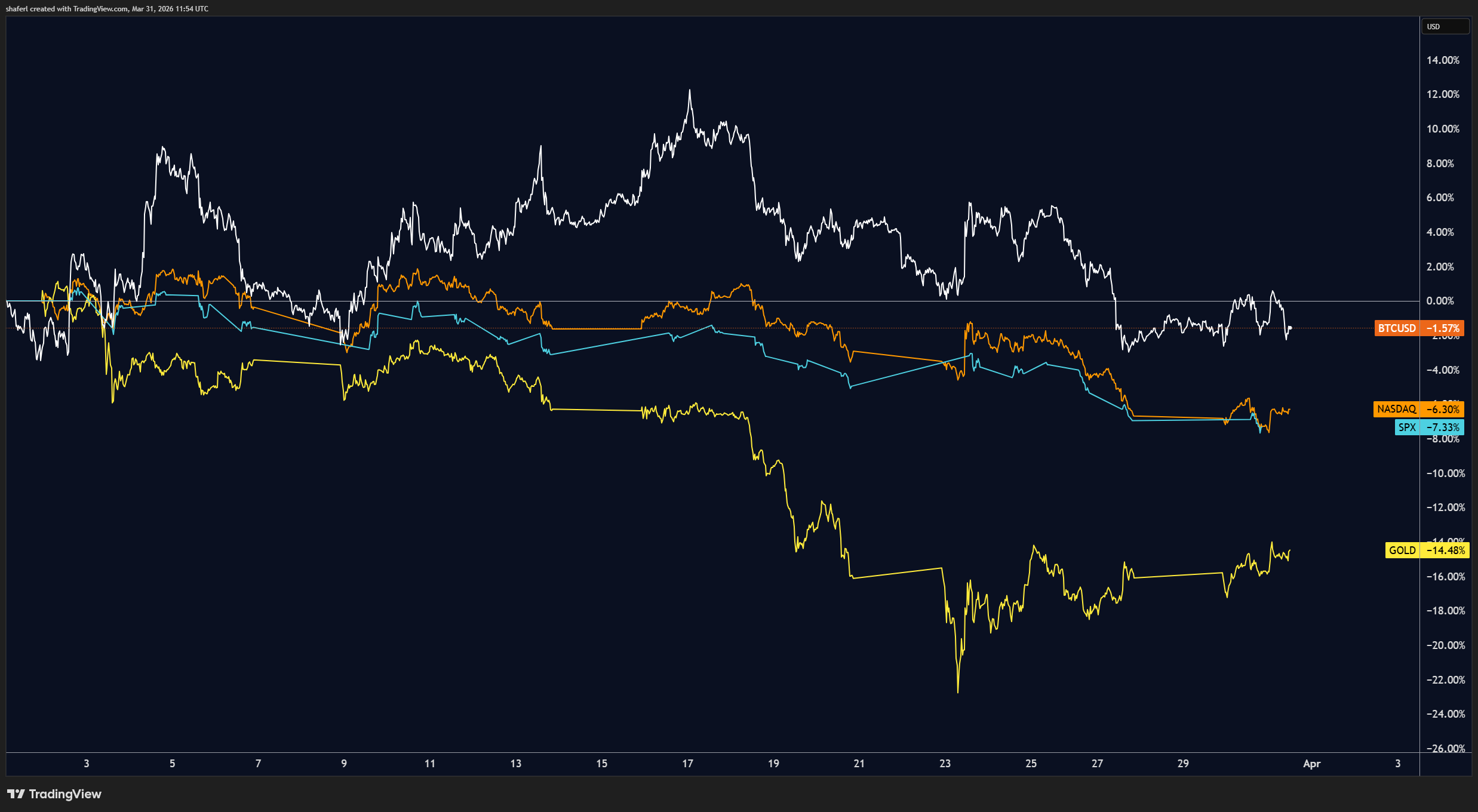
Fig. 2: BTC – NASDAQ – S&P 500 – Gold Comparison

Technical Picture Remains Weak, but Stable

From a technical standpoint, the market is still in a downtrend. Bitcoin and Ether remain below their 200-day moving averages and repeated breakout attempts have failed.

Bitcoin is approaching an important zone around the low 60,000 range, while Ether is holding above its February support. Both assets are currently trading within a broader range that reflects uncertainty rather than directional conviction.

What matters here is not the absence of weakness, but the absence of acceleration to the downside. So far, key support levels are holding.

Selective Strength in Altcoins

The broader altcoin market continues to struggle, which is typical in a risk-off environment. However, the picture is not uniform.

A small group of larger altcoins has managed to outperform since the start of the year. This suggests that capital is still active within the ecosystem, even if it is deployed more selectively.

In markets like this, performance becomes highly concentrated. Investors are no longer buying broadly, but choosing specific assets with stronger positioning or narratives.

Institutional Activity Slows, but Does Not Reverse

Institutional behavior reflects a pause rather than an exit.

Bitcoin treasury accumulation has slowed, with major players stepping back from aggressive buying. At the same time, Ether continues to see targeted accumulation, indicating that interest in the asset class remains intact.

This combination suggests that while conviction is not yet strong enough to drive a rally, it has not disappeared either.

Why the Current Setup Matters

The most important takeaway lies in how crypto is behaving relative to its environment.

Despite negative flows, bearish positioning and macro stress, the market is holding its structure. Bitcoin, Ether and selected altcoins are maintaining their levels rather than breaking down further.

This creates an asymmetric setup.

If macro conditions remain unstable, crypto is likely to continue moving sideways within its current range. But if conditions begin to stabilize or geopolitical tensions ease, crypto markets are structurally positioned to react faster than traditional assets.

Because they trade continuously and with higher volatility, they tend to move first.

Crypto Market Outlook

The trend remains cautious and the environment fragile. There is no confirmed reversal and no clear signal of a sustained risk-on phase.

At the same time, the resilience shown over recent weeks is difficult to ignore. In previous cycles, similar macro conditions would have led to significantly deeper drawdowns.

This time, the market is holding.

That does not guarantee upside. But it does suggest that when conditions change, crypto may be ready to respond quickly.


Disclaimer

This publication is provided for informational purposes only and does not constitute investment, legal, or tax advice. The content reflects general market perspectives and does not represent an offer, solicitation, or recommendation to buy or sell any securities or investment products. Past performance and market observations are not indicative of future results. Readers should seek independent professional advice before making investment decisions.

Timing Altcoin Cycles in Crypto Investing

Understanding the cycles between Bitcoin and altcoins is critical for positioning in the volatile digital asset market. As a fund that invests primarily in altcoins, Venionaire Web3 pays close attention to these cycle dynamics.

One tool that we monitor is the Altcoin Season Index, a signal that provides insight into when capital may be rotating away from Bitcoin into broader crypto markets.

Market Cycles: Bitcoin vs. Altcoins 

Crypto markets move in cycles – and nowhere is this more evident than in the rotations between Bitcoin and altcoins: 

  1. Bitcoin leads the rally, attracting institutional and retail flows, and increasing its market dominance. 
  2. Profit rotation begins, as investors seek higher beta in alternative assets. 
  3. Altcoin season emerges, characterized by broad-based outperformance among altcoins. 

Being able to identify and respond to this pattern is essential to generate superior returns – and to avoid drawdowns when the market tilts back toward Bitcoin dominance. 

The Altcoin Season Index Explained 

One key indicator we monitor is the CMC Altcoin Season Index, which measures the percentage of top coins outperforming Bitcoin over a rolling 90-day period. It is designed to determine whether the market is favoring altcoins or Bitcoin. The index (blue line, 0-100 scale) gauges whether Bitcoin or altcoins are leading the market at a given time: 

  • If 75% or more of the top 100 coins outperform Bitcoin, it is considered Altcoin Season. 
  • If 25% or fewer outperform Bitcoin, it is considered Bitcoin Season. 

Currently, the index sits in the 30s, which points to a Bitcoin-favoring market environment – meaning that capital continues to concentrate in Bitcoin rather than rotating widely into the altcoin market. 

However, the index is not without limitations. It includes a wide range of tokens, including memecoins, which are often driven by speculation rather than substance. These can distort the signal. For this reason, we treat the index as a directional indicator, not a trading signal – and always cross-reference it with market fundamentals.

Characteristics of an Altcoin Season 

When a true altcoin season is underway, we typically observe three key market behaviors: 

  1. Altcoins Gain Market Share

Altcoins begin to absorb a larger share of total crypto market capitalization. For example, during the altcoin rally in May 2021, the combined market cap of the top 100 altcoins grew to around 130 percent of Bitcoin’s market cap – a significant shift in capital allocation. 

  1. Altcoins Outperform Bitcoin

During historical altcoin seasons, we have seen sharp outperformance. In the first half of 2021, the top 100 altcoins posted average returns of 174 percent, while Bitcoin’s price rose by just 2 percent in the same period. 

  1. Increased Volume and Speculative Activity

Altcoin seasons are typically accompanied by strong bullish sentiment and a surge in trading volumes. This momentum is often driven by narratives, community-driven interest, and in some cases, speculative enthusiasm. 

Why Timing Matters 

In a high-volatility asset class like crypto, timing is not just beneficial – it is essential. At Venionaire Web3, we use a combination of quantitative analysis, technical indicators, and macro insights to inform our positioning across different phases of the market cycle. 

When our analysis and indicators (like the Altcoin Season Index) point toward an approaching or underway altcoin season, without memecoin data distortion, we position the portfolio to capture those opportunities. Conversely, when the market is in a Bitcoin-centric phase or an off-season for alts, we prioritize risk management – focusing on fundamentals and maintaining disciplined exposure rather than chasing hype. This data-driven, cycle-aware approach helps us maximize returns while mitigating downside risk through the inevitable ebbs and flows of the crypto market.

A Data-Informed, Cycle-Aware Strategy 

Our investment philosophy is built on discipline, research, and timing. The Altcoin Season Index is one of several tools that help us evaluate when to increase risk and when to reduce it. Combined with our internal research framework and proprietary analytics, it supports a professional, long-term approach to managing Web3 investments. 

We do not chase momentum – we anticipate it. And when it appears, we are ready to act decisively. 

Learn More 

Professional investors recognize that informed timing can significantly enhance long-term performance. We strive to demonstrate thought leadership in this space by leveraging market analytics and experience to navigate the Bitcoin vs. altcoin rotations. Venionaire Capital brings institutional rigor to the digital asset space. If you are an investor looking to gain exposure to altcoins through a professionally managed, cycle-aware strategy, we invite you to connect with us. 

Contact our team to learn more about how we identify market cycles, manage volatility, and build conviction in the evolving world of crypto investing. 

“Mom, are we there yet?” Bitcoin’s Journey Beyond the Election Cycle

Author: Igor Hadziahmetovic | Investment Director & Web3 Tech Lead at Venionaire Web3


In the short term, it doesn’t really matter who wins the US elections. The bitcoin price is poised to appreciate further. The reasons for this optimism are manifold; some of the key factors revolve around bitcoin being an accepted hedge against economic turbulence and uncertainty:

  • Ever-increasing US national debt and money printing
  • Increased weakening of the USD as the world’s reserve currency
  • De-dollarization by central banks and rising sovereign debt as demand driver for bitcoin and gold reserves
  • Centrals banks, governments, and corporates increasingly include bitcoin along with gold in their reserves and balance sheets
  • Financial institutions are increasing their BTC adoption and crypto-industry involvement
  • US ETF inflows are increasing, with other countries following suit

On Tuesday, 29-Oct, bitcoin approached its all-time high (ATH) at around $73.6k before quickly retracing. Depending on the trading venue, some prices did breach new highs, as seen with bitcoin CME futures reaching a new ATH at $74,485. The last week of October brought exceptional price performance, with bitcoin closing the month up 10.9%. Currently, we’re seeing price retracements across the board. When bitcoin experiences even minor corrections, altcoins typically face more significant declines due to their higher beta.

Weekend price action, notorious for lower liquidity and reduced trader participation, often allows for wider price swings before Monday’s open. The last weekly close left a large upper wick reaching into the ATH price range, before retracing to close +1.18% higher than its opening price. However, on monthly, weekly, and daily timeframes, bitcoin maintains its bullish stance as long as it holds the $65-66k level. Even a retracement from $74k to $65k, representing a 12.5% decrease, would not disrupt bitcoin’s bullish market structure.

As a side note: Election days typically see heightened risk premiums, with many traders and investors looking to reduce their exposure. bitcoin experienced similar price retracements a few days before the 2016 and 2020 elections, dropping approximately 7% and 10% respectively. Notably, these pre-election lows were never retested after the elections concluded.

Let’s zoom out a bit.

The short-term impact of the US presidential elections on bitcoin’s price appears to be already priced in, suggesting a potential sell-the-news event. I’m not sure if this holds true for Ether, though. It is interesting to see what historical data shows for the post-elections period of bitcoin’s performance (BTC Index). It can help us to understand what might lie ahead:

Year of elections 30d performance 90d performance 180d performance
2012 24.15% 92.02% 937.91%
2016 9.88% 49.55% 135.95%
2020 41.75% 161.89% 321.88%
Average 25.26% 101.15% 465.24%

The regulatory landscape for bitcoin is improving globally, not just in the US. This trend is expected to continue under the new president, whoever that may be. bitcoin became one of key topics in the US election campaign, which underscores its importance in the political landscape and its role in national interests. I guess bitcoin has indeed come a long way from being ignored and later fiercely opposed as a ‘currency for criminals.’

But, beside bitcoin, there are thousands of other coins and tokens out there that haven’t really profited from positive regulatory development. Yet.

I find this point far more interesting for the post-elections period, potentially providing quality altcoins with strong tailwinds and boosting their adoption. Verticals and sectors like Payments (CFS), zk-Tech, DePIN, SocialFi, DeFi, Abstractions, xVM, and others could experience enormous growth. Currently, many technically sound and battle-tested projects face constraints in reaching their target audience and achieving greater adoption due to regulatory risks, uncertainty, red tape, and selective crackdowns.

US politicians have communicated their ambition for the country to become the world’s leading crypto industry hub, which fuels my optimism for a positive shift in regulatory stance towards quality altcoins. As we know, the crypto industry is much, much more than just bitcoin.

In case of delayed election results (e.g., recounting, contesting, etc.), the short-term volatility period may be prolonged, potentially distorting investors’ long-term perspective. This could drag on into January — the official inauguration is set for January 20th. Reacting to short-term, election-driven market changes might shake out some investors. In other words: if you hold bitcoin and quality altcoins, don’t let occasional price retracements disturb you if your investment horizon is 6-12 months or longer. Similarly, it’s good to keep some capital aside for accumulation opportunities.

Bitcoin: New All Time High in Euro

On March 5th, the cryptocurrency world witnessed a historic milestone as Bitcoin reached its all time high in Euro (€61,312.37 as of 3/5/24 9:30 AM). In November 2021, Bitcoin reached its peak value, soaring to an all-time high of €58,200. This significant achievement not only marked a new peak in Bitcoin’s price trajectory but also signaled a resurgence of enthusiasm within the crypto community. The recent surge in Bitcoin’s price can be attributed to a convergence of factors, each playing a pivotal role in fueling the renewed optimism surrounding the cryptocurrency. Amidst this exhilarating ascent of Bitcoin, the Tigris Web3 Fund, our Austrian crypto investment fund registered with the Austrian Financial Market Authority, has emerged as a standout performer, experiencing a remarkable surge of its own.  

All Time High Surpassed, Marking Historic Milestone

Bitcoin reached its all time high in Euro. In February, the cryptocurrency briefly soared above $64,000, triggering a frenzy of activity on major exchanges like Coinbase. However, as demand surged, so did issues with data traffic and service interruptions, causing some users to see their portfolios momentarily displayed as “zero”. Despite these hiccups, Bitcoin quickly rebounded, currently (3/5/24 9:30 AM) sitting at an impressive $66,714.36 according to Coinmarketcap’s data. The recent surge in Bitcoin’s price relies on several factors, each contributing to the renewed optimism surrounding the cryptocurrency: 

Bitcoin ETFs 

One significant catalyst for Bitcoin’s all time high is the approval of new types of funds in the United States. The Securities and Exchange Commission’s (SEC) green light for exchange-traded Bitcoin funds (ETFs) on January 10th opened the floodgates for listed funds directly investing in Bitcoin. Notably, heavyweights like Blackrock and Fidelity have had their applications approved. These spot ETFs undoubtedly enable investors to gain exposure to Bitcoin without the need to purchase the digital currency directly, expanding accessibility and driving demand. The prospect of the approval of Bitcoin ETFs alone caused the price of the cryptocurrency to rise sharply. At the beginning of January, the currency broke through the $45,000 mark, its highest level since April 2022. 

Bitcoin Halving 

A pivotal event fueling Bitcoin’s all time high is the impending halving. The Bitcoin Halving involves halving the reward for miners validating transactions and adding new blocks to the blockchain. This so-called block reward is 3.125 Bitcoin per mined block after the next halving. Specifically, this halving of the BTC reward is firmly anchored in the code after the creation of 210,000 new Bitcoin blocks. Despite the planned creation of a new block every ten minutes, the date of the next Bitcoin halving can only be estimated. It is expected to be on April 21st, 2024. The number of Bitcoin that will ever exist is fixed at 21 million. This means that the last Bitcoin will not be mined until around the year 2140 after the 33rd halving.

Historically, halving events have triggered substantial price increases due to the anticipated supply shock. With demand on the rise and the supply diminishing, investors anticipate a surge in Bitcoin’s price in the wake of the halving, further bolstering its value. 

Falling Interest Rates 

Analysts are closely watching the Federal Reserve’s stance on interest rates, with expectations of a halt or even a reversal of the rate hikes initiated to combat inflation. Moreover, as the economy stabilizes after a turbulent period, the Federal Reserve’s potential shift in policy could stimulate investment activity. Due to the series of rate increases, borrowing got more expensive, dampening investment appetite and favoring safer government assets. A shift towards lower interest rates could reinvigorate risk appetite, driving investors towards alternative assets like Bitcoin in search of higher returns. 

Riding the Crypto Wave: Insights from the Tigris Web3 Fund 

In the midst of Bitcoin’s meteoric rise, the Tigris Web3 Fund, our Austrian crypto investment fund registered with the Austrian Financial Market Authority, has been experiencing a remarkable surge of its own. Last week, we witnessed a series of all-time highs, reflecting the buoyant momentum within our portfolio. Anchored by strategic investments in leading projects such as Kujira (KUJI), Thorchain (RUNE), Akash (AKT), Injective (INJ), and Ethereum (ETH), our fund has been reaping the rewards of a dynamic crypto market landscape. 

Fueled Institutional Interest and Technological Advancements 

While Bitcoin’s recent surge has garnered significant attention, the drivers behind our fund’s success are multifaceted and extend beyond the flagship cryptocurrency. Notably, the approval of Bitcoin ETFs in the US has provided a substantial tailwind, amplifying investor interest in the broader crypto space. Furthermore, the possibility of Ethereum ETF approval looms on the horizon, promising additional avenues for diversification and growth. 

Technical advancements in the realm of usability and scaling have also played a pivotal role in propelling our fund forward. With Web3 protocols evolving to offer seamless user experiences, free from the complexities of traditional wallet management, and incorporating social or user/password logins, accessibility to crypto assets has never been easier. Additionally, innovations in scaling solutions such as Layer 2s and the impending Ethereum upgrade have laid the groundwork for enhanced transaction throughput and reduced fees, further bolstering the appeal of our investment portfolio. 

Resurgence of Retail Investors and Halving Anticipation 

Moreover, the resurgence of retail investors, coupled with anticipation surrounding the upcoming Bitcoin halving, has injected renewed enthusiasm into the crypto market. As retail participation continues to gain momentum, we remain poised to capitalize on emerging opportunities and navigate market dynamics with agility. 

At the core of our investment strategy lies a commitment to yield-generating trading strategies and diversified investments, underpinned by ongoing rebalancing and informed insights derived from our extensive network within the crypto ecosystem. Additionally, through close collaboration with industry stakeholders, including developers, foundations, validators, and beyond, we maintain a pulse on market trends and position ourselves strategically to optimize returns for our investors. 

In conclusion, Bitcoin’s recent surge past the $60,000 mark and all time high in euro is underpinned by a combination of factors, including the approval of Bitcoin ETFs in the US, expectations of falling interest rates, and the upcoming halving event. As institutional interest in cryptocurrencies grows and regulatory barriers continue to evolve, Bitcoin’s trajectory remains one to watch closely, offering both opportunities and challenges for investors navigating the volatile yet promising landscape of digital assets. The Tigris Web3 Fund stands at the forefront of the crypto revolution, harnessing the collective potential of innovative technologies and strategic investments to deliver unparalleled value to our stakeholders. 


Sources: 

https://blockchainwelt.de/news/bitcoin-kurs-kurz-vor-60-000-ath-im-zuges-des-halvings-in-sicht/ 

https://www.wiwo.de/finanzen/boerse/bitcoin-kurs-aktuell-bitcoin-steigt-ueber-die-64-000-dollar-marke-ausfall-bei-coinbase/27382428.html 

https://www.wiwo.de/finanzen/boerse/bitcoin-halving-2024-der-countdown-laeuft-wann-ist-das-naechste-bitcoin-halving-/29061320.html 

https://futurezone.at/digital-life/bitcoin-etf-genehmigt-kurs-preis-ansteig-ethereum-altcoin-grund-warum/402737485 

https://futurezone.at/digital-life/bitcoin-kurs-steigt-grund-rekord-kurshoch-ethereum-kryptowaehrung-spot-etf/402794824 

https://www.stuttgarter-zeitung.de/inhalt.bitcoin-knackt-60000-dollar-marke-warum-steigt-der-bitcoin.ba7705c2-2891-4c41-860a-ffff86be7050.html 

https://coinmarketcap.com/currencies/bitcoin/ 

https://www.bitcoin.de/en?cr=2


CRYPTO INSIGHTS #3 – The Anticipated Impact of Bitcoin Halving 2024 and its Tigris Web3 Crypto Fund

Get ready for the upcoming Bitcoin Halving, expected on Wednesday, April 17, 2024, marking its fourth iteration since Bitcoin’s inception. With the block height set at 840,000, this event will witness a reduction in the block reward from 6.25 to 3.125 Bitcoin per validated block. The implications of this event on the crypto market as a whole, as well as on Venionaire’s crypto fund, “Tigris Web3,” are of great interest to analysts and enthusiasts alike.  


Crypto Market Impact 

Throughout history, Bitcoin Halving events have triggered significant shifts in for the crypto world, tweakening Bitcoin’s supply and demand dynamics. The reduction in block rewards slows the creation of new Bitcoins, potentially driving up the value of existing Bitcoins due to increased scarcity. Previous halvings created a bullish sentiment in the market, with Bitcoin’s price experiencing notable increases following previous halving events. 


Analyst Expectations 

Analysts hold diverse views on the 2024 Bitcoin Halving. Optimists believe that the reduced block reward will lead to a supply shock, driving up the price of Bitcoin. Historical data supports this view, as previous halving events have resulted in significant price rallies. Following this logic, Venionaire’s analysts expect strong upwards BTC price movements in 2024 up to a new all-time high. There are counter arguments as well – we’d like to mention that pessimistic analysts fear that the market has already priced in the halving event, potentially limiting its immediate impact on Bitcoin’s price. 


Nonetheless, the consensus among analysts is that the long-term impact of the halving will be positive, solidifying Bitcoin’s position as a store of value and further growing interest from both private, as well as institutional investors. 


Implications for Tigris Web3 

As an active player in the crypto investment landscape, Venionaire is well-positioned to leverage the potential opportunities presented by the upcoming Bitcoin Halving. Our crypto fund „Tigris Web3” with its focus on web3 & DeFi blockchain technologies eyes benefits from the increased interest and potential price appreciation of Bitcoin and other price correlated assets. The increased attention for web3 and Blockchain driven by the halving and potentially the long-awaited Bitcoin ETF by Blackrock, will boost the whole sector and let us expect sectore-wide growth. 


Venionaire’s Tigris Web3 Crypto Fund, recently set a new high watermark boasting a YTD 2023 performance (since 01.01.2023) exceeding +80%. Forecasts suggest further significant growth driven by these market dynamics. Management expects to attract both existing and new investors who recognize the significance of the Bitcoin Halving, the momentum of the Bitcoin ETF, and its potential impact on the crypto market. By strategically managing its portfolio and capitalizing on market trends, Venionaire strives hard to provide investors with lucrative returns while navigating the evolving the web3 and crypto landscape. 


The Bitcoin Halving 2024 is expected to have a profound impact on the crypto market. While the specific price movements remain uncertain, historical precedents and analyst expectations point towards positive effects for Bitcoin and the overall crypto market. Venionaire Capital’s Tigris Web3 Crypto Fund strategically positions itself to seize the opportunities arising by the halving, attracting investors who seek exposure to the potential benefits of this significant event. As the crypto market further evolves, Venionaire’s expertise and strategic approach will play a crucial role in navigating the changing dynamics of the industry. 

WHERE TO FIND US

VIENNA, OFFICE (HQ)

Babenbergerstraße 9/12,
A-1010 Vienna, Austria (EU)
office@venionaire.com

SAN FRANCISCO, USA

1355 Market St. #488
San Francisco CA 94103
sfo@venionaire.com

NEW YORK CITY, USA

122 East 37th Street
First Floor
New York, NY 10016
nyc@venionaire.com

LONDON, UK

Gable House, 239 Regents Park Road
London N3 3LF
office@venionaire.com

Luxembourg, LUX

28, Boulevard F.W. Raiffeisen
2411 Luxembourg
office@venionaire.com

LOOKING FOR FUNDING?

FOR STARTUPS

Venionaire Capital exclusively invests through the European Super Angels Club, for more information and application please go to the website. We do not accept direct investment proposals via this website.