Critical Success Factors (CSF) for Accelerators
Why funding after an accelerator program tells us more than anything?
In order to the new high-tech European companies to develop and survive in an international context, they need smart investors who support young companies with knowledge, networks and of course capital. Hardware in particular is extremely difficult, but it is possible and there is a Hub for them: Dresden, Germany!
HIGHTECH VENTURE DAYS 2018 Europe’s leading investors’ conference in the high-tech sector, showcased some of the best hightech scale-ups we have seen in a long time. Berthold Baurek-Karlic, Founder and Managing Partner at Venionaire Capital enjoyed moderating the microtronics panel together with Dr. Ulrich Eisele, Osram Ventures.
The HIGHTECH VENTURE DAYS address the potential of European high-tech innovations and their capitalization as a two day match-making format for the decisive growth phase. Last 17th and 18th of October in Dresden, forty selected startups had the opportunity to present their projects to national and international investors, within the beautiful venue of Volkswagen Glaspalast.
The focus was on high-tech businesses from the areas of environmental & energy technology, ICT, micro- and nanotechnologies, life sciences, mechanical & plant engineering, materials science and transport & logisticst.
The exchange of different opinions and angles on the topic of innovation in various areas contributed to broadening perspectives of all those that took part. And that is exactly what a successful technology innovation event should be all about … we are looking forward to partner up with this great event again next year.
Silicon Valley Bank (SVB) is famous worldwide for its specialist banking services for the startup and venture industry. Having established a branch in London in 2012 which now employs 200 people, they have now opened a subsidiary in Frankfurt, Germany which will service the emerging European tech industry with venture debt services and products. Unfortunately, bank accounts for startups or VCs are still unavailable, as Frankfurt is a subsidiary office and does not yet have a full banking licence.
Munich played host to the opening party of SVB’s new branch in Frankfurt last week, its first on the continental mainland. It was a key investment meetup with private equity firms, partners of venture funds and family offices, as well as the European Super Angels Club.
Silicon Valley Bank offers a very unique set of debt products, which are very useful for funds, attractive to growth-stage startups and last but not least the bank has the world’s best network of investors. We are looking forward to working with SVB, explains Berthold Baurek-Karlic, President of European Super Angels Club after his return to Vienna.
Download the SVB presentation and find out what they can offer you!
It is a strategic decision of SVB to launch their first European mainland office in Germany. According to a recent report by London-based Frontline Ventures and Speedinvest, the German-speaking countries represents a very fertile breeding ground for tech ventures, with a reasonably homogenous market of 100m German speakers whose GDP/capita exceeds €48.000, a full 50% above the EU average and a smartphone penetration of 67%. If the region can fully leverage their position in the centre of Europe, use the (relative cheap and highly skilled) developer talent from Eastern Europe and match it with the increasing amounts of capital available (10 funds have launched over the past 18 months with a combined value in excess of €1bn), it could translate its historic high-tech goods manufacturing strength to IP-rich tech that is likely to dominate the next century.
As VC investment activity continues to grow across Europe, with €16.9bn being invested over 3,306 deals, also Switzerland, Germany, and Austria have followed the trend of fewer and larger sized deals. However, if the region fundraising game remains fragmented, it will always underperform its potential. That’s why our pan-European networks of angel investors, family offices, corporate venture capitalists exists: to help build this ecosystem and connect it to the rest of the world.
With ESAC, business angels no longer have to rely on the best startups magically popping up by coincidence and founders are no longer tied to a limited network in their surrounding area. For more information about the European Super Angels Club please visit www.superangels.club.

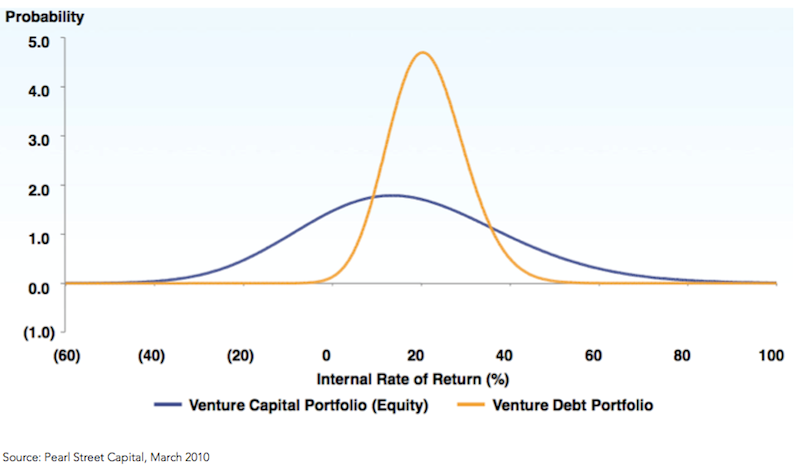
In the second part of the series, we take a closer look at the difference between Venture Debt and Venture Capital. Click here for the first part of the series about “What is Venture Debt?”
When comparing venture debt with venture capital, it is essential to bear in mind that venture debt is mostly a topic for mature (ventures) companies, which make a continual profit, whereas venture capital (equity) is for still early-stage companies. (Fuse3, 2017)
[hubspot type=cta portal=5314519 id=bc2a7bcd-bcee-4a08-960b-b43a6cea4bfe]
Venture capitalists and entrepreneurs are intimately connected; meaning they succeed or fail together. The venture capitalists often take a seat on the company’s board of directors in order to make the potential return match the risk. On the other hand, a venture debt lender does not take on the same risks as the VC; they are hedged. A lender’s returns are linked to fees, interests and warrants (equity kicker). VCs provide a higher portion of the whole capital mix between equity and debt. VCs are an appropriate choice to attain a venture of the ground when a huge amount of capital is required. The most important drawback of the venture capital is that it can be dilutive leading to losing significantly of ownership of the founders. However, Venture debt has very limited dilution for the company’s founders, which is why owners choose venture debt after raising equity capital from VCs. (Edgington, 2017)
As an early stage startup, your most prominent concern is probably access to capital and securing the first 18 months. You do not want to see the fruits of your early work dying before they hit the market. You demand supplemental forms of financing that provide your company with the required capital at a reasonable cost.
Venture debt is an essential part of any entrepreneur’s toolkit to respond to this demand – but is it suitable for early-stage? We gathered in this 4 part series critical and general information on venture debt. We would like to give you an overview of this rising alternative to traditional Venture Capital by answering the most frequently asked questions we received during the last months.
Venture debt is a form of debt financing for venture equity-backed companies that lack the assets or cash flow for traditional debt financing, or that want greater flexibility. Patrick Gordon, Kaufmann Fellows.
Venture Debt is provided by banks, finance companies and funds and is generally structured as a three to a four-year term loan with warrants for company stock – enabling an equity kicker and serving as collateral to protect the downside.
[hubspot type=cta portal=5314519 id=bc2a7bcd-bcee-4a08-960b-b43a6cea4bfe]
The expected returns on venture debt capitals usually range from 12–25% in monthly repayments in association with loan interest and equity returns. (IPFS, 2016) Lending to early-stage companies is riskier than the interest rates. Therefore, lenders also take warrants while lowering the rates. (Denning, 2017)
Venture debt is an attractive option to finance business because it amounts to less equity dilution and it does not require valuation and is, therefore, a fast alternative. (Trinity Capital Investment, 2018) Furthermore, venture lenders need no board seats, and in comparison with equity, the due diligence procedure is less time consuming – because they are collateralised in the first rank with equity.
There are generally three types of venture debts:
In our next article, we will compare venture debt and venture capital and their differences.
The “Steve Jobs of the automotive industry“, Henrik Fisker, design icon and electric car pioneer, has joined forces with our joint venture motec ventures in an advisory capacity. motec ventures is an innovation platform and investment company with the aim of shaping the future of mobility as a link between European SMEs and high-tech start-ups. The cooperation was founded by us and e&Co AG, a leading consultant and investment company in Germany.
Fisker will support motec ventures managing directors Berthold Baurek-Karlic (CEO Venionaire Capital) and Geza Brugger (CEO of e&Co AG) through regular exchanges on technical and entrepreneurial topics – and Fisker Inc. will also invest in portfolio companies of motec ventures. “Henrik Fisker is, from my perspective, the Steve Jobs of the automotive world: a strong visionary and full-blooded entrepreneur with experience from both successful projects, as well as those that brought challenges and lessons learned. We are very much looking forward to working with Henrik and are pleased to have gained an experienced icon in the automotive and mobility industry”, says Geza Brugger, Co-Managing Director of motec ventures and Principal at e&Co.
Read the full story here:
Invest Europe published its annual report on investment and fundraising for the European private equity and venture capital industry. The report covers activity on over 1,250 firms, directly verified by fund managers using the European Data Cooperative (EDC). The EDC holds data from over 3,000 European private equity firms on 8,000 funds, 64,000 portfolio companies and 250,000 transactions since 2007. The research is recognised by coverage in the Financial Times.
Findings in the report paint a delightful picture of the Investment development in Europe. Fundraising reached €91.9 billion, surpassing 2016 by 12% and the highest level since 2006. Pension funds provided 29% of all capital raised, followed by funds of funds (20%), family offices & private individuals (15%), sovereign wealth funds (9%) and insurance companies (8%).
Simultaneously Private equity investment in European companies hit a ten-year high at €71.7 billion, a 29% year-on-year increase. Almost 7,000 companies received investment, of which 87% were small and medium-sized enterprises (SMEs). Divestments (measured at cost) increased by 7% to €42.7 billion. This is the third highest level of the past decade, with around 3,800 European companies exited in 2017. Venture capital investment increased by 34% to a ten-year high of €6.4bn, surpassing 2008’s amount by 13%. Nearly 3,800 companies were venture-backed, an 8% increase.
Companies focused on consumer goods and services in Europe received 15% more private equity investment compared to last year, representing 24% of the total. Almost equalling this were business-to-business products and services, increasing by 51% to account also for 24% of the total. The technology sector (ICT) reached a ten-year investment high, with 17% of the total, a year-on-year increase of 6%.
France and Benelux-based companies received 27% of private equity investments in 2017. Close behind was the UK & Ireland with 26%, followed by DACH-based companies (20%), Southern Europe (13%), the Nordics (9%) and CEE (5%).
Digitization turns our world upside down – new business models, new organizational structures, new management, increasing automation and experimental strategies based on data. Corporate management, controlling and marketing demand completely different skills today, then just 10 years ago. Business is changing in all means and this can be felt most clearly in marketing. Growth Hacking, the evolution of marketing – in many cases still smiled at as a “buzzword” – is eating Marketing for breakfast. NO – this is not about social media or another goofy new tool, Growth Hacking really is a totally new approach to digital marketing.
Growth Hacking describes a discipline that combines various methods of digital marketing with the goal of efficient growth. It’s all about improving your so-called “NORTH STAR METRIC” – the one and only, most important, KPI – which is crucial to the success of your business. A Growth Hacker is an interdisciplinary marketing manager who understands virality, PR, SEO, SEM, product design (basics), UX, marketing tools (technology stack), email marketing, content marketing, funnel marketing, behavioral psychology, brand positioning, and storytelling. These disciplines are traditionally organized in separate departments in larger organizations – Growth Hackers combine those and act across them.
Growth Hacking comes from startups, which are forced to grow as fast as possible with little human and financial resources. The better a startup may hack its growth, the faster its value increases and venture capital funds will, therefore, fund them round over round. Only those who are at the top in the race of start-ups receive venture capital and can thus continue their international triumphal march.
However, corporations and medium-sized businesses are also fascinated by the new methods that “conventional” agencies usually are not able to provide, yet. Growth Hacking does not require large teams, but creativity, speed, technical know-how (simple programming skills) and strong data analysis skills. The challenge lies in finding and developing this know-how or to hire it.
Unfortunately, there is still far too little experience in our latitudes with this discipline and the best work is often done at one or in a startup. The industry is clearly losing out in the “war of talents” in this area. In most cases one will have to invest in the targeted training of young talents – the first structured training courses are slowly emerging (see Growth Base in cooperation with Lauder Business School).
Data is the greatest blessing of digitization, it allows targeted analytical action and is the basis for automated decisions. Growth hackers love data and use a so-called “technology stack” that helps them to work as efficient and automated as possible on the basis of true data. Check out the automated workflow of a SaaS company (e.g. CB Insights), in my opinion, is a perfect example of automation.
Marketing Stack Automation Flow by CBinsights.
The process improves best through ongoing analysis of data and iterative experiments. Texts, colors, the arrangement of links – everything plays a role – and growth hackers are constantly testing and experimenting how they can optimize the so-called “conversion rate”.
If you’ve got an appetite for more – then it’s best to buy a few books, experiment a little yourself and work step by step to become the next Growth Hacker yourself. I’ll be happy to give you reading tips and link you to professional growth hackers from our network if there is a need.
Raising capital is always difficult – on average Startups get rejected over 100 times before they close a sufficient seed-round (to be clear: Investors not FFF). It’s obvious that this process wastes a lot of times for founders, as they should be working on their products, services, technologies, and clients.
Having raised money for a lot of startups and SMEs in different stages over the last years, we have discovered a pattern which will make you successful in fundraising.
Build relations in times you are not running for an investment. Investors / Fund-Managers like to get to know founders and follow their progress early. This helps them to understand your business better and it will build trust in your management capabilities.
Set yourself a timeframe (e.g. 2 weeks for Research, 3 weeks for approaching, 4 weeks for first-round calls and 2 months moving forward) and be realistic about it. Fundraising takes about 3 to 6 months. Set your self a strategy for your fundraising and stick to it. Investors will understand that you do not want to waste time – therefore it’s ok to communicate a timeframe and be transparent about it.
Make sure you have a good FAQ for all your fundraising partners prepared and all relevant documents – legal, financial, KPIs, technology, roadmaps, strategy papers, research, etc. – arranged in a data room, ready to be shared.
Professional investors need to be efficient as well, so make their lives as easy as possible and show them that you are prepared to raise funds now.
You will need to manage involved team-members, Business Angels and consultants – and maybe press (if you run transaction PR to increase visibility). Therefore you should use a professional software tool to manage your fundraising funnel, tasks, documents, reports, including a growing investors database – all in one place – like foundersuite.com.
Make sure you have a good storyline for your campaign. Investors like traction, momentum, numbers (does not always have to be revenue) and it is important to support your fundraising campaign with a strong story which gets repeatedly updated during the process. Launch successful press releases of achieved milestones, partnerships or new alliances you have been able to close.
Drip this information – piece by piece – and communicate with your audience.
Some startups slam doors by calling for ridiculous valuations – this is simply stupid. You should know in which area your company should be valued, but it is always to signal that you are open for negotiations. Valuations and terms play together like a swiss-clockwork and you will have to find a good balance between them.
Make sure you ask for more than money. It’s important to understand that early-stage Investing is not like calling a bank loan. The right investor will bring your company up to speed and be worth a fortune. His reputation can even be the underlying asset, which opens doors for next rounds and exits. Ask investors, why you should work with them instead of their competitors. All the best for your fundraising!
Finally, if you need advice or simply additional (professional) resources for fundraising – we are always happy to look at your deal and see if we can be of value for your venture.
Note: You can read this article in German at DerBrutkasten.com.
For a long time, thinking about self-employment and entrepreneurship wasn’t a priority in Austria with high entry barriers (investments). Luckily, times have changed. Digitization has dramatically lowered these barriers. Today, anyone can come up with a good idea at the kitchen table and use it on their laptop, and soon after, business life begins. High investments in machinery and factories are no longer necessarily needed.
Only a few years ago, almost all initiatives within the Austrian startup ecosystem were run by the state. We experienced a market failure. The veterans of the venture capital scene Gert Reinhard Jonke (Venture Capital Funds), Michael Tojner (then venture investor behind BWIN), PONTIS Ventures and later Gamma Capital Partners had either already developed further, could no longer put together new funds, or have simply missed the advent of a new founder era. Startups in Austria were not completely at the beginning, but they needed new pioneers.
With Start Europe and later Pioneers Festival, the potential of the Austrian startup ecosystem and the need to catch up internationally became very clear. The most well-known early drivers of today’s startup ecosystem Speedinvest, i5Invest, Hansi Hansmann, Stefanie Pingitzer, Selma Prodanovic and our company (Venionaire was established in 2012) had initially a hard time to attract the attention from media, politics, and society. Even in 2015, it was too early to convince institutional investors on a larger scale, with many still licking their wounds from the dotcom bubble. Today, there are again efforts to address these investors, whether it will succeed to convince them this time is still uncertain.
In addition, Austria hadn’t enough successful startup founders, who could support the ecosystem as mentors and investors after their exit. All of this has changed dramatically in recent years and the ecosystem has developed greatly – the number of investors has multiplied, established companies are regularly working actively with startups, and some government initiatives have done an excellent job creating a market that adapted the dynamics of the private sector. Above all, the commitment of institutional investors should be promoted so that Austria’s investment power will be further expanded. Especially in the field of high technology is still hidden potential that could be exploited through investments and technology transfer centers. The current strength of the scene can still be expanded!
In the next segment of this article, we present you an overview of the startup ecosystem in Austria from an investors perspective. This list was inspired by Bernhard Hauser’s blog and is build on his content. If an important player is missing, we are very happy if you shoot us a quick email.
[sociallocker id=”10980″]
Mergers of Business Angels are not a new invention. They offer Angels several benefits, such as sharing experience, co-investing, or better dealflow. Networks, which (also) operate in Austria in alphabetical order:
Babenbergerstraße 9/12,
A-1010 Vienna, Austria (EU)
office@venionaire.com
1355 Market St. #488
San Francisco CA 94103
sfo@venionaire.com
122 East 37th Street
First Floor
New York, NY 10016
nyc@venionaire.com
Gable House, 239 Regents Park Road
London N3 3LF
office@venionaire.com
3 rue Gabriel Lippmann
5365 Munsbach
office@venionaire.com
Venionaire Capital exclusively invests through the European Super Angels Club, for more information and application please go to the website. We do not accept direct investment proposals via this website.