Small Modular Generators: A New Layer of Energy Infrastructure
Small Modular Generators (SMGs) are emerging as a new category of energy technology that sits between traditional nuclear, renewables, and industrial-scale infrastructure.
Global markets are entering a phase where energy systems, technological innovation, and capital allocation are increasingly intertwined. Stability, scalability, and cost-efficiency are no longer optional. They are prerequisites for any energy solution that aims to operate at scale.
In this context, SMGs represent a shift not just in technology, but in how energy systems are designed and financed.
From Reactors to Generators
For years, Small Modular Reactors (SMRs) have been positioned as the future of nuclear energy. However, SMGs introduce a fundamentally different approach.
Instead of relying on a continuous chain reaction, SMGs use accelerator-driven systems to trigger energy release. This removes several of the structural risks associated with nuclear energy and reframes the entire category.
As discussed in our latest Let’s Talk About Tech episode with Florian Wagner, CEO and Founder of Emerald Horizon, the concept is to retain the benefits of nuclear energy while eliminating its key drawbacks .
The result is a system that behaves less like a traditional power plant and more like a controllable energy device. Energy generation becomes something that can be switched on and off, rather than something that must be continuously managed at scale.
Modular by Design, Not by Label
One of the core differences lies in how SMGs approach modularity.
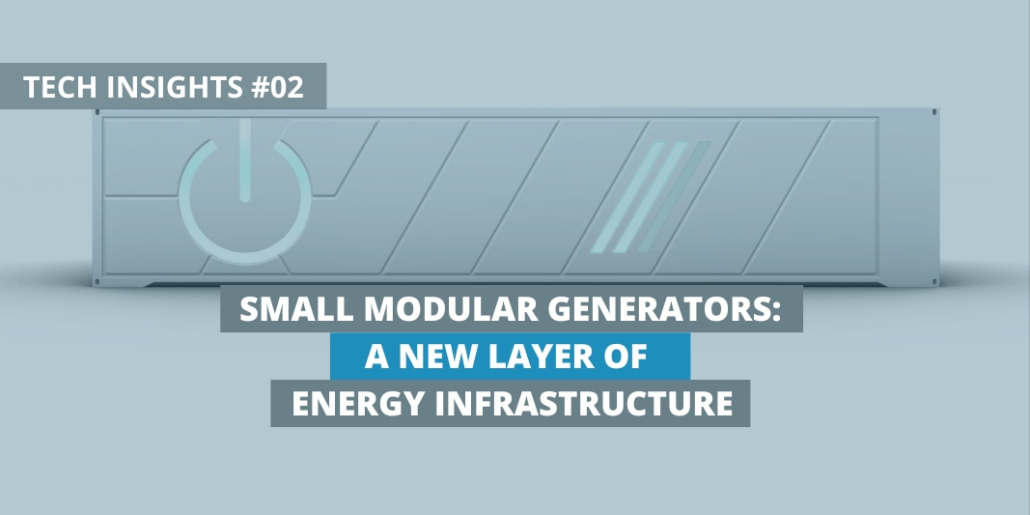
While many “modular” energy systems are still large-scale infrastructure projects, SMGs are designed from the ground up as container-sized units. Each unit delivers meaningful output on its own and can be combined depending on demand.
This changes the economics entirely. Instead of building one large asset, energy capacity can be deployed incrementally. It also reduces dependency on large grid expansions, as production can move closer to consumption.
From a capital markets perspective, this introduces a manufacturing logic into energy. Scaling is no longer tied to project size, but to production capacity.
Rethinking Energy Supply Chains
A central element of SMG technology is thorium.
Unlike uranium, thorium is widely available and geographically distributed. It already exists as a by-product of industrial processes, particularly in rare earth mining. This fundamentally changes the supply-side dynamics of energy.
Rather than relying on concentrated resource regions, energy systems can be built on more globally accessible inputs. This reduces geopolitical exposure and introduces a different level of resilience into the system.
At the same time, thorium-based systems avoid many of the regulatory and safety concerns that have historically slowed nuclear adoption .
Energy as a Scalable System
What makes SMGs particularly interesting is not just the technology, but the system logic behind it.
Traditional energy infrastructure is defined by scale, long timelines, and high upfront capital intensity. SMGs shift this toward a model that resembles industrial production.
Energy capacity can be added in units, deployed where needed, and scaled over time. This creates a more flexible system that aligns better with real-world demand patterns.
It also opens the door to new business models, where energy is not only produced centrally, but distributed in a modular and adaptive way.
The Investor Perspective
From an investment standpoint, SMGs sit at the intersection of deep tech, infrastructure, and energy transition.
They combine long-term structural relevance with a fundamentally different scaling dynamic. This makes them comparable to other emerging categories where technology redefines how infrastructure is built and monetized.
At the same time, the space remains early. Many comparable companies operate without revenues, and valuations are often driven by expectations rather than realized performance .
This creates a familiar pattern for investors: high potential, paired with execution and regulatory risk.
Europe’s Strategic Position
For Europe, SMGs could offer a unique pathway forward.
Energy policy across the region remains fragmented, particularly when it comes to nuclear. SMGs introduce a middle ground by offering a technology that captures the benefits of nuclear energy without its most controversial elements.
This creates the potential for a broader consensus on energy strategy, especially in a context where resilience and independence are becoming increasingly important .
Watch the Full Discussion
To explore these ideas in more detail, listen to our latest Let’s Talk About Tech episode featuring Florian Wagner, CEO & Founder of Emerald Horizon.
Conclusion
SMGs are not just another iteration of existing energy technologies. They represent a shift in how energy systems are conceptualized.
If successful, they could move energy from large, centralized infrastructure toward modular, scalable systems that behave more like technology platforms than traditional utilities.
For investors, this is where the real relevance lies. Not only in the technology itself, but in the structural change it introduces to one of the most fundamental industries in the global economy.
Disclaimer
This publication is provided for informational purposes only and does not constitute investment, legal, or tax advice. The content reflects general market perspectives and does not represent an offer, solicitation, or recommendation to buy or sell any securities or investment products. Past performance and market observations are not indicative of future results. Readers should seek independent professional advice before making investment decisions.