

Crypto in a Risk-Off Market: What Comes Next?
Global markets are facing an unusual combination of pressures. Energy supply disruptions, geopolitical tensions and tightening financial conditions are all hitting at the same time. Crypto is moving within this environment, not outside of it.
In the latest Crypto Insights episode, Igor Hadziahmetovic, Investment Director of the Venionaire Web3 Fund, analyzes what is happening across Bitcoin, Ether and major altcoins, and why the current setup may be more constructive than it looks.
ETF Flows Signal Caution
Market sentiment has clearly softened. US spot ETF flows for both Bitcoin and Ether have turned negative, reflecting reduced short-term conviction.
When adjusted for market size, Ether stands out with relatively stronger outflows compared to Bitcoin. At the same time, futures positioning shows a familiar pattern. Institutional players are increasingly hedged, while retail participants are leaning more long.
This combination typically signals caution in the near term, with markets lacking strong directional conviction.
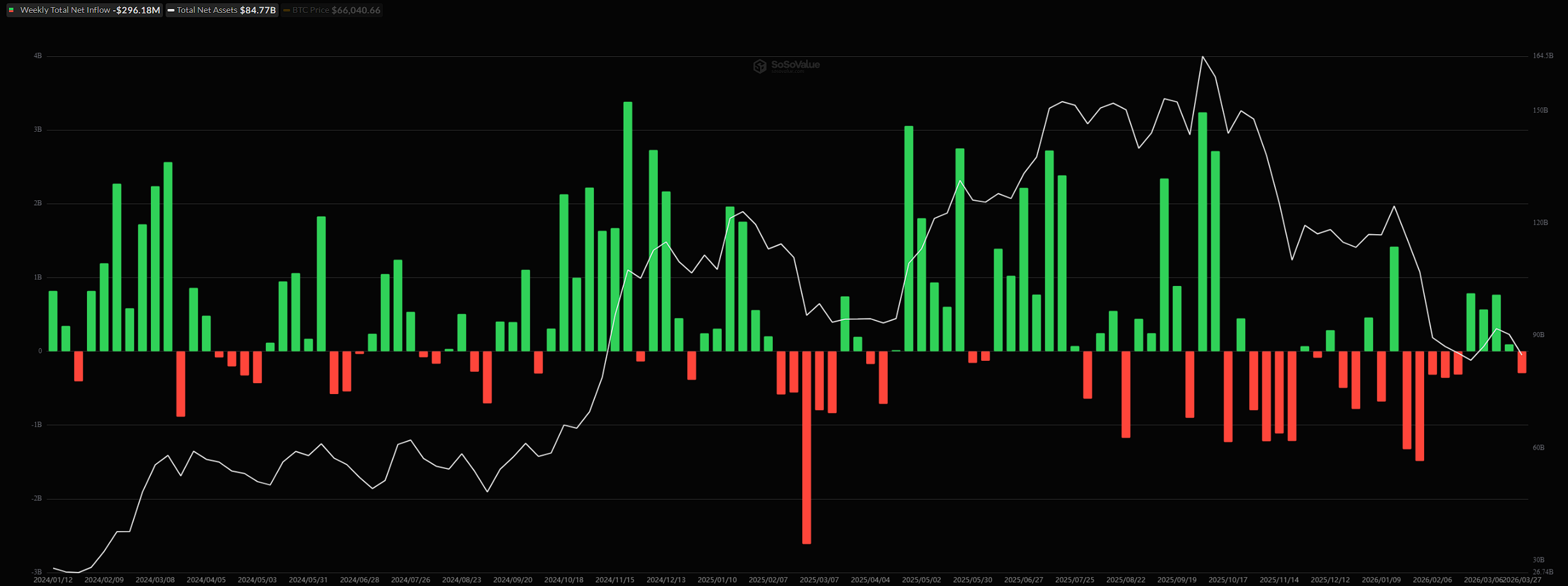
Fig. 1: ETF-BTC: Weekly Total Net Inflow
Macro Pressure Is the Dominant Force
To understand the current market, it is essential to look beyond crypto itself.
A severe disruption in global energy supply is driving much of the current volatility. With key supply routes constrained and production imbalances persisting, inflationary pressure remains elevated while liquidity tightens. The IMF has described the situation as a global shock with asymmetric effects across economies.
This backdrop makes it difficult for risk assets to sustain rallies. Any short-term upside driven by macro data is likely to remain fragile as long as structural uncertainty persists.
Bitcoin Holds Ground Despite Market Stress
Against this backdrop, Bitcoin is behaving in a way that stands out.
While it continues to move broadly in line with risk assets, it has not shown the kind of breakdown one might expect given the macro pressure. Instead, it has held key levels and even outperformed traditional assets such as equities and gold on a relative basis since the escalation of the current crisis.
This does not signal strength in an absolute sense, but it does point to resilience under stress.
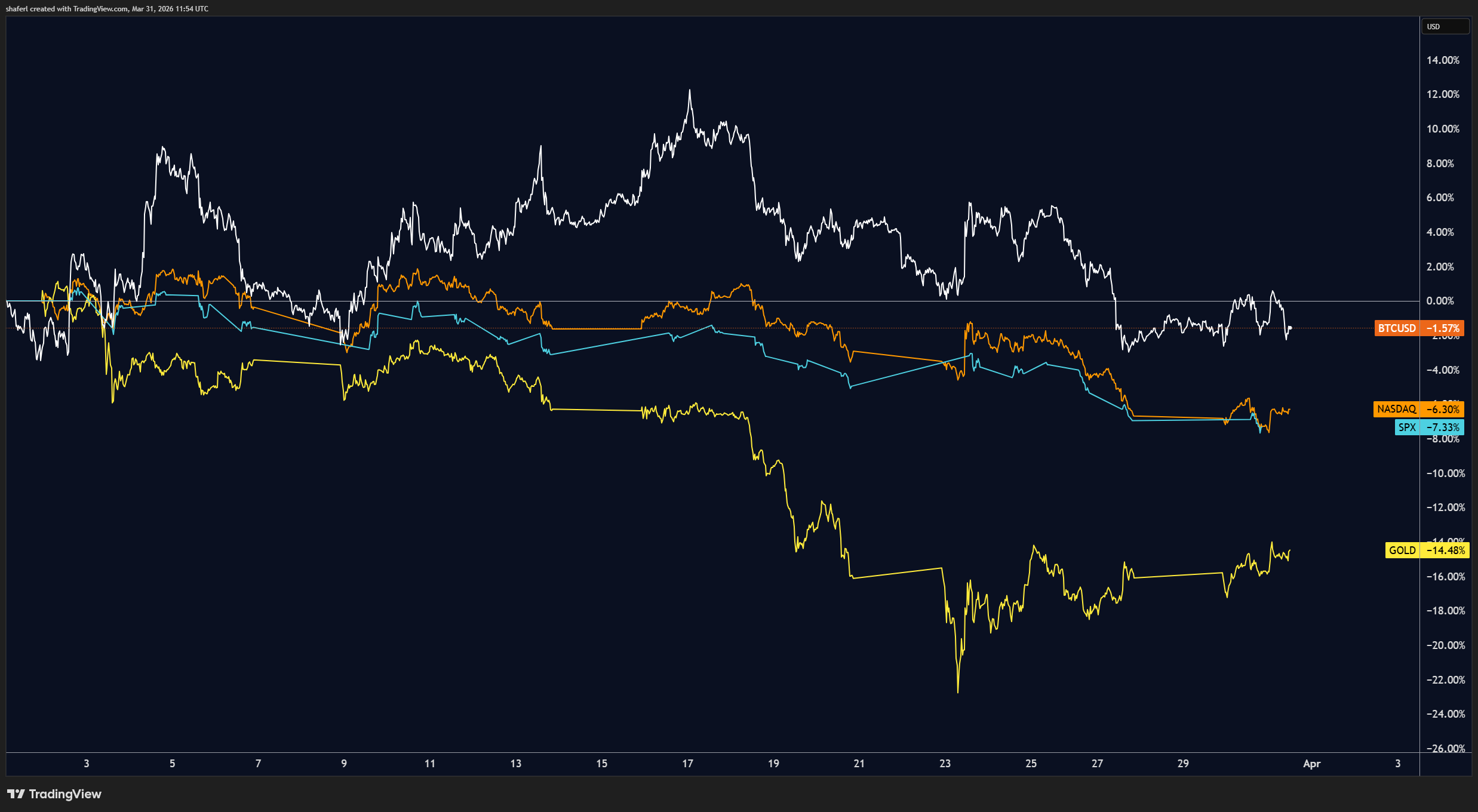
Fig. 2: BTC – NASDAQ – S&P 500 – Gold Comparison
Technical Picture Remains Weak, but Stable
From a technical standpoint, the market is still in a downtrend. Bitcoin and Ether remain below their 200-day moving averages and repeated breakout attempts have failed.
Bitcoin is approaching an important zone around the low 60,000 range, while Ether is holding above its February support. Both assets are currently trading within a broader range that reflects uncertainty rather than directional conviction.
What matters here is not the absence of weakness, but the absence of acceleration to the downside. So far, key support levels are holding.
Selective Strength in Altcoins
The broader altcoin market continues to struggle, which is typical in a risk-off environment. However, the picture is not uniform.
A small group of larger altcoins has managed to outperform since the start of the year. This suggests that capital is still active within the ecosystem, even if it is deployed more selectively.
In markets like this, performance becomes highly concentrated. Investors are no longer buying broadly, but choosing specific assets with stronger positioning or narratives.
Institutional Activity Slows, but Does Not Reverse
Institutional behavior reflects a pause rather than an exit.
Bitcoin treasury accumulation has slowed, with major players stepping back from aggressive buying. At the same time, Ether continues to see targeted accumulation, indicating that interest in the asset class remains intact.
This combination suggests that while conviction is not yet strong enough to drive a rally, it has not disappeared either.
Why the Current Setup Matters
The most important takeaway lies in how crypto is behaving relative to its environment.
Despite negative flows, bearish positioning and macro stress, the market is holding its structure. Bitcoin, Ether and selected altcoins are maintaining their levels rather than breaking down further.
This creates an asymmetric setup.
If macro conditions remain unstable, crypto is likely to continue moving sideways within its current range. But if conditions begin to stabilize or geopolitical tensions ease, crypto markets are structurally positioned to react faster than traditional assets.
Because they trade continuously and with higher volatility, they tend to move first.
Crypto Market Outlook
The trend remains cautious and the environment fragile. There is no confirmed reversal and no clear signal of a sustained risk-on phase.
At the same time, the resilience shown over recent weeks is difficult to ignore. In previous cycles, similar macro conditions would have led to significantly deeper drawdowns.
This time, the market is holding.
That does not guarantee upside. But it does suggest that when conditions change, crypto may be ready to respond quickly.
Disclaimer
This publication is provided for informational purposes only and does not constitute investment, legal, or tax advice. The content reflects general market perspectives and does not represent an offer, solicitation, or recommendation to buy or sell any securities or investment products. Past performance and market observations are not indicative of future results. Readers should seek independent professional advice before making investment decisions.