Europe’s VC reset – recovery without a cycle reset

This article offers a focused insight into one of the core mechanisms shaping markets in 2026. The full Market Outlook 2026 provides the broader, integrated context across macro, public markets, private capital and digital assets.

Europe’s venture environment has moved into a recovery phase characterised by improving activity and clearer thematic focus – while remaining structurally selective rather than broadly risk-on.

This distinction matters. A rebound in funding and sentiment does not automatically translate into unconstrained growth. Outcomes remain tied to liquidity, exit capacity, and the ability to scale beyond early success.

Rebound, not risk-on – liquidity still rules.


Rebound numbers – activity returns, selectivity persists

European venture activity recovered in 2025, reaching USD 65.9 bn across 3,784 transactions. Capital deployment, however, remained uneven across stages:

  • Late-stage: USD 26.6 bn across 781 deals
  • Early-stage: USD 18.8 bn across 662 deals
  • Technology growth: USD 13.7 bn across 83 deals
  • Seed and angel: USD 6.7 bn across 2,258 deals

Sentiment indicators stayed above neutral throughout the year, pointing to renewed confidence without a return to indiscriminate allocation.

Mechanism: Recovery is taking place inside a constrained capital regime – where liquidity and realisation pathways determine which companies can convert momentum into durable outcomes.

Thematic specialisation – depth as Europe’s advantage

Europe’s recovery is underpinned by thematic concentration rather than broad-based exposure. Capital continues to cluster around areas with established regional depth:

  • Targeted AI specialisation, moving beyond general experimentation
  • Applied AI and infrastructure layers such as compute, data tooling, chips, and AI safety
  • ClimateTech and the wider energy transition

Into 2026, the shift is from horizontal technology narratives toward domain-specific applications and infrastructure that can justify selective capital deployment.

Mechanism: Specialisation supports recovery only when it creates defensible scaling paths – not when it simply accelerates early validation.

The scale gap – Europe’s unresolved champion problem

A persistent structural constraint remains Europe’s difficulty in building global champions.

Innovation is strong – scaling champions is the gap.

Venture-backed companies frequently achieve technical and commercial validation but are absorbed before reaching full scale, resulting in the export of intellectual property and long-term value creation.

The emergence of new unicorns in 2025 signals renewed formation capacity, but does not resolve the scaling bottleneck on its own. Without sufficient late-stage capital and liquidity mechanisms, exits risk becoming the default outcome rather than a strategic choice.

Late-stage growth capital and secondaries are therefore positioned as structurally important tools for extending holding periods and supporting scale.

Mechanism: Recovery strengthens the pipeline – but without deeper scaling infrastructure, it reinforces the same pattern it seeks to overcome.

What to watch in 2026

The binding variable is not sentiment, but realisation.

Key questions:

  • Do exit channels broaden beyond episodic windows?
  • Do secondaries normalise as a structural liquidity instrument?
  • Do barriers to scale meaningfully decline, enabling value to compound locally rather than being exported?

Why this matters

Europe’s VC reset is not a cyclical replay. It combines recovery with selectivity – while leaving the central challenge unresolved: scaling champions instead of exporting IP.

The broader framework that connects venture dynamics to liquidity, exits, and the cross-asset environment sits beyond this mechanism view.
The North America VC shape: broad seed, narrow scale

This article offers a focused insight into one of the core mechanisms shaping markets in 2026. The full Market Outlook 2026 provides the broader, integrated context across macro, public markets, private capital and digital assets.

North America’s venture market holds two truths at once: high deal activity at the earliest stages and heavy capital concentration at scale. In practice, seed and angel rounds create volume, while the market’s real “yes/no” decisions happen later, where fewer rounds absorb most of the dollars.

As a result, that barbell structure matters in 2026 because it changes what “momentum” looks like. At the same time, a busy pipeline can coexist with a narrow set of winners. Ultimately, the question is not whether companies can start, but whether they can graduate into the part of the market where outcomes are priced.

AI concentrates capital – broad seed activity continues, but late-stage conviction rounds dominate.

AI as the market’s gravity well – and a concentration amplifier

At the centre of the North American venture market sits AI. In particular, capital clusters around the parts of the stack that are harder to replicate – infrastructure, compute, chips, data tooling, and robotics – and, by contrast, becomes more selective elsewhere.

Consequently, in a gravity-well regime, “sector rotation” happens inside venture itself. Rather than following ideas alone, funding increasingly follows durability. Therefore, the closer a business model is to defensible infrastructure and real-world deployment, the easier it becomes to justify large cheques.

2026: from deployment to capital justification

Into 2026, the market shifts from capital deployment to capital justification. After a year defined by mega-rounds, investors now expect tangible outcomes – revenue growth, defensible moats, and credible paths to profitability.

In effect, this shift turns proof into a financing input. Accordingly, execution quality becomes a pricing factor – and “why this capital, at this valuation, right now?” emerges as a core underwriting question across stages.

Exit visibility improves – liquidity remains uneven

On the one hand, exit visibility improves: an IPO window reopens and M&A provides an additional route to realisation, thereby broadening the outcomes companies can actively position for.

On the other hand, liquidity remains uneven – particularly for mid-tier and earlier-stage companies. Therefore, this is where 2026 gets practical: companies and investors need a plan that assumes exits can happen, but not on command.

2026 demands proof – capital justification, exit readiness, and uneven liquidity decide outcomes.

Financing adapts as proof thresholds rise

In a proof-driven regime, the financing toolkit expands. Specifically, alternative structures move into focus – including venture debt, structured equity, and secondary transactions – as flexible ways to support portfolio companies without relying solely on traditional equity rounds.

Importantly, the point is not financial engineering for its own sake. Instead, it is about matching company timelines to imperfect liquidity and, in turn, protecting optionality when the market rewards evidence over narrative.

What to watch in 2026

For example, where does “capital justification” show up first – in pricing, terms, or follow-on selectivity? Additionally, does the AI gravity well widen the gap between scaled platforms and the mid-tier? Finally, do alternative structures improve runway and optionality – or simply delay the hard reset?

Why this matters for 2026 decision-making

Overall, North America remains the centre of gravity – but the bar is moving. Capital does not disappear; instead, it becomes more conditional. In 2026, proof, discipline, and exit readiness are what turn attention into outcomes.

If you want the full integrated context – including the broader regime logic that sits behind this shift across public markets, private capital, and digital assets – then download the complete Market Outlook 2026.

Recovery with a Liquidity Filter: Secondaries, Structure, and the New Private-Market Toolkit

This article offers a focused insight into one of the core mechanisms shaping markets in 2026. The full Market Outlook 2026 provides the broader, integrated context across macro, public markets, private capital and digital assets.

Why “better mood” is not the same as better outcomes

Exit activity is improving relative to the trough, yet liquidity remains uneven. That distinction defines the environment for 2026: conditions are no longer uniformly deteriorating, but recovery does not translate into broadly realised outcomes.

Improvement exists, but it is selective. The central issue is therefore not whether conditions have stabilised, but who is actually positioned to convert stabilisation into realised liquidity – and who remains structurally constrained.

Exits may improve – but liquidity stays uneven.

The liquidity filter – framed as a mechanism, not a claim

When liquidity remains uneven, a filtering process emerges by default. It does not need to be asserted; it is implied by how markets function under constrained exit capacity.

The relevant questions are therefore structural rather than emotional:

  • which companies can realistically access exit windows when they open
  • which portfolios can sustain value if those windows close again
  • which capital structures remain workable under delayed realisation

Recovery, in this framing, is conditional. Liquidity does not vanish, but it concentrates rather than disperses.

Secondaries, structure, and debt – why they enter the discussion

Secondaries, structured equity, and venture debt enter the picture not as signals of exuberance, but as responses to constrained realisation. They appear where timing risk dominates and traditional exits remain uncertain.

Secondaries and structure become the toolkit for selective liquidity.

Rather than indicating a universal shift, these instruments support a narrower reading:

  • when exits are possible but inconsistent, bridging mechanisms gain relevance
  • when timing risk outweighs pricing risk, structure matters more than headline valuation
  • when dilution becomes expensive, alternative capital forms enter consideration

They function as options under constraint, not as guarantees of outcome.

Exit readiness instead of exit timing

Preparedness takes precedence over prediction. The environment does not reward precise timing forecasts, but it increasingly differentiates between those who are structurally ready and those who are not.

This shifts attention:

  • away from identifying a single optimal exit moment
  • toward maintaining conditions under which multiple exit paths remain viable

Capital efficiency and durability matter in this context, not as solutions, but as prerequisites for optionality.

What remains uncertain – and therefore actionable

Several unresolved questions naturally follow:

  • If liquidity is uneven, how long can individual companies realistically bridge?
  • Under what conditions do secondaries or structured capital improve outcomes rather than defer decisions?
  • When does extending runway preserve optionality – and when does it quietly erode it?

These are not resolved mechanically. They are the decision points that define outcomes under selective liquidity.

Why this framing matters

Recovery can coexist with persistent liquidity constraints for a large share of assets. Making that tension explicit reframes secondaries, structure, and alternative financing as context-dependent tools, not universal solutions.

For readers seeking the full cross-asset logic – how this liquidity filter connects to macro conditions, public markets, and capital discipline – the complete Market Outlook 2026 provides the necessary depth and integration.

DefenseTech 2026: Where Investors Should Pay Attention

DefenseTech 2026 is emerging as one of the most important investment themes of the decade.

Global markets are entering a phase where technology, geopolitics, and capital markets intersect more closely than ever before. Defense is no longer limited to traditional military contractors. Instead, it increasingly includes startups, software companies, satellite providers, and cybersecurity platforms.

As a result, investors are beginning to treat defense technology as a strategic innovation sector rather than a purely governmental domain.

In short, DefenseTech has moved from the margins of venture capital to the center of geopolitical technology competition.

Why DefenseTech Is Becoming a Major Investment Theme

Several structural trends explain the growing importance of DefenseTech in 2026.

First, the global security environment has changed. Many governments now speak openly about hybrid threats, which combine cyber attacks, infrastructure disruption, economic pressure, and technological competition.

Unlike traditional warfare, hybrid threats target entire societies. Critical infrastructure such as energy systems, telecommunications networks, financial platforms, and supply chains are now considered strategic assets.

In our recent Let’s Talk About Tech podcast with Dr. Bernhard Müller, Industry Lead Aerospace & Defense at PwC, we discussed how cyber attacks, infrastructure disruptions, and digital warfare are already shaping modern security environments.

This shift has direct implications for investors. Governments and corporations are now allocating capital toward technologies that increase resilience, security, and strategic autonomy.

The Rise of Dual-Use Innovation

Another defining feature of DefenseTech 2026 is the rise of dual-use technologies.

Historically, many breakthrough technologies, like the internet, GPS or satellite communications, originated in defense research.

However, innovation dynamics have changed.

Today, the private sector often leads technological progress. Startups and commercial technology companies develop innovations that can later be adapted for defense applications.

Examples include:

  • artificial intelligence systems

  • drone and autonomous technologies

  • satellite networks

  • cybersecurity platforms

  • quantum technologies

Because private companies innovate faster than traditional military procurement cycles, governments increasingly rely on commercial technology ecosystems.

For investors, this creates a new category of companies operating at the intersection of venture capital, national security, and deep technology.

Critical Infrastructure Is the New Strategic Battlefield

One of the most important consequences of hybrid threats is the focus on national resilience.

Governments are now investing heavily in protecting critical infrastructure. This includes:

  • electricity grids

  • telecommunications systems

  • financial networks

  • water infrastructure

  • logistics and supply chains

Even short disruptions in these systems can cause significant economic damage.

For example, cyber attacks targeting infrastructure operators or financial institutions have already demonstrated how quickly modern economies can be affected.

As Müller explains, resilience has therefore become a new leadership principle for both governments and corporations.

Defense Spending Is Entering a Structural Growth Cycle

DefenseTech 2026 is also supported by a major macroeconomic trend: rising global defense spending.

Across Europe and NATO countries, governments are increasing military budgets and investing in technological modernization.

This shift reflects several structural drivers:

  • geopolitical fragmentation

  • supply chain security

  • technological competition between global powers

  • protection of critical infrastructure

Importantly, many of these investments focus on technology rather than traditional hardware.

As a result, private technology companies are becoming essential partners in the defense ecosystem.

For venture investors and private equity firms, this creates opportunities across the broader security and resilience technology stack.

Space Is Becoming a Strategic Technology Domain

Another emerging pillar of DefenseTech is space.

Satellite infrastructure has become a critical backbone for modern economies and security systems alike, enabling navigation, global communications, surveillance capabilities, and military coordination. At the same time, the rapid expansion of commercial satellite constellations is fundamentally changing the economics of space technology.

Private companies are now building large-scale satellite networks that serve both civilian markets and defense-related applications. As a result, governments are increasingly integrating commercial space providers into their national security architectures.

For investors, this development signals that space technology is evolving beyond a specialized government domain into a strategic layer of commercial infrastructure with growing geopolitical relevance.

DefenseTech 2026: The Investor Perspective

Taken together, these developments are reshaping the technology investment landscape.

DefenseTech now sits at the intersection of several major innovation domains:

  • artificial intelligence

  • cybersecurity

  • autonomous systems

  • satellite infrastructure

  • quantum technologies

  • advanced manufacturing

Importantly, many of these technologies serve both civilian and defense markets.

This dual-use dynamic makes DefenseTech particularly interesting for venture capital and private equity investors.

The companies building these technologies are not only contributing to national security. They are also shaping the next generation of global technology infrastructure.

Listen to the Full Discussion

To explore these topics in more depth, listen to our latest Let’s Talk About Tech podcast episode featuring Dr. Bernhard Müller, Industry Lead Aerospace & Defense at PwC.

In this episode we discuss:

  • hybrid warfare and cybersecurity

  • critical infrastructure resilience

  • the role of private sector innovation in defense

  • geopolitical developments shaping technology markets

Listen to the full episode:

Speak With Our Investment Team

Defense technology, infrastructure resilience, and dual-use innovation are becoming key areas of strategic investment.

At Venionaire Capital, we continuously analyze emerging technology sectors and their implications for investors, founders, and corporate partners.

If you are building a company in the DefenseTech, cybersecurity, or deep-technology ecosystem, or if you are an investor exploring opportunities in this space, we would be happy to connect.

Speak with our team to explore collaboration or investment opportunities.

Disclaimer

This publication is provided for informational purposes only and does not constitute investment, legal, or tax advice. The content reflects general market perspectives and does not represent an offer, solicitation, or recommendation to buy or sell any securities or investment products. Past performance and market observations are not indicative of future results. Readers should seek independent professional advice before making investment decisions.

Exit Windows in 2026: Episodic, Not Smooth – and What “Exit-Ready” Really Means

This article offers a focused insight into one of the core mechanisms shaping markets in 2026. The full Market Outlook 2026 provides the broader, integrated context across macro, public markets, private capital and digital assets.

The 2026 backdrop makes one thing clear: listed markets reset the cost of capital – and that flows into episodic IPO and M&A windows, higher dispersion, and a shift from beta to selective leadership.

In private markets, the binding constraint is not simply “sentiment”. It is realisation pathways. Exits improve versus the trough, but liquidity remains uneven, especially for mid tier and earlier stage companies – which raises the importance of secondaries, structured equity, and venture debt.

That tension also shows up in sentiment measures. EVSI signals improving confidence, while flagging practical pressure points for early 2026 such as higher requirements on traction and execution, a still tight exit market, and tougher Series A conditions.

This is why the exit discussion needs a reset. The likely pattern is not a smooth reopening, but episodic windows.

Public markets set the bar for private outcomes

Public equity markets reset the cost of capital in 2026.

Exit windows open in bursts – public markets set the bar

Even for PE and VC, listed markets matter because they determine three things:

  • the discount rate that anchors valuations
  • the multiples that reset private marks
  • the state of the exit window – IPO and M&A confidence

This is the transmission mechanism. When the listed market’s pricing regime shifts, private outcomes reprice with it.

A regional cross check makes the point concrete. In North America, the outlook expects the improved exit environment to support higher levels of realisation in 2026 – with the IPO window reopening and M&A activity remaining strong – while also warning that liquidity will remain uneven, particularly for mid tier and earlier stage companies.

Why exits open in bursts

Episodic windows follow a recognisable pattern: periods where quality issuance clears and acquisition confidence returns, followed by pauses when rates or politics reprice uncertainty.

That is consistent with the broader constraint described elsewhere: exits can improve while liquidity stays uneven. In that environment, the market clears the very best first – and the rest waits for the next window.

So the strategic error in 2026 is not “missing the perfect week”. The bigger error is building a portfolio plan around timing a window that can close as fast as it opens.

Don’t time it Be exit-ready

Exit readiness beats exit timing

The practical goal is to be exit ready at all times, not to “time the window”.

Exit readiness is not a slogan. It is a set of actions that raises optionality under imperfect conditions.

This is not a year where “market beta” does the work. In private markets, performance will be driven by manager actions.

What “exit ready” looks like in practice

The outlook frames levers that define readiness in 2026:

  • Portfolio triage, not portfolio hope. Concentrate follow on capital behind assets that can credibly reach cash flow breakeven or strategic defensibility within realistic timeframes. De risk the rest early through governance, cost actions, and strategic alternatives – rather than waiting for an external recovery to do the job.
  • Liquidity as a value creation lever. Secondaries, structured equity, and selective venture debt help protect ownership, extend runway without destructive dilution, and match company timelines to imperfect exit conditions. The outlook also expects these tools to play a growing role where liquidity remains uneven.
  • Operating discipline beats narrative. In a higher hurdle rate regime, improvements in gross margin, retention, payback, and working capital compound into higher exit optionality, because buyers and public markets underwrite durability, not only growth.
  • Execution speed is part of readiness. The outlook highlights term and cap table hygiene as practical work that raises the probability of capturing windows when they open.

A simple readiness checklist for 2026

If exit windows come in bursts, readiness becomes a continuous process. A practical checklist is to ask:

  • Can this asset defend its valuation under the discount rate and multiples regime set by listed markets?
  • If a window opens briefly, can governance and reporting move fast enough to convert interest into a process?
  • If a window closes, do we have liquidity tools – secondaries, structured equity, venture debt – to protect ownership and extend runway without destructive dilution?

Bottom line

In 2026, the exit environment does not reward perfect timing. It rewards readiness – because windows can open, clear quality, and then pause when uncertainty reprices.

If you want the integrated view – how the rates regime, public market pricing, and private market liquidity filters connect to exit outcomes – the full Market Outlook 2026 provides the broader frame.

Why the Middle East Economy Is More Resilient Than Headlines Suggest

Global markets periodically experience moments that test the strength of economic ecosystems. The recent geopolitical tensions affecting the Gulf region — including temporary disruptions to airspace and aviation operations — have sparked renewed debate about Middle East economic resilience and the long-term stability of global hubs such as Dubai and the United Arab Emirates.

While headlines often focus on immediate shocks, long-term investors know that the real question is different: how robust are the underlying systems that power global economic centers?

The Reality of Middle East Hub Risk

Major international hubs — whether Singapore, London, Dubai, or New York — are built on interconnected systems: aviation, trade, finance, tourism, and global mobility.

Recent disruptions in Middle Eastern airspace briefly interrupted flights and tourism flows, reminding markets that no region is completely insulated from geopolitical dynamics. Visible events such as airport closures or missile interceptions inevitably influence global perception and risk assessment.

In the immediate aftermath, several short-term effects typically emerge:

  • Temporary declines in tourism demand

  • Operational challenges for aviation networks

  • Increased media attention on regional stability

  • Heightened risk sensitivity among travelers and investors

However, such disruptions do not automatically translate into structural economic decline. In fact, Middle East economic resilience often becomes most visible precisely during these moments of stress.

Structural Strength Matters More Than Headlines

Dubai’s economic model offers a compelling case study in diversification and institutional capacity.

Tourism, while highly visible, represents only one pillar of a broader ecosystem that includes:

  • global logistics and aviation networks

  • international finance and capital markets

  • energy and trade infrastructure

  • technology and innovation initiatives

This diversification is critical. When one sector temporarily slows, others often compensate.

Equally important is the institutional capability to manage crises. Rapid operational responses, coordinated government actions, and strong public-private cooperation frequently determine whether disruptions remain short-lived or evolve into structural challenges.

In the Gulf, these capabilities have developed significantly over the past two decades.

The Power of Rapid Recovery

History shows that tourism and mobility sectors are remarkably resilient.

After global shocks — whether financial crises, pandemics, or regional conflicts — travel demand often rebounds faster than expected once stability returns.

Early indicators suggest a similar pattern may unfold across the Gulf region. Aviation operations typically normalize quickly after temporary disruptions, and international travel demand remains structurally strong as global mobility continues to expand.

For investors, the key takeaway is simple:

Temporary volatility does not necessarily alter long-term demand fundamentals.

Global connectivity remains one of the most powerful drivers of economic growth.

The Strategic Pivot: From “Perfect Safety” to “Professional Resilience”

One subtle but important shift may emerge from current events.

For decades, certain global hubs marketed themselves as completely insulated from regional volatility. In today’s interconnected world, that narrative is increasingly unrealistic.

Instead, the competitive advantage is shifting toward something more credible: the ability to manage complexity effectively.

Investors, businesses, and travelers increasingly value environments that demonstrate:

  • strong governance and crisis management

  • resilient infrastructure systems

  • transparent communication during uncertainty

  • long-term strategic planning

Cities and countries that prove capable in these areas often strengthen their reputation over time.

In other words, the narrative evolves from “nothing ever happens here” to “this system works even when things do happen.”

Scenario Thinking: A Core Skill for Investors

Periods of geopolitical uncertainty highlight the importance of structured scenario analysis — a discipline that venture investors, private equity firms, and sovereign funds have long relied upon.

Rather than predicting a single outcome, sophisticated investors evaluate multiple possible trajectories:

  • Short-term disruption followed by recovery

  • Periodic volatility requiring strategic adaptation

  • Long-term structural shifts in global networks

The probability distribution across these scenarios determines investment strategy, capital allocation, and risk management.

Most importantly, scenario thinking prevents emotional reactions to headlines and instead encourages data-driven decision-making.

The Bigger Picture: A Multipolar Global Economy

The deeper story is that global economic power is becoming increasingly multipolar.

New hubs continue to emerge across the Middle East, Southeast Asia, and parts of Africa. These regions are investing heavily in infrastructure, logistics, digital economies, and capital markets.

Dubai and the UAE have been among the pioneers of this transformation, positioning themselves as bridges between continents — a testament to the depth of Middle East economic resilience in the face of a rapidly shifting global order.

While geopolitical tensions can create temporary friction, the long-term trend toward greater global connectivity and regional economic diversification remains intact.

Lessons for Global Investors

For investors observing current developments, several strategic lessons stand out:

  1. Resilience is the new competitive advantage: Markets increasingly reward systems that can absorb shocks and recover quickly.

  2. Diversification matters — at both portfolio and national levels: Economies built on multiple sectors tend to weather volatility more effectively.

  3. Perception evolves, but fundamentals endure: Temporary media narratives rarely define the long-term trajectory of global economic hubs.

  4. Scenario planning beats prediction: Investors who model multiple outcomes are better prepared for uncertainty.

Looking Ahead

The world is entering an era where geopolitical complexity and economic globalization coexist.

For international investors, this does not mean retreating from dynamic regions. Instead, it means approaching them with greater analytical depth, strategic flexibility, and long-term perspective.

History repeatedly shows that the most innovative and connected cities — the true global crossroads — possess a remarkable ability to adapt.

The same resilience that built them often proves strongest when the world becomes more uncertain.

Valuation Asymmetry: Why Europe Can Compete Without Winning the AI Race

This article offers a focused insight into one of the core mechanisms shaping markets in 2026. The full Market Outlook 2026 provides the broader, integrated context across macro, public markets, private capital and digital assets.

Europe does not need to lead the AI headline to be investable in 2026. Instead, a more practical setup is valuation asymmetry – a wide multiples gap paired with a narrowing growth gap, inside a region where index composition naturally creates dispersion.

The mechanism: a multiples gap with a tightening growth gap

Late 2025 multiples show a clear valuation asymmetry: European equities traded at approximately ~15x forward earnings compared to ~22–23x for the S&P 500, implying a ~30–35% valuation discount.

A discount can persist. However, the setup changes when fundamentals move.

Consensus forecasts point to around ~12% earnings growth for European equities in 2026, and they explicitly link this to a narrowing growth gap versus the U.S. and a stronger case for valuation convergence.

15x vs 22–23x – and Europe’s 2026 growth gap tightens (~12%).

The implication is straightforward: if earnings growth stops being the core objection while valuation remains the core support, rotation becomes easier to justify on price and fundamentals rather than narrative.

Europe is not one trade – index composition drives dispersion

A single regional label hides meaningful differences. Crucially, country level dispersion is re-emerging across European equities, and index composition shapes return paths.

Europe isn’t one bet – index mix drives dispersion, so selectivity pays.

Major indices reflect distinct sector mixes:

  • Germany’s DAX tilts toward cyclicals such as industrials (~25%) and financials (~21%), with an IT component.
  • France’s CAC 40 concentrates in large industrials and global consumer and luxury leaders, with examples listed among top weights.
  • The UK’s FTSE 100 carries a high financials weight (~26%) and exposure to global resource linked sectors.

Therefore, the broader 2026 setup frames a more selective and higher dispersion regime – where selection quality tends to matter more than broad beta.

Valuation support already showed up in 2025 returns

The valuation support is not theoretical. It links to observed index performance: European equities matched and slightly beat the S&P 500 over 2025, despite differing sector compositions.

This does not guarantee 2026 outcomes. Rather, it clarifies the mechanism: comparable index level returns can come from different engines when relative pricing and sector mix are supportive.

Where the opportunity shows up: specific subsegments, not a blanket bet

The opportunity set shows up most clearly in subsegments such as B2B SaaS, cybersecurity, and industrial DeepTech tied to digital and energy infrastructure.

In addition, the same section highlights strategic investment into European data centre capacity and adjacent industrial suppliers – an additional channel outside the U.S. tech core.

The constraint that forces selectivity

The European equity lens sits against a macro backdrop of weak private capital formation across several economies, with the public sector increasingly compensating through infrastructure, energy, and digital spending. An Austria example illustrates the point: private net investment falls sharply while public investment rises.

In that environment, the premium rises on listed companies with global revenue exposure, strong balance sheets, and defensible competitive positions, while domestic investment conditions remain uneven.

Valuation asymmetry improves the odds. It does not replace underwriting quality.

Bottom line

The 2026 European case is not an anti U.S. call and not a bet on Europe winning the AI race. It is a valuation asymmetry setup: a wide multiples gap, earnings growth convergence, and index driven dispersion that rewards selective positioning.

If you want the integrated view – how this European valuation setup connects to the rates regime, U.S. concentration, and private market liquidity filters – the full Market Outlook 2026 provides the broader frame.

AI capex Reality Check: When Scale Meets Capital Discipline

This article offers a focused insight into one of the core mechanisms shaping markets in 2026. The full Market Outlook 2026 provides the broader, integrated context across macro, public markets, private capital and digital assets.

The 2026 equity narrative is not simply “AI wins” or “AI fades”.

It is a more specific tension: the same companies that dominate AI leadership are also absorbing an exceptional share of the system’s capital. In a higher term-premium world, that makes the cost of leadership a first-order valuation variable.

AI leadership is now a cost-of-capital story.

Concentration is not a footnote – it is the starting point

AI-centric mega-cap technology leaders remain the centre of gravity for index weight and earnings delivery, supported by exceptional levels of AI infrastructure spending.

The concentration is quantified: the “Magnificent Seven” accounted for 34 to 35% of the S&P 500 market cap in 2025, up materially from 2024.

That is the backdrop for 2026 selection. When leadership is narrow, mistakes are amplified – and “being right on the theme” is not the same as “being right on the price”.

CAPEX is the new filter – because the scale is historically exceptional

Estimates put hyperscaler spending at around $400bn in 2025 (roughly +70% YoY), and forecasts show it exceeding $500bn in 2026 as data centre and compute buildouts accelerate.

Major Big Tech issuers increasingly use debt to finance part of this cycle. In 2025, they raised >$120bn in new debt to support AI and cloud infrastructure. That signals how capital-intensive the buildout has become.

The risk is not that investment is “too big” in absolute terms. The risk is the mismatch between the pace of capital deployment and the pace of near-term earnings delivery, particularly if revenue realisation is back-loaded.

The phase shift: scale is no longer sufficient

A clear regime statement sits at the top level of the outlook: the AI investment cycle is entering its next phase. Markets increasingly demand capital discipline, monetisation evidence, and capex efficiency – not just scale.

Scale is no longer sufficient.

That shift matters because the outlook frames 2026 as a year with less room for error. Markets punish valuation stretch and narrative excess faster; dispersion rises; leadership becomes more selective.

What “capital discipline” means in a capex-heavy cycle

In this setup, the difference between “structural winner” and “overpriced infrastructure builder” becomes decisive. Heavy investment can create extraordinary capability – and still produce mixed returns for the companies funding the buildout, especially when capex growth outpaces near-term earnings delivery.

A disciplined lens is therefore practical, not philosophical. It turns into questions such as:

  • Does the capex trajectory match visible earnings delivery, or does revenue realisation become increasingly back-loaded?
  • Does the buildout rely more on debt financing – and does that change the market’s tolerance for valuation?
  • Are expectations already demanding, or is valuation support still present?

Where the “capex reality” creates relative opportunity

In a higher term-premium world, valuation asymmetry matters more. With U.S. market concentration near historic highs and valuations stretched, relative opportunities broaden toward lower-valuation markets and sectors where expectations are less demanding.

This is where the selective case for Europe enters: European-listed tech equities can benefit from a valuation rotation as investors seek alternatives to stretched U.S. mega-caps.

As of late 2025, European equities traded at approximately ~15x forward earnings compared to ~22–23x for the S&P 500, implying a ~30–35% valuation discount, well above long-term historical norms.

The point is not “Europe replaces the U.S.” The point is that valuation support and dispersion create room for selective rotation – particularly toward quality earnings, balance-sheet strength, and sectors where expectations are less demanding.

Bottom line

AI remains the leadership engine – but leadership now comes with a measurable capital bill. In 2026, the question is not whether the buildout continues; it is whether the market pays for the buildout at the same multiple once it assesses capex intensity, financing mix, and earnings delivery under a higher hurdle rate.

If you want the integrated view – how AI concentration and capex reality connect to the discount-rate regime, cross-asset dispersion, and regional valuation rotation – the full Market Outlook 2026 connects those dots.

From Cuts to Supply: How Duration Became the New Volatility

This article offers a focused insight into one of the core mechanisms shaping markets in 2026. The full Market Outlook 2026 provides the broader, integrated context across macro, public markets, private capital and digital assets.

For most of the past decade, fixed income lived inside one dominant story: central banks would eventually cut, yields would fall, and duration would behave. That framing no longer explains the world described in the Market Outlook 2026.

The key shift is stated plainly: “The defining fixed-income theme of 2026 is not where policy rates go next, but how markets price duration risk.”

In other words, the question is moving from direction to absorption – who holds duration, at what price, and with how much tolerance for volatility.

Not about cuts – about duration pricing.

Duration is back – and it is the volatility driver

Fixed income volatility is increasingly shaped by a different mix of forces than the simple “next central bank decision”. The drivers are bond supply, inflation compensation, and investor tolerance for duration.

This matters because those forces do not fade just because policy rates stop rising. When supply is heavy and inflation persistence remains a constraint, the long end can reprice even in an environment where growth still holds up.

From policy dominance to the supply channel

A central constraint on sentiment is inflation persistence. Inflation appears to have bottomed in 2025 at levels still meaningfully above pre-pandemic norms, with services and wages singled out as the areas to watch.

With inflation persistence as the backdrop, the market impact flows through a repricing of term premia, which lifts long-end yields and tightens financial conditions even without overt policy tightening.

That takes the market into a regime where the long end behaves less like a passive reflection of “future cuts” and more like a live referendum on credibility, inflation risk, and duration supply.

Curve pressure and the hurdle rate reset

The investment implication is explicit:

  • curve steepening pressure persists
  • long-duration complacency is penalised
  • higher risk-free yields raise the hurdle rate across assets

These are not abstract statements. They are a redefinition of what “risk” means in portfolios.

When the risk-free anchor is higher and less stable at the long end, the discount rate becomes a gatekeeper across markets – not only in rates, but in how equities, private assets, and growth narratives are priced.

Higher hurdle rates – more dispersion and selectivity across assets.

Why duration repricing spills into equities and private markets

The broader cross-asset setup is continued expansion with rate-driven pricing and rising selectivity.

In public equities, it describes a bifurcation – leadership concentrated in AI-centric mega-cap technology, with selective rotation elsewhere. The point here is not the equity story itself, but the rate story underneath it: when duration risk reprices, dispersion rises and the market becomes less forgiving of valuation stretch.

In private markets, the same constraint shows up through the cost of capital and the exit environment. The state of public markets feeds into private outcomes via discount rates, multiples, and the exit window.

The one question for 2026: who warehouses duration?

If you want one question that captures the shift, it is this:

Who is willing to hold long-duration exposure – and at what price – when supply, inflation compensation, and term premia are the active variables?

That question sits behind the macro framing of narrower margins for error and more structural volatility.

Signals to watch in 2026 – signals, not predictions

Mechanisms matter more than headlines:

  • Inflation persistence and its pathway into term premia and the long end.
  • The market’s capacity to absorb bond supply without higher inflation compensation.
  • Whether duration tolerance holds up when volatility resurfaces.
  • Whether curve dynamics remain a source of cross-asset repricing pressure.

Bottom line

In this framework, 2026 is not defined by a single “cut cycle” narrative. It is defined by how duration risk is priced in a world where supply and inflation compensation matter – and where that pricing sets the hurdle rate for everything else.

If you want the integrated view – how this supply-driven duration regime connects to global equities, private-market liquidity filters, regional capital cycles, and digital assets – the full Market Outlook 2026 is built to connect those dots.

Venionaire DealMatrix Multiples: Valuation Multiples Built for Private Markets

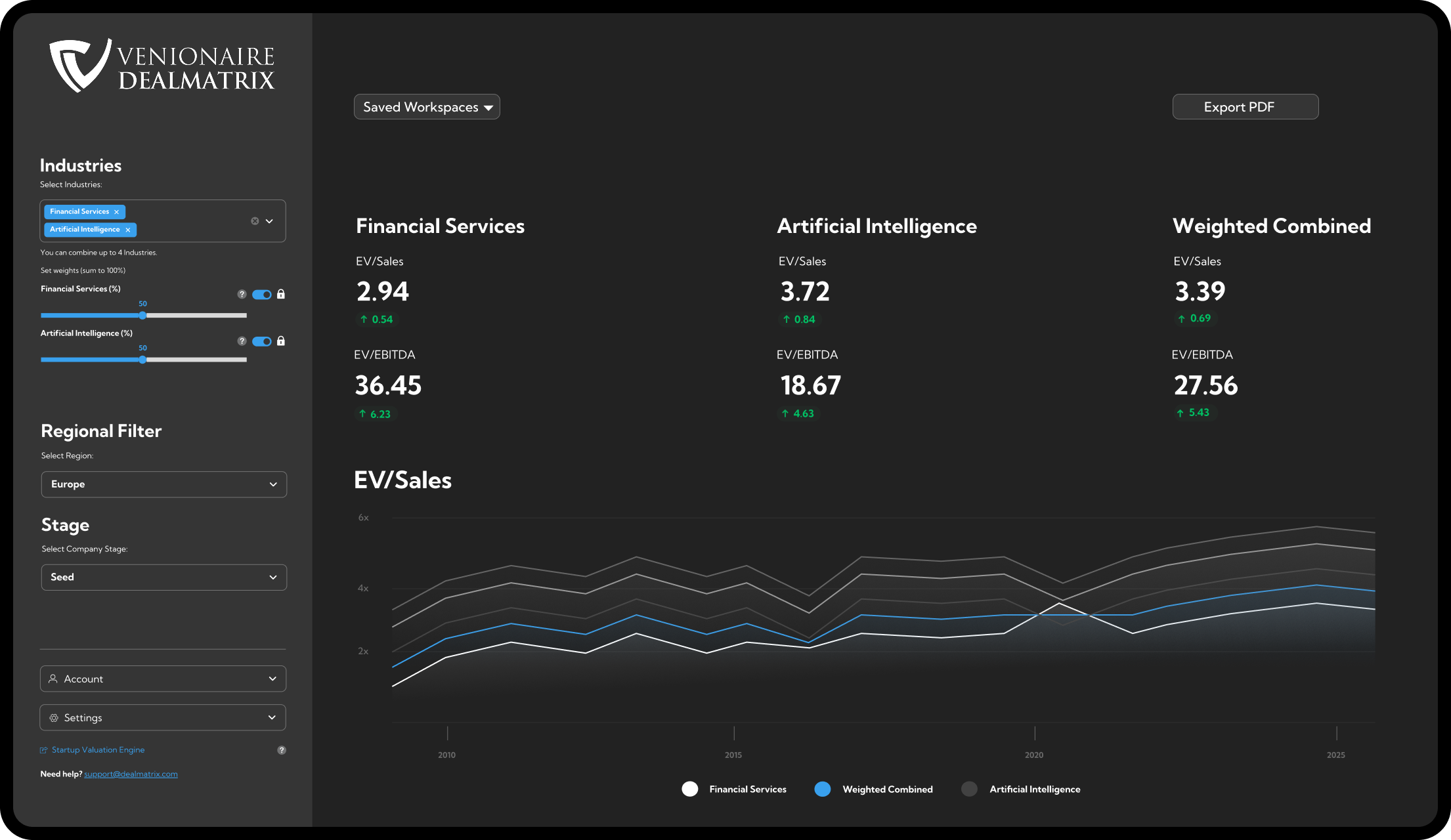
Venionaire DealMatrix, subsidiary of Venionaire Capital, has launched Venionaire DealMatrix Multiples, providing private-market EV/Sales and EV/EBITDA valuation multiples that can be explored by sector, stage, and region.

Venionaire-DealMatrix-Multiples-Mockup-2

Figure 1: Venionaire DealMatrix Multiples

The launch builds on Venionaire Capital’s long-standing activity across Venture Capital, Private Equity, and M&A, where valuation decisions are routinely made in environments characterized by limited transparency and high contextual dependency.


The challenge: valuation without a private-market framework

Across private markets, pricing decisions are still largely anchored in experience, precedent transactions, and public-market multiples. Not because these tools are ideal, but because there has been no widely available alternative designed specifically for private companies.

Private transactions are rarely disclosed, deal terms are negotiated bilaterally, and pricing varies significantly by sector, company stage, and geographic context. As a result, comparability is limited and valuation discussions often rely on narrative rather than a shared analytical foundation.


Why public-market multiples fall short

Public-market multiples became the default reference due to their availability and structure. However, they reflect a fundamentally different environment—one shaped by liquidity, scale, standardized reporting, and immediate exitability.

These characteristics rarely apply to private companies. Applying public multiples to private transactions therefore requires subjective adjustment, which introduces inconsistency when used systematically across deals.


Building a private-market methodology

Venionaire DealMatrix Multiples were developed to address this structural gap.

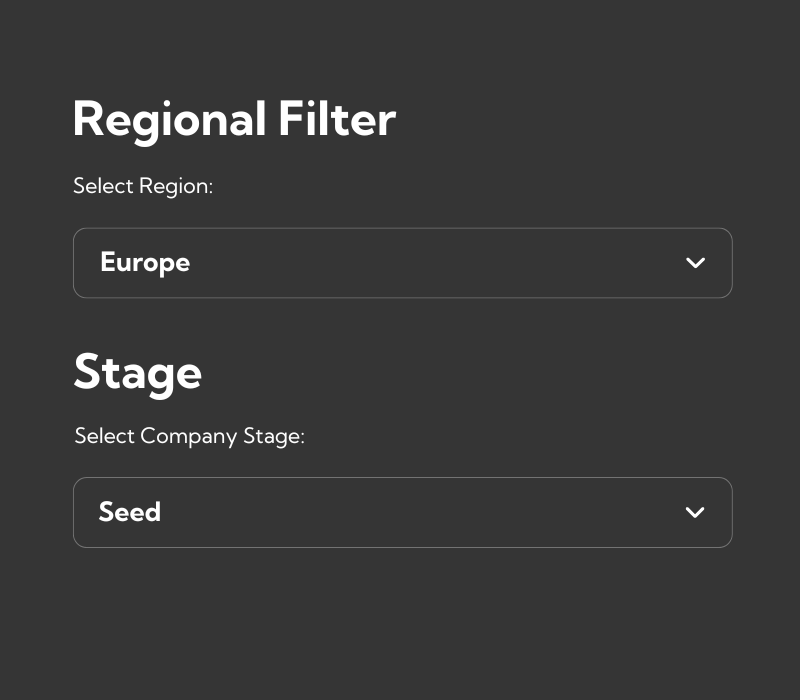
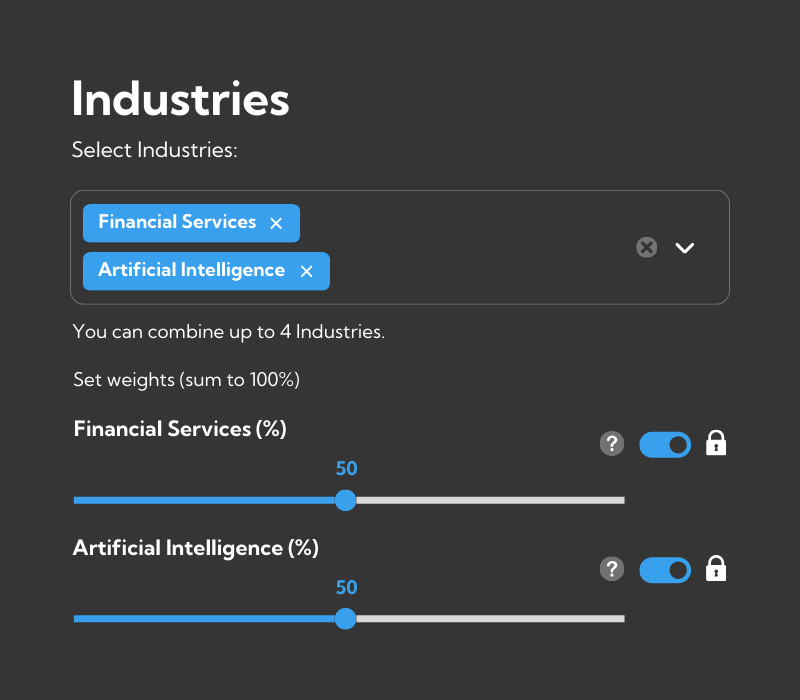
Instead of adapting public-market benchmarks, the methodology was built from the ground up around private-market characteristics. The result is a framework for calculating EV/Sales and EV/EBITDA multiples for private companies, structured by:

  • sector

  • company stage

  • geographic region

DealMatrix_Multiples_Industries

Figure 2: Industries Filter


DealMatrix_Multiples_Region_Stage

Figure 3: Regional & Stage Filter


Public-market data serves as a starting point for peer-group identification, but is systematically contextualized using macroeconomic indicators and proprietary private-market datasets accumulated through Venionaire’s work in Venture Capital, Private Equity, and M&A.


Launching Venionaire DealMatrix Multiples

Venionaire DealMatrix Multiples are now live. They are designed to support valuation discussions, deal screening, and comparative analysis by providing structure where private markets have traditionally relied on fragmented benchmarks and individual experience.

To introduce the product, the DealMatrix team has prepared a short video demonstrating how the platform works and how private-market multiples can be explored in practice.

WHERE TO FIND US

VIENNA, OFFICE (HQ)

Babenbergerstraße 9/12,
A-1010 Vienna, Austria (EU)
office@venionaire.com

SAN FRANCISCO, USA

1355 Market St. #488
San Francisco CA 94103
sfo@venionaire.com

NEW YORK CITY, USA

122 East 37th Street
First Floor
New York, NY 10016
nyc@venionaire.com

LONDON, UK

Gable House, 239 Regents Park Road
London N3 3LF
office@venionaire.com

Luxembourg, LUX

28, Boulevard F.W. Raiffeisen
2411 Luxembourg
office@venionaire.com

LOOKING FOR FUNDING?

FOR STARTUPS

Venionaire Capital exclusively invests through the European Super Angels Club, for more information and application please go to the website. We do not accept direct investment proposals via this website.