5 Fundraising Tips

We are reguarly helping startups in their fundraising as well as analyzing a lot of pitch decks. From our long experience, we would like to present you 5 key fundraising tips:


#1 Do your homework

Time is always your most valuable asset, so don’t waste it. Find out everything you can about the fund: their investment strategy and focus, current portfolio, track record, the type of investor they are. Make sure to ask questions that build on the information that is already there. Nothing is more annoying than asking the obsolete – it simply conveys you didn’t care or engage enough.


#2 Nail your pitch – know your numbers

Your story needs to be sound – what problem in the market am I solving, how am I solving it and how will I grow and survive doing it: your raison d’être. But whilst you want a sexy pitch, you also need to be able to go into the nitty gritty details to back it up: monthly revenue growth and forecasts, your customer acquisition and operating costs and of course, your margins; make sure you understand what drives your cash flow! Be prepared to answer the uncomfortable questions and make sure not to exaggerate your financial projections – due diligence will do the relationship test for you.


#3 On being likable

This seems like an obvious one but you’ll be surprised how many startups fail to get past the first meeting due to this issue. In the eyes of the investor, if I am going to spend a lot of time with you but I don’t like you as a person, it’s just not going to happen: why would I choose to spend time with you if you make me feel uneasy? You need to convince the investor that the money is well invested because YOU are worth his time and able to lead a company and sell its product: lying, boasting, refusing to listen, being unable to accept criticism, those are not the sought after characteristics to start a business relationship.


#4 Timing and amounts

There is much disagreement on this one. Some experts will tell you to raise money when you need it least because it gives you more leverage, while others say there is no need to give a piece of the cake too early. Be certain when and how much you need and how and when you want to ask for it – be clear on your funding objectives. Remember, just like in any personal relationship, it takes two to tango. The reason you strike a deal is because there is a purpose for both parties, so you should neither be too cocky nor too desperate: but know your worth!


#5 Follow-up

After the first successful contact, be sure you keep up with what you promised: Show the investor how you will, and have achieved agreed targets, it will make him more likely to trust and invest his time and effort into you. Be cooperative and confident: you need to uphold your end of the bargain, and if it is a fit, that relationship will thrive.

What we can learn from the Silicon Valley Mindset

Silicon Valley is undoubtedly the most innovative region on the planet. Many people visit the valley every year to get an understanding of what makes this region so different. Is it the air, the water, the landscape? Or are people genetically different? Not so, because the 3.5 million people include 60.000 Germans, Austrians and Swiss who live and work here.

The secret as it turns out is not the nice buildings or the great climate, but the several dozen behavioral traits that people practice. While each one in itself may seem small, taken together they give Silicon Valley the competitive edge. Because behaviors can be changed, there is no need to wait for the creative genius to be born in our country. We can all learn and practice those behaviors as well.


Mindfulness

Being mindful is the art of being aware of one’s surroundings and looking at things with fresh eyes. We do that when we are traveling, as we notice differences from our own home. An architectural style, a meal, the way waiters behave, people line up or don’t at a bus station, all these things make us aware of differences. And we realize that things can be done in ways deviating from what we are used to and think those are the only ways.

Reminding ourselves to being mindful every day in our own city or country can help us discover inconsistencies, or potentially new ways of doing things. On our way to work lets just lift our eyes from the smartphone screens and observe our surroundings. This opens us up to another creative technique, namely …


Questioning the Status Quo

For an innovator the logic ‘never change a running system’ makes no sense. While the waiting line is the process we are used to we can ask “Are there other options?” Can we reduce wait times, or get completely rid of waiting line? Why actually do we have waiting lines? Do we need so many buttons to use a smartphone? Do we need a driver in cars? What if we remove keyboards from smartphones and drivers from cars?

By questioning the Status Quo we are opening ourselves to making new discoveries and potentially improving processes and creating new ones. Doing this is not a sign of disrespect to somebody or an institution. It’s a sign of respect to humanity making their lives better. Coming up with alternatives to the Status Quo, we need …


Ideas

Ideas keep the innovation engine running. That’s why we need many of them. We need to generate many ideas, we need to talk about them and share them with others, and we need to listen. Many Austrian startup often ask me to sign an NDA before they share an idea with me. And I always reject. And it also tells me that the idea still sucks, because without sharing it, the startup has not yet gotten enough feedback to see the validity and demand for their idea.

A common misunderstanding is that ideas have value. No. Ideas are cheap. I can easily write down hundred of them. The hard part, the one that is difficult is to execute on the ideas. Turning them from an idea into reality.

That’s also a reason why we can never say what is a good idea and what not. Every idea that didn’t sound ridiculous first, was never there to change the world.  People using a machine heavier than air to fly? Riding on a cart that has a noisy and stinking steam boiler attached to it? Putting a railway underground? All those ideas sounded ridiculous and many great and highly respected ‘experts’ told the ‘fools’ why their ideas wouldn’t work. Until they did. And those ‘fools’ didn’t care about …


Reputation

If you are craving for a good reputation you choose a task or job where you are not looking like a fool. If every meeting for you is one to confirm your status, one will only try proven things. Considering the statistics this is a smart way to do your business. Most of the ideas will never fly; most will fail. But the ones that succeed can bring humanity forward.

To demonstrate that principle I address everyone coming to visit or trying to understand Silicon Valley by the first name and using an informal version. Instead of addressing somebody with ‘Sie’ (German) or ‘Vous’ (French), I right away use the informal ‘Du’ (German) and ‘Tu’ (French). This allows everyone to relax. It’s not about your reputation anymore, it’s about what ideas you have right now. Then you stop being afraid of expressing an unpolished idea out of fear to ‘look silly.’ No great idea will ever be perfectly polished. Coming up with a good idea is creating many ideas, filtering the good ideas, building on the many bad ideas, sparking new ideas by combining several.

If one is too afraid to look silly, you deprive us from getting to many ideas and finding the good ones. That’s why we need to create a…


Psychological safe environment

Hospitals need to maintain books, where every medical error is reported. Two hospitals were compared, one which had an error book with only few errors report, the other one had many errors listed. Which hospital is safer for patients? After all we talk about errors that can be fatal. Turns out that the hospital with more errors reported was much safer, had much less medical complications and fatalities than the other. The reason becomes obvious: in the hospital with few reported errors people were punished fo making mistakes. So the medical staff tried to hide errors and not report them. By not reporting the others couldn’t learn and improve the system. The result was that more people died there and more complications occurred.

The hospital with the many errors had created a ‘psychologically safe environment’ that encouraged every staff member to report errors and let the others know. Changes were suggested and followed and fewer medical complications and fatalities occurred.

Ask yourself: does your organization foster a psychologically safe environment? Do people need to be afraid that they are being punished or badmouthed behind their backs? Are you the one badmouthing them? Are you the one ridiculing them for ideas they have? Are you the one finding all reasons why something will never work, and that you knew it all along? Then you should use a method called …


Yes, and …

When somebody shares an idea with us, our first reaction may almost certainly be “What a silly idea! Will never work!“ Guess what? We are very bad with selecting the good from the bad ideas. Building a platform where people send each other messages limited to 140 characters? Bad idea, right? No, that’s Twitter. A platform where people talk to kids about what they do at their jobs? Another bad idea, right? No, that’s Whatchado.

This is certainly one of the hardest behaviors to change. Overcoming our gut feeling, our initial reaction and taking instead a step back, breathing in and out, and saying “Interesting. Can you tell me more about your idea?“ and then “Yes, and … can I do this as well with the idea?“ Suddenly, this turns into an invitation to a dialog about an idea and the potentials for it crystalize. This is where an idea turns from a pebble into a boulder and then into a gold nugget.

This is also the moment, where you want to …


Connect

You may not know much about the industry or discipline of such an idea, but giving constructive feedback is a first step. And then you may remember a friend  or acquaintance who works in that field, or can connect you to somebody else, or knows somebody who does something similar or complimentary. Connect them. A short introduction mail is done in a minute. And you never know what will happen. At minimum two people met and had a coffee together, at best they executed a great idea and serve humanity. Guess whom they will remember and help when needed?

These are some of many more behaviors that people in Silicon Valley tend to show more than people in other regions. While we have access to the very same knowledge and technologies, these traits help us to unleash our own potentials by combining them with our own strengths. The good news is: the Silicon Valley mindset can be learned. It’s up to us to pick them up and embody them.
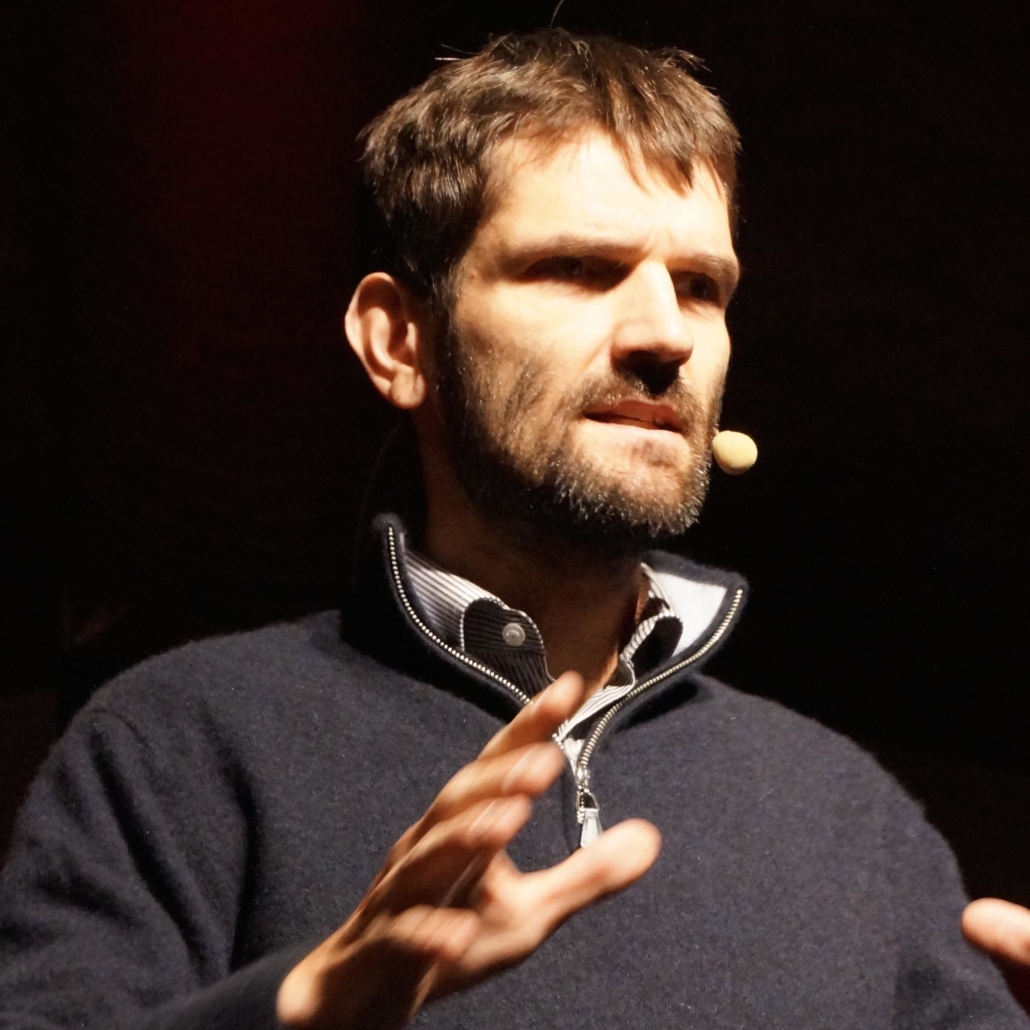


Mario Herger is a technology & trend researcher and consultant living in Silicon Valley. He writes books on technology, innovation and behavioral topics, including Silicon Valley Mindset and Gamification. His next book is about the second car revolution, titled “The last driver license holder”. He has written a number of articles for magazines and given interviews (The Guardian, LA Times, Financial Times, Der Aktionär…). Herger has 15 years of experience in the enterprise software space and worked with SAP in Germany and SAP Labs in Palo Alto as developer, development manager, and senior innovation strategist. He is founder of the boutique consultancy Enterprise Garage .

4 tips to attract better deal flow

How can you attract better deal flow as an investor? There is a clear relation between the volume and quality of deal flow a business angel or early stage VC is able to attract and its potential performance. It does not matter how many companies one has founded, how many investments one has made, or how strong investment process or sound risk management is. Even if you are one of those super lucky “hot shots” – having had one or two nice exits, true success over time does strongly depend on the quality of investment opportunities you get your hands on and there are some simple strategies to master the art of attracting the best deal flow possible for your strategy.

Being an investor is hard work. The only difference to classical asset classes – such as equity, fixed-income or fund investments – is the type of work you need to do. Attracting deal flow is the fundament of a solid portfolio and it could be compared to attracting talent by top-tier HR professionals.


Note:
Agreeing on a valuation is one of the most critical point for the investor-startup-relation. We developed a startup valuation tool to help with that.

[hubspot type=cta portal=5314519 id=bc2a7bcd-bcee-4a08-960b-b43a6cea4bfe]


#1 Communicate your Investment Scope

The worst thing, besides attracting any deal flow, is if you only receive application out-of-scope. Every application should be looked into and answered individually, as this will influence your reputation in the community, but you do not want to waste your time and concentrate on time for the right companies, right? The best way to attract a better fit of applications is to publish your investment scope and strategy, where you explain:

  • How much do you invest?
  • How many investments are you willing to make per year?
  • Investment strategy (industry, stages, regions)
  • What type of investor are you? (hands-on, co-invest (syndicator), financial investor …)
  • Investment process: hard criteria (must haves) and soft criteria (nice to haves)
  • Average response-time
  • Current portfolio & track record

Don’t forget to explain who you are and why startups should work with you. Besides the smartness of money – driven by your personal experience, skills, network and such – synergies to other portfolio companies may be highly valuable.

There are multiple ways to publish your investment scope and investors profile. One good starting point is a website of your investment company, if you have enough resources to attract significant traffic. If you are lazy writer, I would recommend occasional blog posts about your experience, latest success storys, digital trends, technologies and startups of interest and personal experiences on platforms like “Medium“, where you profit from a better reach. You may also list yourself at online platforms for deal flow like Dealmatrix, AngelList and Crunchbase. Some of these platforms are free, others offer additional services, like date, process and investment tools, additional deal flow and other management tools to make your life easier at a small cost.


#2 Play your Network

Personal connections are very important, probably even the secret to most successful investors. If you consider building a portfolio, you will always need to partner up with other investors to leverage your personal skills and to diversify you financial risk – and this is the same for all professional investors, therefore they are usually open to talk about co-investments and collaboration on deals. It is smart you surround yourself with top-investors and maintain these relations with heart.

There are many ways to engage and widen your networks. One way is to become a member and attend meetings of local angel groups. Be aware that there are a number of different ways these groups work. Some charge member fees (smaller and higher), others take a success fee at closing of promoted deals and participated in terms of carried interest and others are free in order to foster angel investments within a region.


#3 Be active within your Startup Community

Almost every day there is an opportunity to engage with the startup ecosystems. There are meetups, conferences, demo days of accelerators and incubators, launch events, speakers-nights at co-working centers and investors meetings – there are even so many that you can easily be overwhelmed by the possibilities.

We highly recommend the following events, as we believe they are among the most important ones for business angels, active in the European startup ecosystem (in alphabetic order / not ranking by importance):

Events like those above are always looking for great speakers and judges for pitch or business plan competitions and mentors. Accerlators an incubators tend to work closely as well with investors, as they technically need a great pool of advisors, mentors and early stage investors to work with startups within their programs – it is always worth approaching these organizations and apply for such an active role. Active engagement in the community will build a strong reputations for you and will make to approachable to startups and naturally turnout in better deal flow presented or forwarded to you.


#4 Active Scouting

In case you are interested in true high-tech innovations, I highly recommend to engage with technical and bio-engineering universities (depending on your investment focus) and actively scout for startups through a more specialist environment. Another very European approach is to work closely with state-driven high-tech supporting institutions such as AWS in Austria or KfW in Germany. It is common for investors in this field to approach startups at early stages and pitch them as an investor. Some startups in this field are like raw diamonds and need to be scouted!


Conclusion

If you are transparent about your interests and your offerings, enjoy working with young and hungry entrepreneurs and are willing to spend time and effort within your ecosystem, better deal flow will come to you for a fact.

If you have limited time or simply not focusing solely on startup investments you may participate as a qualified investor from becoming a limited partner (investor) of a venture fund or outsource tasks like screening and transactions to professional service providers such as we are. We are trusted deal flow partners and provide professional analyst services for early stage investors, corporates and SMEs, as well as corporate innovation contests like www.innovation2company.wien, with a very tailored and scouting driven approach to our clients.


Further Readings

A glimpse on the Iranian startup ecosystem

When we talk in Austria about innovation and startups, we almost always reference to Silicon Valley, London or Berlin. However, the startup ecoystem is gathering speed in other parts of the world as well. Take Iran as an example. The oil rich country is still struggling with economic growth, but on the plus side Iran has a highly educated and young population, hungry for success and in high demand for new products and services.


Visit to Teheran
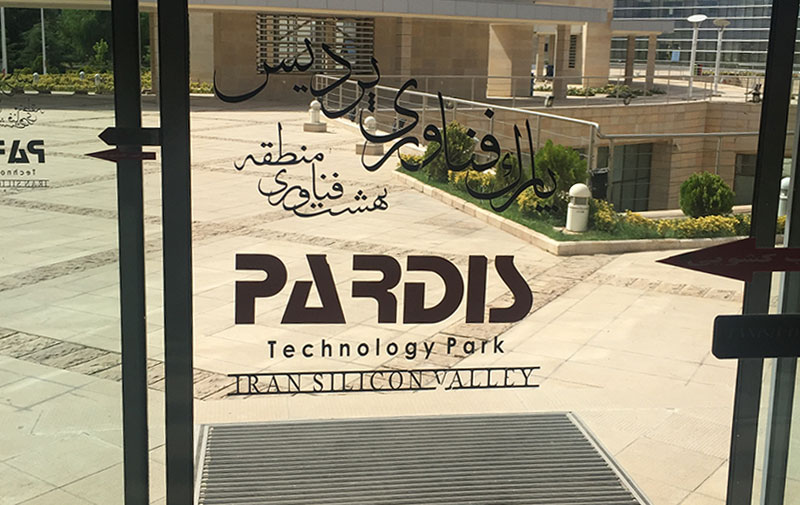
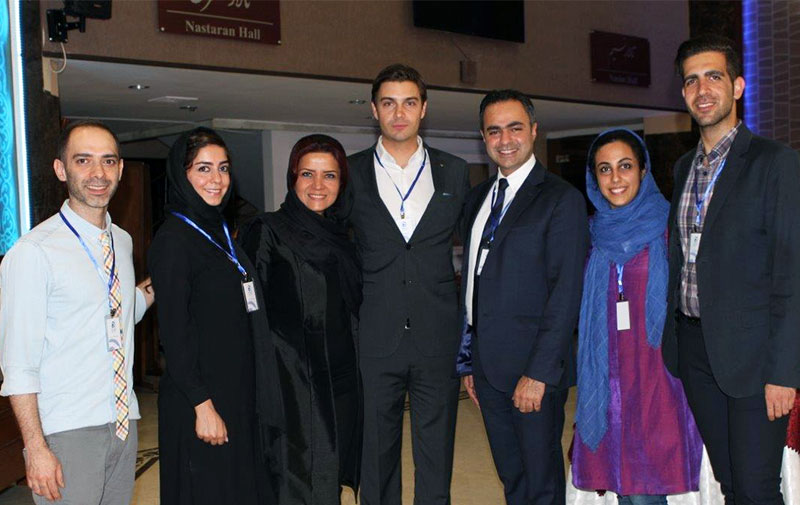
Therefore we were more than happy to accept the invitation to the 1st International Marketing Conference on knowledge-based industries in Teheran, which took place last week. The conference was held by the Iranian Marketing Research Association (IMRA) and Innovative Consultants in cooperation with the European Society for Opinion and Marketing Research (ESOMAR), the Iran Vice-Presidency for Science and Technology and the Center for Innovation and Technology Cooperation of Iran Presidency (CITC) with the aim of transferring marketing knowledge to knowledge-based companies and promoting the necessity of market research. Our partners Alexander Rapatz and Sasan Hashemi attended the conference, with Alexander holding a keynote about venture capital investments as a go-to-market approach. On the following panel discussion he was joined by Sasan, Farhad Rasouli from the Danish platform Venture Cup and Dr. Amir Albadvi, Faculty member at the Tarbiat Modares University. The conference was co-hosted by Pirooz Malekzadeh, CEO of Innovate Consultants and Board Member of Iran Marketing Research Association, who also organized and supported Venionaire in attending side-events, such as visits to the PARDIS Technology Park and the FINEX 2016  – Iran Exhibition of Bank, Exchange & Insurance.

pardis


Big market with high potential
Iran may not be the first destination investors would think of when it comes to startups, but its track record is huge. Iran is one of the world’s biggest emerging markets and the startup and venture capital ecosystem is growing fast. 120-130 Million people are talking Farsi, with borders to huge and untapped countries in the Middle East and Asia. Therefore it is definitely worthwhile to keep an eye on this region.

teheran-marketing-conference


Pictures provided by Innovate Consultants / Alexander Rapatz


How Startups profit from the Business Angel Summit

There are thousands of startup events, but often founders as same as investors are disappointed by the outcome. The problem is, if you actually want things to get moving you need time and the right setting. The Business Angel Summit in Kitzbühel – organized by the Austrian Wirtschaftsservice as well as Standortagentur Tirol and co-initiated by Venionaire – offers precisely this opportunity.


Dealmatrix convinces Business Angels
This year even contracts were signed at the Summit! Dealmatrix CEO Christoph Drescher (picture: second from left) was able to close a deal with AAIA (Austrian Angels Investors Association) “Super Angel 2015” Markus Ertler (founder of immobilien.net) and today fintech expert Michael Müller (founder paysafecard and CEO of mPAY24) joined the cause. Both Business Angels will support Dealmatrix with cash, know-how and their network. Among the earlier investors are Venionaire Capital and Kalbeck Media. All together Dealmatrix has raised almost 300.000 Euros since the foundation in November 2015.

So what do they do? The startup has developed a unified solution for the venture industry. Their first product is Pitchscoring, a mobile app for evaluating startups during an event and delivering results in real time. The app was already used at several big conferences around Europe. In Kitzbühel the app was in action to select the best startups for the Pitching Days in New York.


Personal talks with Investors
Besides the pitching events, the Summit offered founders great opportunities for one-to-one talks with investors such as Heinrich Prokop (Clever Clover), Peter Koch (Martin Global), Charlie O’Donnell (Brooklyn Bridge Ventures), Luigi Amati (Meta Group), Harald Oberrauch (Tyrolean Business Angel) or Baruch Gindin (Club 100 Plus). The Startup Yodel was even able to win Philippe Gluntz, former CEO of Alcatel and President of Business Angel Europe (BAE), as advisor and promoter!


If you are an investor or founder we highly recommend you to save the date for the Summit next year! You can apply for participations at www.businessangelsummit.at. For more pictures check out the Business Angel Institute Facebook Page and see who attended the welcome evening, sponsored by Venionaire.

Challenge your Startup and get connected with Corporates

(from left: Dalia Preziosa (Österreichische Post AG), Gregor Bierent (New Frontier Group), Hannes Cizek (RZB), Walter Ruck (President of the Vienna Chamber of Commerce), Gerhard Gamperl (Verbund), Maximilian Schausberger (A1), Sabine Toplak (Accor Hotels), Christiane Noll (Microsoft Österreich) and Robert Heinze (Connect Care – Winner of the Microsoft Challenge Season 1 © Florian Wieser / WKW)

Where do think Europe’s biggest Corporate Innovation Challenge is taking place? London? Berlin? Or maybe in Paris? Nope, we are sorry, but this time Vienna is up on top and taking a huge step towards stronger Corporate Startup Engagement (CSE).

Last Friday, season 2 of the “Innovation to Company”-Challenge kicked off, aiming to merge the innovation strength of startups, with international networks, strong market positions and the financial power of large corporations. Working with startups is very beneficial for corporates, far beyond generating a fast and promising innovation flow. We are proud to plan an important role in this initiative, launched by the Vienna Chamber of Commerce, as we are going to scout and analyse the best startups for all seven challenges. Together with excellent mentors, we will actively consult the corporates and startups in order to bring those together who have the best synergies and have the potential to bring the most value for both sides.

We are happy to accept your applications for the competitive challenges of Austrian Telecom (A1), Accor Hotels (Austria), Microsoft (Austria), New Frontier Group, Raiffeisen Zentralbank Österreich AG (RZB Group), Österreichische Post AG and Verbund AG.

How does Innovation to Company work?

If you’re interested in participating, please go to www.innovation2company.wien. You will find detailed descriptions of tasks and rewards offered for the winner of each challenge. If you decide to apply, your data will be processed by our analysts using the professional software solution of dealmatrix.io.

Our team will analyse each and every application carefully and will contact the most promising applicants to learn more and dive even deeper into your business cases. Each challenge will bring out three finalists. Those who make the cut and are invited to meet the corporates will get a chance to pitch and negotiate a potential collaboration, an investment or similar rewards (see challenge description for details).

During the whole process experienced coaches such as Martin Giesswein (Digital City Vienna), Berthold Baurek-Karlic (Managing Partner, Venionaire Capital) and Lorenz Edtmayer (Tailored Media and derbrutkasten.com) guide and support the process between all corporates and startups. All finalists will receive individual pitch training and mentoring sessions in order to land a perfect pitch. Finally, the corporates pick the winners, which will receive their prizes on November at the Mercur Innovation Awards.

“This is a great chance for European startups especially the finalists and winners, as they will have the chance to access global markets, through extremely strong strategic partners and their well established corporate and partnership networks worldwide”, explains Berthold Baurek-Karlic.

Don’t miss this opportunity!
www.innovation2company.wien

Differences of an IPO in Germany, Europe and USA

Last week, Venionaire Partner Martin Steininger (on the left) and Alexander Rapatz (at the center) participated at the 3rd IPO conference in Munich, which was hostet by FCF Fox Corporate Finance. The conference addressed corporate executives and their shareholders, as well as investors from the venture capital and private equity industry.

This year’s presenters included several investment banks, such as Deutsche Bank, Oddo Seydler Bank, KBC Securities NV and Stifel Nicolaus & Company, which provided deep practical insights on listing implications from a technical and strategic perspective. Furthermore the stock exchanges NYSE, NASDAQ, Deutsche Börse AG and Euronext explained their individual listing requirements, specific benefits and advantages. Legal and regulatory topics were illustrated by the international law firms Hogan Lovells, Latham & Watkins and Paul Hastings.

In addition, FCF published its annual market study „IPO valuation – comparison in the US and EU“, which analyses the different valuation regimes in the US and Europe, based on historic IPO activities. Key findings were in particular, that the US IPO market generally offers higher IPO valuations than the UK, Europe and German markets. The US market shows in particular strength in small and mid cap IPOs, while European exchanges have rather micro caps (smaller than EUR 30m offerings). The valuation and performance gap is particularly large in growth industries, such as consumer discretionary, consumer staples, healthcare, information technology and industrials, making the US the premier listing location for these sectors. However, going and being public in the US is generally – with respect to underwriting fees, legal costs, etc. –  more expensive than in Europe.

The IPO Conference gave us the opportunity to strengthen our ties with key players in the German financial market. If you want to know more about how to tell a great equity story and convince investors from your company, please contact us now.

purchased.at: An easy solution for selling digital goods

On Monday, purchased.at launched its new online payment platform at the tech fair Money 20/20 Europe. The idea is to enable easy and cost efficient integration of professional payment methods for online shops specialized on digital goods.


purchased.at currently enables access to 200+ online and mobile payment methods and is constantly expanding its portfolio. This includes popular payment methods such as eps, Mastercard, Visa or paysafecard. Starting immediately, companies of all sizes can use purchased.at to market digital products and services worldwide and gain access to new markets. A simple technical integration (API) makes this possible within just a few hours. Online shop operators need only choose which payment methods and currencies they wish to offer. The platform then takes care of time- and cost-intensive issues such as country-specific taxation rates (e.g.: EU tax regulations) or payment support. The multilingual support team answers all customer queries seven days a week. An optimized user experience and user-friendly checkout process further encourages a high conversion rate.

The platform removes the usual hurdles and obstacles global payment processing involves. With the push of a button, additional statistics, reports and business-relevant figures can be recalled. Moreover, payment processes are protected by an ingenious “fraud prevention system” that interdicts payment fraud. Usage is free of advertising and waives any and all setup or monthly fees. For the duration of their service use, online shop providers are merely charged a small platform fee and reasonable rates of the chosen payment methods.

Strong partners in the background. The payment platform was jointly founded by the Austrian IT service provider IXOLIT and the American payment company Skol LLC. Wishing to rapidly expand internationally with purchased.at, growth is driven by an experienced developer team and a six-figure seed investment.


Venionaire is proud to support this startup in matters of PR.

Find out more on www.purchased.at.


Western und Eastern VCs gathering in Vienna

„Banks and insurance companies will die a death of thousand cuts”, said Martin Hauge in his keynote at the first Up Venture Conference in Vienna.  The Creandum board member and new partner at Fluent Digital Capital (Fund of Fund under establishment) was referring to the raise of fintech companies and how they are changing the financial industries.

Serial Entrepreneur and Venture Capitalist Martin Hauge

Game changing ventures and how to finance them was naturally a dominant topic at the first Up Venture Conference in Vienna last Friday. Aim of the conference is to connect LPs and GPs from the Western and Eastern VC Ecosystem, and the organiser surely succeeded. Venture Experts such as Nikolas Samios (General Partner at German Startups Group), Peter Schwanitz (Portfolio Advisors), Speedinvest CEO Oliver Holle, Michael Gastauer (Founder & President Gastauer Family Office) and many more attended the event. The team of DealMatrix, led by Christoph Drescher, had some highly interesting conversations while introducing their SaaS solution for venture capital, startup events and investors.

alex-rapatz_christoph-drescher

From left: Venionaire Capital Partner Alexander Rapatz and DealMatrix CEO Christoph Drescher.

The Conference was organized by Rubixlab, a Slovakian accelerator and incubator and they already announced to repeat the event next year. There is good news for Austrian Startups as well: Rubixlab is thinking about opening a new office in Austria – a warm welcome from our side!

GSA Region outperforms rest of Europe in terms of average VC deal size

In 2015, the GSA region (Germany, Austria and Switzerland) was responsible for €3.6 billion of Venture Capital invested through 374 deals. This yields not only the largest average deal size, but also Europe’s second largest share in terms of total Venture Capital investment. Only UK & Ireland outperform the GSA region with a total VC funding of €4.47 billion in 2014.

Overall, Europe saw a decline of Venture Capital activity in many areas when compared to 2014. Broken down by stage, the total number of deals in the GSA region decreased from 2014 by 36.1% in the angel/seed stage, by 17% in early stage and by 14.3% in late stage investments, which amounts to an average decrease of 22.5%. In UK & Ireland, where 855 VC deals were closed in 2015, the number of deals decreased by 39.7% compared to 2014.

But in the same time, the capital invested in the GSA region increased by 13% and even by 125% compared to the year 2011. Consequently, the deal sizes in investment rounds raised. Overall, the invested capital in the GSA region had an average annual growth of 25% in the last 5 years, while the average growth in UK & Ireland was 23%, in the Nordic region 20% and in France & Benelux 19%.

In a global perspective, the GSA region is responsible for 3.1% of total Venture Capital invested and 3% of total global Venture Capital deals closed. We are confident that this figure will even grow further as the GSA region offers great investing opportunities. Therefore, Venionaire Investment is focusing on this market region. Learn more about our aim of a new Venture Capital fund here.

Get the detailed report on pitchbook.com.

WHERE TO FIND US

VIENNA, OFFICE (HQ)

Babenbergerstraße 9/12,
A-1010 Vienna, Austria (EU)
office@venionaire.com

SAN FRANCISCO, USA

1355 Market St. #488
San Francisco CA 94103
sfo@venionaire.com

NEW YORK CITY, USA

122 East 37th Street
First Floor
New York, NY 10016
nyc@venionaire.com

LONDON, UK

Gable House, 239 Regents Park Road
London N3 3LF
office@venionaire.com

MUNSBACH, LUX

3 rue Gabriel Lippmann
5365 Munsbach
office@venionaire.com

LOOKING FOR FUNDING?

FOR STARTUPS

Venionaire Capital exclusively invests through the European Super Angels Club, for more information and application please go to the website. We do not accept direct investment proposals via this website.