“Better be on time!” – How timing owns startup success

Despite the vast amount of venture capital funding that startup companies receive every year (US$48 billion in 2014), many of them fail to succeed over the long term. Apparently, access to financial means is not the only important factor for success. Other essentials can easily be identified when trying to assess the success or failure of startups. Beginning with the underlying business idea, via the team, through to the business model and last but not least, what experts, entrepreneurs and managers tend to underestimate on regular basis: the timing!

Almost all multi-billion dollar tech-companies that have emerged in the last decade had one thing in common. Apart from incredibly well-working teams, enough funding and sometimes perfectly working business models, timing was even more crucial for their success.

But what does the term “timing” refer to? Lets have a glance at the past.


YouTube and the release of Adobe Flash

Until 2003 it was very difficult to view digital content online when using web browsers. Only two years later this problem was solved by Adobe Flash. Additionally, the internet speed had increased in recent years, so the timing was just perfect for YouTube. YouTube was not the first video portal, yet it is arguably the most successful one. Companies like shareyourworld.com tried the same thing earlier in 1997, but went belly up in 2001 due to inefficient cost structure (and probably due to bad timing?). One can see that the perfectly timed moment is even more important than a great idea.

Sometimes startups don’t necessarily have to cover all of the factors mentioned in the section above. In the case of YouTube, there did not even exist a working business model at first but was added later when the platform gained enough traction to implement a business model.


Airbnb and the economic recession

Airbnb, a website for private rent lodging, emerged during the economic recession when people were in need of extra money. Prior to Airbnb´s launch, experts predicted that individuals and households would never rent their private space to strangers. That was probably true under ordinary circumstances, but in times of economic downturn, their need for additional income prevailed over the inconvenience of renting out space to people they don’t know.


Uber and the rise of mobile devices

Uber´s success tells a similar story. While traditional taxi-companies struggled with increasing organizational and legal requirements and their inflexible structure, Uber came up with an organizational model which can quickly adapt supply to demand by providing individuals with the possibility to join their driver pool. Relying on the latest technological improvements in the field of smartphone usability in a time of enormous increase in smartphone sales and increasing acceptance of online services and payment solutions, Uber executed (and they did it against all odds) their idea at an optimal moment. Alongside great execution and an incredible business model, timing was their strongest asset to reach the status they now feed on.


Facebook and the fast spread of the internet

Both Facebook´s idea and execution were great but the main factor contributing to Facebook´s billion dollar business was – again –its timing. A fast spread of internet access and an exponentially increasing number of internet users created a suitable environment for social media platforms. While other companies like MySpace.com (launched in 2003) or SixDegrees.com (first social network ever to combine todays functions of a social network; 1997) did the groundwork for a general change of attitude concerning sharing of information and privacy online, Facebook was able to harvest the fruits of success.

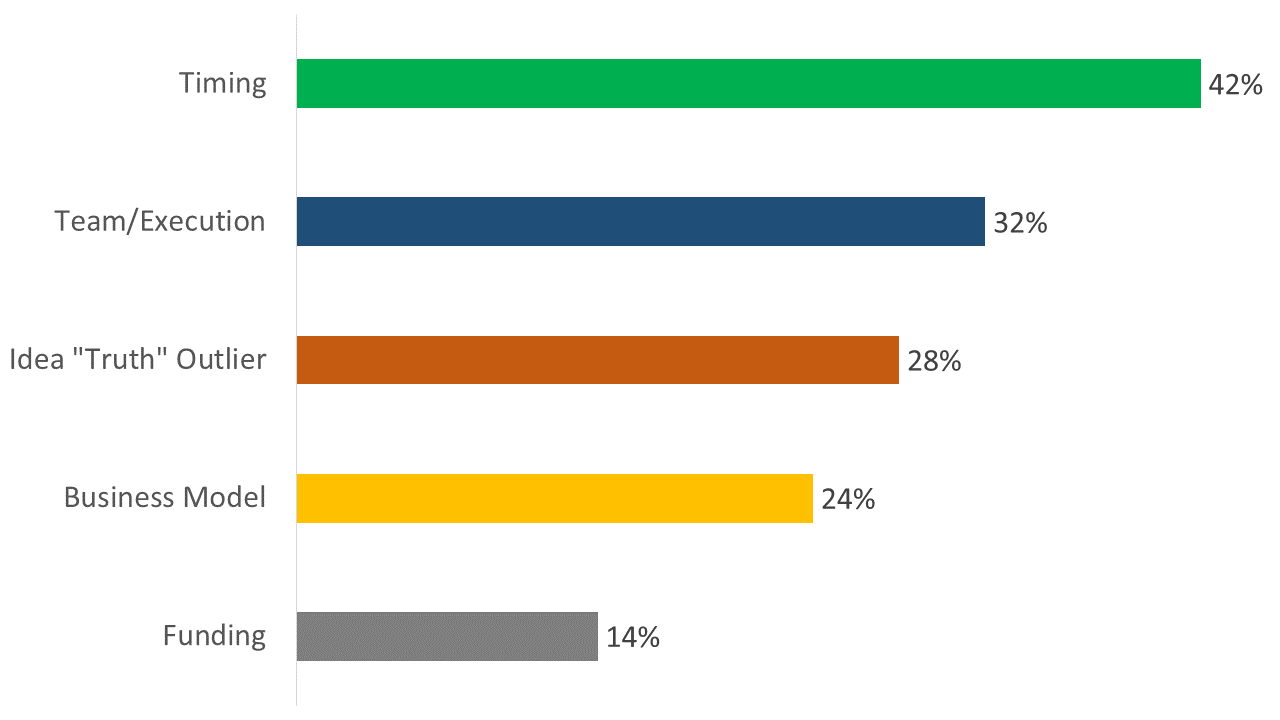
At this years Ted Talks in Vancouver, Bill Gross, founder of Idealab, showed that Timing is by far the most important success factor coming in first before „idea“ and „team/execution“. Timing accounts for 42% of success of startup companies.

Timing Graph

Thus given, one ends up wondering how to estimate the right timing for a startup. Especially nowadays where industries and business models get disrupted on a higher frequency than ever before.

Why the VW Scandal is a Game Changer for E-Mobility

Climate change is one the most pressing issues of the 21st century, and with transportation being one of the largest contributors, it has been a major focus of the European Commission over the past decade. While the e-mobility sector has proven itself as possessing the technology to truly revolutionize transportation into a clean industry, Europe’s focus on incentivising diesel vehicles as the encouraged solution has hindered growth. The recent VW scandal, in which 11 million diesel vehicles were exposed as producing 40 times the amount of harmful Nitrous Oxide in an open road setting than in a testing scenario, has come as a shock to the industry -but is looking like the necessary catalyst to take e-mobility to the next level.


With insights gathered through Venionaire’s recent comprehensive research on e-mobility, this discussion will take a deeper look into the impacts of the recent VW scandal. 


The Conversation of Sustainable Mobility in the EU

Transportation, over the past century, has contributed to the development of society more than almost any other invention – the ability to trade and transport goods defined the 20th century. However, despite the huge economic success the industry has offered, it has also been one of the largest contributors to global pollution. Mobility alone is currently responsible for a quarter of total greenhouse gases in Europe and as a result, the transition to a more sustainable transportation sector has become a major focus of the European Commission over the past decade. Although historically transportation and sustainability were thought of as two contrasting principles, advances in technology have proven that there are viable solutions to significantly decreasing the environmental impact of mobility. Regulatory bodies throughout the EU have begun to put increasing pressure on car manufacturers to adopt better practices by introducing average fleet targets across Europe. It is clear that over the long-term mobility as a whole is going to face extreme transformation in order to meet the gradual introduction of stringent regulations posed by governments. In addition, shifting demands of increasingly environmentally conscious consumers will further push this change.


However, the current conditions are challenging for car manufacturers who face contrasting challenges: meeting the gradual introduction of these new targets set in place by European regulatory bodies, while trying to overachieve these as little as possible to avoid the significant capital required to introduce new technologies. After all, adopting new technologies is expensive – very expensive. While some outliers such as Tesla and BMW have invested significantly in the development of Electronic Vehicles – a technology truly capable of revolutionising the mobility industry – most car manufacturers have focused on downsizing ICE’s (Internal Combustion Engines) and introducing supposedly ‘clean’ diesel driven passenger vehicles. While majority of car manufacturers see the introduction of Electronic Vehicles as part of their long-term strategies, the main focus over the short-to-medium term remains to be fossil fuel based, as the margins involved in the sale of EVs are significantly lower at this stage. This is attributed to the fact that the additional USP for Electronic Vehicles is relatively lower than the additional cost of producing them, and thus manufacturers are only able to pass on a portion of that additional cost to the consumer.


Before electronic vehicles are realised as the mainstream solution to sustainable transportation, there are some barriers that need to be overcome by both manufacturers and service providers. Firstly, the technology in this sector needs to improve in quality and decrease in price. In the current market, electronic vehicles still underperform in both range and convenience, and considering the price premium, only a niche market are both willing and able to opt for one over conventional vehicles in the current market. Furthermore, the infrastructure is still lacking in this sector. While the provision of charging stations are growing throughout both the United States and Europe, we still need to see considerable expansion before the convenience factor of electronic vehicles is able to compete with that of refuelling traditional vehicles. While experts predict that these hurdles will be able to be overcome – an injection of brainpower, resources and capital is what e-mobility needs to make the leap.


How the VW scandal could act as the catalyst to take e-mobility mainstream

The current emissions-fixing scandal surrounding Volkswagen, the world largest car manufacturer, has fundamentally altered the conversation about the future of sustainable mobility. Last month, the German car manufacturer admitted to cheating in diesel emissions tests by installing software to detect when the engines were undergoing testing and respond altering output of nitrous dioxide (NOx). Volkswagen has acknowledged that the software is likely installed in over 11 million cars, most of which are in Europe. While Volkswagen is undoubtedly guilty, new evidence suggests that they may not be the only offenders and that other car manufactures may also be installing software tricks to deceive emission tests. Following the scandal, the EPA is now committed to determining the extent to which this is an industry-wide problem. Shortly after the information on VW was revealed, the EPA confirmed that a BMW diesel car also yielded significantly different results. Peter Mock, ICCT Europe’s managing director further supported this argument, confirming “all measured data suggests that this is not a VW-specific issue”. With uncertainty at an all-time high, and consumers loosing trust in car manufactures we can expect to see a trend towards consumers demanding more transparency. One Startup gaining attention is The Stigg, which allows users to track the real time emissions data of their vehicles, and compares it to the desired values of the car model.


Until recently, diesel vehicles have been pushed by both European car manufacturers as well as government bodies as a supposedly more sustainable alternative to their gasoline counterpart, in addressing both climate change, reduction of CO2 emissions and fuel efficiency. ‘Clean’ diesel vehicles were widely seen by the car manufacturing industry as the solution to meeting pending fleet emissions, and have been a popular choice for European consumers. In contrast to other parts of the world, where the sale of diesel passenger cars are very low, diesel sales currently account for 50% of the European car market.


This focus by regulators has resulted in the adaption electric vehicles being slow in the European region.  However, Tesla CEO Elon Musk expressed that the scandal proves the boundaries of fossil fuel vehicles. „We’ve reached our limit of what’s possible with diesel and gasoline. And so, the time, I think, has come to move to a new generation of technology”. The ‘new generation’ of technology being referred to are Electric Vehicles, and industry experts predict that the downfall of diesel passenger vehicles will bring much needed attention to the e-mobility sector – and they are not wrong. In fact, even Volkswagen is planning to capitalize the opportunity their own diesel scandal has presented. In a recent statement they have indicated they will shift focus to developing electric cars in response to the crises.


So what’s next for e-mobility­?

It is without a doubt that this recent event presents great opportunity for the e-mobility sector. The Volkswagen scandal gives further invitation for innovation to disrupt the automobile industry. As in any industry, the timing of business is one of the most influential factors determining success, and the timing couldn’t be better for those eager to disrupt the market the necessary incentive to step up. While the e-mobility sector has proved itself as having the ability to redefine the transportation industry, the market is still extremely fragmented in terms of both services and stakeholders. We at Venionaire have published an comprehensive research about the dynamics, opportunities and challenges of the e-mobility sector.

For more information, check out our Venionaire Research website.

Digital Revolution, Growth and Regulatory Frameworks – A review of the Economic Symposium at Forum Alpbach 2015

This week, Berthold Baurek-Karlic, Alexander Rapatz and our Junior Analyst Lukas Arzberger attended the European Forum Alpach and took part in the Economic Symposium. One of this year’s hottest topics was the digital revolution.

The topics of merging industries, creating new business models and promoting a closer collaboration between startups and big corporates were intensively discussed at a side event with Wolfgang Anzengruber (CEO, Verbund AG), State Secretary Harald Mahrer and Richard Grasl (ORF Commercial Director). With the ever growing speed of innovation cycles, even the biggest corporations are facing competition from young companies that traditionally would never have been in the position to compete. One strategy for corporates is to work closer with startups and therefore enable access to innovation.  This approach has already been proven to work across many industries, as Mr. Mahrer pointed out.


Venture Capital in Austria

Afterwards, with an insipring backdrop of picturesque mountain scenery, Wilhelm Molterer (Vice President and member of the Management Committee of the European Investment Bank), Christoph Leitl (Chairman of the Austrian Chamber of Commerce) and our CEO Berthold Baurek-Karlic discussed the current market environment for establishing venture capital funds in Austria. One big step forward would be, if trusts were given the necessary permission to invest in venture capital. Another one, if banks would be capable to offset their venture capital investments from the Austrian Bank Levy (“Bankenabgabe”), which would effectively compensate them for the burdening capital adequacy obligations for such investments.

The last one is critical for Europes’s economy, as Basel III and Solvency II have already raised barriers for banks and insurance companies to invest within this asset class. This caused an unintended side effect. In fact, both regulatory frameworks intended to stabilize the economy after the latest crisis. However, as a result early stage financing was also strongly challenged through these regulatory frameworks. Venture Capital is urgently needed in Europe as it drives growth, builds jobs and secures the competitiveness of local markets.


We hope the current attention for this topic, discussed by Top Level Executives and Politicians from all over Europe, will boost positive developments to ease this challenging market environment.


Photo by Zátonyi Sándor (ifj.) Fizped (Own work) [GFDL or CC BY 3.0], via Wikimedia Commons


Failure permitted! – A call for more courage and endurance!

If Howard Schultz had given up after having been turned down more than two hundred times by banks, there would be no Starbucks today. If J.K. Rowling had given up her writing ambitions after several publishers told her they did not like her ideas for a fantasy novel, we would never have heard about Harry Potter. If the young Thomas Alva Edison had stopped after one of his failed attempts to create a working light bulb model, I wonder what our world would look like today. Instead of giving up, he just gave it another try and after his final success, he turned to the numerous sceptics and said: “I have not failed. I’ve just found 10,000 ways that won’t work.”


Making mistakes is our generation’s privilege

Working in a fast, globalized and disruptive business environment, while at the same time in a secure social society, is the best thing our generation can ask for! Today, hundreds of people are leaving their “safe” career paths as employees, creating their own businesses and following their ambitious goals of success and wealth. Therefore, it would be foolish to believe that your business idea is the only thing you need on your way to fame and fortune. Because of the many well-educated and trained competitors, it takes hard daily work, endurance and consistency more than ever. You need trustworthy suppliers, partners and employees as well as business angels, experts in venture capital and financial advisors. What it takes is an open mind towards new forms of business organization like co-working and co-creation and many more personal and professional skills. Most notably though, it takes courage to get up again after your business has crashed down. If you don’t get up and attempt to get your business, your team and yourself back on track, you will neither find success nor personal fulfilment.


Failures are permitted, Quitting is not

One lesson I have learned from my own company’s history is that there are a lot of institutions, NGOs, investors and experienced individuals who are willing to help you with your business idea. Professional experts along with the right mindset and skills can give every entrepreneur a powerful head start. This is the reason why I try to offer young business owners my helping hand, before and after their successful take-off, calling on them for more courage and endurance in their business careers.

“Failure permitted” (or ‘Scheitern erlaubt’ in German), is the overarching theme of this years ‘Jungunternehmertag’ (Austria’s biggest fair for business creation, young entrepreneurship and start-ups) which is taking place on October 13th at Messe Wien. It is the perfect opportunity for young business owners, start-ups, students and people who are considering starting their own company to learn more about successful business creations and the opportunities of failure from our special guest speakers who will be talking about their own respective defeats. We are looking forward to getting to know you, and learning about your business ideas!

One thing’s for sure: If you give up too soon or if you don’t get up again after a setback, you will never know what you will be missing. Keep going and don’t ever quit! Go to www.jungunternehmertag.com.


Juergen_Tarbauer_JWW_c_Junge_Wirtschaft_Wien


Jürgen Tarbauer is Founder and CEO of the marketing and advertising agency OMNES and Chairman of the Junior Chamber Vienna (Junge Wirtschaft Wien, JWW), an association of young entrepreneurs and leaders between the age of 18 to 40 years. JWW provides several business services and lobbying for better regulations for enterprises as well as national and international networking opportunities for its 3.500 members.

Picture: © Junge Wirtschaft Wien.


Corporate Venture – A Survival Strategy for Dinosaurs and Unicorns

The digital era has already managed to sweep away some of the long-established market players, giving birth to new powerful and global acting ventures: From Uber to Tesla via Airbnb – the digital age distinguishes itself by it’s unique potential for scalability. A lesson the media industry learned the hard way. To quote one example: While the over 160 years old newspaper New York Times has a current valuation of about $2 Billion, the nine years old microblogging service Twitter enjoys the fifteenfold of it (about $30 Billion). And other industries are bound to follow. Astonishingly, Innosight estimates that more than two out of three S&P 500 companies will be replaced in the next 12 years. Moreover, the average lifespan of a company listed in the S&P 500 index has already declined by more than 50 years during the last century. So, how do such companies go from most performant or largest in their sector to shutting down completely? Why does it seem to be so difficult for them to implement new business models and foster innovation? The answer lies within the traditional big corporations themselves.


Note:
Agreeing on a valuation is one of the most critical point for a good corporate startup relation. We developed a startup valuation tool to help with that.

[hubspot type=cta portal=5314519 id=bc2a7bcd-bcee-4a08-960b-b43a6cea4bfe]


Shift from innovation to sales

As related by Walter Isaacson, Author of Steve Jobs biography, Apple’s late CEO explained the decline of large corporations as a logic suite of phases which every company is inclined to go through. At first, the company enjoys growth and financial success in a certain field, where some of its products become profitable cash cows. Throughout the years, the power progressively shifts from a product and design centered culture towards a sales driven focus. This inevitably leads to slowly switch off product and design innovation, as their teams feel no longer at the epicenter of the company. Rather than trying to create or add new value, milking the cash cow takes all of the management’s attention.

One day however, markets will change drastically, depriving companies from their main stream of revenue and sentencing them to inevitably fade away until eventually shutting down completely. That day will probably even come sooner than expected, as explained by our Managing Partner Martin Steininger in a previous article on technological innovation. Remember: it took about 2000 years before the Bronze Age was fully replaced by the Iron Age, but not even three hundred years for humanity to transit between the Industrial to the Digital Age!


Corporate Venturing as a corporate survival strategy

In order to prevent such catastrophic scenario to occur, companies have to plan and anticipate early on.  This topic is discussed in details by Richard Foster and Sarah Kaplan in their Business Manual “Creative Destruction”. The authors explain why companies, initially built to last, usually underperform the market. In order to survive, corporates must undertake a transformation process, which holds on three management essentials:

  1. Operations must be run effectively
  2. Businesses that do not meet the firms needs for growth and return should be cut off
  3. Concentrate on creating new businesses which meet customers’ needs

The third point is where Corporate Venturing kicks in. In complement to in-house technology R&D, companies more frequently invest or cooperate with innovative startups in their respective field. In fact, Corporate Venture capital allows companies to gain in flexibility on a small scale, leading to faster innovation, and therefore give big structures a chance to keep up with the market’s paste. Going one step further, some may argue that corporations can even use their venture arms to influence their industry’s ecosystem itself, by identifying new markets and building up their existing businesses.

Far away from a random alternative investment approach, investing in startups is therefore nothing other than a survival strategy for several coporations, in order to face the fast changing market pace. Take the energy sector for example: confronted to several completely disruptive market dynamics, utilities are now forced to rethink their business models from scratch. While this process can’t be undertaken easily, many turn to Corporate Venture, in particular Corporate Accelerators, as one of their main strategies to create products and models which fit their customers’ needs.

Corporate Venture Investments seem to have bright years in front of them. According to CB Insight, Corporate VCs participated in almost $8B of US-based financings in the first half of 2015, maintaining their investment level into VC-backed companies, taking just under a quarter of total deals for the past four quarters.


cvcoverall


Corporate Venture Programs boost Startups

The classical form of startup investment, Venture Capital, can be described as the capital invested in a project which holds a substantial element of risk in exchange of a portion of equity. This definition perfectly applies to both Corporate and Private Venture. Nevertheless, a significant difference must be drawn regarding the respective objectives of these two forms of funding. While return on investment remains the main objective for both forms of funds, as related in the The Oxford Handbook of Venture Capital by Douglas Cumming, Corporate Venture follows a much more diverse set of objectives than a purely financial exercise.

Corporate Venture is an efficient way for companies to explore potential acquisition targets. Based on Crunchbased data, Rami Rahal, Co-Founder and General Partner of Blue Cloud Ventures, calculated in an article that about one out of three corporate venture-backed startups has been acquired, in comparison to only 10 percent which had managed to raise funding from private venture capital.

Overall, it seems Corporate Venture is not a one-way relationship, but instead a bilateral strategy, both for Dinosaurs and Unicorns.

500k Investment for Updatemi

Great news for Updatemi! The media startup gets 500,000 euros in a seed round. Updatemi filters and summarizes relevant news and information into updates consisting of six bullet points. The transaction was structured and executed by Venionaire Capital.

News reports
Managing to close half a million euro in funding is a great step foreword for Updatemi. As a result, several media outlets reported on the deal (in German): Futurezone mentioned that Updatemi wants to enhance its artificial intelligence technology. Horizont (online as well as print) explained how Venionaire supports Updatemi with business development, the private equity story, fundraising and deal structuring. Börse Express described the plans of Updatemi to enter the US market, while the Private Banking Magazin highlighted the investment of a member of the Manz family. The Swiss Online Magazine Moneycab addressed the expansion of the B2B-Business and the German Webmagazin did a short interview with the two founders Michael Hirschbrich and Andreas Schietz.

Innovate or die – why industries have to adapt fast

“The only constant in the universe is change”, stated philosopher Heraclitus of Ephesus. And change is constantly getting faster: It took about 2000 years before the Bronze Age was fully replaced by the Iron Age, but not even three hundred years for humanity to transit between the Industrial to the Digital Age.

In a phase of transition, the new and old economy can greatly profit from each other. One good example is the invention of modern telecommunication satellites in the 1950s. This technology evolved due to important investments made by the Soviet Union and the United States. In the following years, the knowledge transfer of the state-operated industry to the private sector enabled new products and businesses to flourish. Take for instance a look at the Startup Spire, founded by Austrian-born physicist Peter Platzer. It completely revolutionized the industry by producing small low budget satellites out of common consumer electronics. The Spire satellites provide now the best real-time global cargo tracking data for the maritime industry.


Note:
Agreeing on a valuation is one of the most critical point for a good corporate startup relation. We developed a startup valuation tool to help with that.

[hubspot type=cta portal=5314519 id=bc2a7bcd-bcee-4a08-960b-b43a6cea4bfe]


How to make the right investment decision

But the speed of change also implies new challenges for investors. Today, business models get created and evolve faster than ever – so how should one decide which is worth perusing? Our approach is not to focus too much on an industry. We believe investors should rather analyze how a specific technology can contribute to solve great human challenges and how it can be adapted for different use cases.

A truly disruptive technology will always affect many industries. Just remember the birth of steam engines: Originally, they were invented to pump out water from mines but later were used to power ships and trains. Steam became quickly the almost only source for energy production and enhanced massively the overall energy output.

Timeline of UK's power capacity and power sources.

Timeline of UK’s power capacity and power sources.


But the steam engine was such a new thing that people had difficulties to imagine it’s value. Scottish engineer James Watt used a clever trick by comparing the output of steam engines with the power of draft horses. He made it understandable that one steam engine could achieve the same as thousands of horses.

Curious to find out how Venionaire identifies Game Changer? Check out this short presentation.

Founders, Investors and Tyrolean Alps

“No matter what, stick to your idea”, was one crucial tip for founders from Hans-Dieter Toth, CEO of Eurotours International. Last Friday he was one of the speakers sharing his entrepreneurial experience at the Business Angel Summit in Kitzbühel.

The summit offered selected startups the opportunity to pitch their business to Investors. Hotel Kitzhof, the event location, was filled with great ideas. For example Rainer Philippeit develops Software and Hardware for palm vein recognition, making the identification of a person faster, easier and more secure. The Mikme Microphone app records wireless studio-quality audio with a single push of a button. The startup Freeze produces a unique heart catheder helping patients with atrial fibrillation. Anyline is an App which identifies text, codes or numbers taken with your smartphone, Coolcare is a device to cool down body parts and thus reducing swellings and Mattro built a cool new electric-powered vehicle.


Venionaire Marketing & PR Manager Fabian Greiler on a Ziesel by Mattro.

Venionaire Marketing & PR Manager Fabian Greiler on a Ziesel by Mattro.


It is great to see that the Austrian startup ecosystem is on the political agenda. In his keynote, State Secretary Harald Mahrer stressed out how important innovation is for Austria, especially as our prosperity relies on innovative and high quality products.


from left: Harald Gohm (Standortagentur Tirol), Alois Bauer (Mattro Production GmbH), LRin Patrizia Zoller-Frischauf (federal state government Tyrol), State Secretary Harald Mahrer (BMWFW), Jürgen Popp (Capani Capital), Carina Wetzlhütter (Anyline), David Dengg (Anyline) und Bernhard Sagmeister (aws). Copyright: Georg Schönwiese / Standortagentur Tirol

from left: Harald Gohm (Standortagentur Tirol), Alois Bauer (Mattro Production GmbH), LRin Patrizia Zoller-Frischauf (federal state government Tyrol), State Secretary Harald Mahrer (BMWFW), Jürgen Popp (Capani Capital), Carina Wetzlhütter (Anyline), David Dengg (Anyline) und Bernhard Sagmeister (aws). Copyright: Georg Schönwiese / Standortagentur Tirol


The Summit was organized by Business Angel Jürgen Popp, Standortagentur Tirol and the Austrian development and financing bank AWS (Austria Wirtschaftsservice). Venionaire happily hosted the Reception Evening on Thursday with Champagne sponsored by Stift Klosterneuburg and Winery Neumann.

Venionaire CEO Berthold Baurek-Karlic and Peter Koch (Martin Holding)

Venionaire CEO Berthold Baurek-Karlic and Peter Koch (Martin Holding)

More pictures on our Facebook-Page.

Hipsters collaborating with Suits: 3 tips how generations can work together

Now that the Generation Y is taking over as the main workforce in our economy, it is time for managers and companies to overcome long maintained stereotypes. Our guest author Martin Giesswein, Co-Founder of Digital City Vienna, explains why it doesn’t matter anymore if you wear a suit or tight jeans.


Stop quarreling about the bearded men with tattoos and their Generation Y colleagues (people between 18 and 35 years) working with you. They are up to 25 percent of the current workforce and the biggest single age group of the U.S. population already. They are natural born digital pros – unlike the Generation X (people 40 years old or older). That means they don’t just smartly apply digital technology to their lives and businesses but are rather interwoven in their thinking, living and business DNA. Most importantly, they are able to understand what young to middle aged customers expect from life and how they make their buying decisions. Essentially, they know how to approach their pairs and therefore can transform declining businesses into a zero-margin-cost buzz.


Youngsters make your business ready for the digital age

Some years ago, grey-haired CEOs got applause from shareholders when they argued how that internet thing does not affect their company. Today, realism is seated in the board room, with 77 percent of business leaders rating digital transformation as biggest single immediate business issue. Now companies know that having the Generation Y staff in transformation projects, cooperating with startups and allowing venturing outside of current cash cow products might be the only chance they have not to be swept away be the digital wave.


#1 Do not ask for conformism

Generation Y are striving for meaning, fun and balanced lifestyle more than for an old fashioned car allowance program. Many cherish a non-conformist lifestyle and do not hesitate to leave a company when asked to wear a tie and show up every day at nine o’clock at the office no matter what. Management needs to grant them access to corporate IT systems 24/7 accessible from any device they fancy to use.

The good thing is, that a lot of those loose guns are as business focussed and career orientated as the Suits. As studies show, 60 percent of the young belong to adaptive-pragmatic or conservative segments and they are not reality-rejecting punks. They simply use their own way to reach the business goal.


#2 Encourage emotional leadership

For a long time, management aimed to structure workforce and optimize output, not focusing much on individuals. It  seems however we finally need to follow the Harvard Business Review advices on emotional leadership. Indeed, leading Generation Y means individual attention to all team members. Proclaiming the corporate strategy in an all-hands call is not enough anymore. We suit-wearing leaders need to find a person-by-person overlap of companies goals and the personal motivation of every single employee. The lifetime relationship with Generation Y pros last as long as the overlap is bigger than the pain of aligning with the corporate structure. If not, they will move on to the next more „meaningful“ job.


#3 Be nice – they might be your customer soon

„Generation Y are illoyal job-hoppers“ is one stereotype we often hear in the news. That is as wrong as the belief that a career has to consist of one or maximum two companies from cradle to grave. It is perfectly normal to have ten or more employers in your life and to switch between employments, freelance, part-time, pro bono work and capitalistic entrepreneurship. The only one holding back in that development are laws and social insurance systems looking at possible abuse instead of chances of an (European) society in the international war for talents.


Martin Giesswein

Martin Giesswein

Martin Giesswein is Co-Founder of the Digital City Vienna Initiative and a freelance business designer. He is an expert in smart city development, growth strategies, startups & exit management. Previously Martin worked 15 years in the IT-sector. Among others he held positions as CEO of immobilien.net and General Manager at Nokia Austria/Adriatics. Web: giesswein.org

Startup Funding – five tips to improve your chances

Raising capital for your startup can be critical, considering a startups runway – mistakes could kill your project for good! External funding (Venture Capital) will enable you to grow your company much faster, more professionally and globally competitive. All of the startups which made it to the unicorn club in the first quarter of 2015, have been backed by several Venture Capital Funds and Business Angels, as stated in the CB Insights Blog Article.

Money alone never made a Unicorn out of a startup- it most definitely needs much more! Still if your business is in need of risk-taking investors, you should make sure to attract the right ones, at the right time, with a reasonable amount of money to gain enough traction, improve your product and eventually make it to the next stage. So, what are the best tips to get funding for your startup? Here’s five of them to remember.


#1 Plan your financing round in advance

One of the most common mistakes is that too many startups start looking to raise money once they have spent all of their cash. This is too late: once you are desperately looking for money, you end up in a very weak negotiation position, and therefore are tempted to accept any investment offer, under any circumstances or conditions.

A good timeline would be to start searching for investment at least 6 to 9 months in advance, even if you do not currently need cash at this moment. Per example, if you have just closed a seed investment round of 50K EUR, which represents a 9 months runway for your company, start planning the next round right away by setting objectives. If you announce tangible KPIs for the next three months in terms of traction, you will have solid numbers which will show investors your progress, achievement (even over achievements) and overall management capabilities. Don’t forget: working with investors requires relationship building, which takes time and trust.


#2 It is all about Smart Money

Many founders believe that raising money is just about filling your bank account and having a great burn-rate running “happily ever after”. This is obviously not true! Money alone keeps your project alive for another couple of months, but smart money gives you wings to fly! You could also think about it in this way: Money is just like petrol for a car – without a vehicle it will still burn, but at the end of the day will not take you anywhere.

Smart money also means that a startup doesn’t only apply to an investor: An investor also applies to be part of a startup’s growth because he or she can bring special added value to the startup. In fact I have realized that the best investors are willing to fight for a shot at the best startups. With the right investor you will feel like in a rocket launch – forget about cars and petrol, if you have the chance to reach for the stars!


#3 Profile your potential Investors

Venture Capitalists and Business Angels screen hundreds of startups per year, and quickly develop a set of criteria which help them judge if a startup is interesting to invest in or not. Getting to know-how an investor ticks is crucial, as you can nail your pitch right at this point.

According to the Angel Resource Institute, most investors base themselves on the following factors as being Best Practices in Dealscreening

  1. Region: Most Investors have a strong preference to Ventures which lay less than two hours flight from their offices.
  2. Technological/Industrial Focus: Investors tend to finance startups in industries where they have strong knowledge and expertise. Don’t pitch your Biotech startup to VC with focus on e-commerce.
  3. Growth potential: Investors rate market growth potential as top factor when considering a company. This means for some that the startup is already generating revenue and for others that the startup has a viable competitive edge which will lead to fast market capture.
  4. Management Team: Here, basic criteria often include trustworthy and commitment. Furthermore, the team has to be balanced, which means a founding team which includes technical, managerial and sales knowledge.


#4 A rocking pitch deck

The fundament for raising capital is a killer pitch deck, or in other words a document presenting your company in a simple and understandable way. Remember: the aim here is to hook the potential investor from the very first look. The pitch deck needs therefor to be extremely clear and concise, one which can be understood by everyone, especially if this person is not familiar with the companies sector. Ten slides are usually more than enough to give the overall picture. Realize that professional Investors and Analysts do not have more than 10 Minutes to decide, if your project is worth to dig deeper, or not – as they see a huge amount of deal-flow every day! I really think Guy Kawasaki’s nailed it in his article the only ten slides you need for a pitch.


#5 Take the most out of NO’s

Let’s face it: you will most probably get several rejections during your finding process. Fundraising is just like a sales process, so you will get to be familiar soon with the 10-3 -1 ratio: it will take you on average 10 meetings to get to three leads, and of these you may eventually get one investment. According to the Harvard Business Review, Venture Capital is even tougher. Only a tiny fraction of the total amount of startups applying for Venture capital money got investments, lower than 1%! You will probably fall several times in the 98 or 99% of startups rejected. And there is a lot to learn out of it. Does the investor see a problem in the team, market or strategy? Or is it just a misfit regarding the fund focus?

A good way to approach this is to get as much investor feedback as possible and aggregate them. You will probably very soon notice a clear pattern, which will teach you a lot about how your startup is perceived by externals.


Overall, it is crucial not to underestimate the fundraising process, which requires a lot of effort, time, network and specific expertise. From our experience, three to six months of intense fundraising has an opportunity cost which is always higher compared to hiring a professional advisory team to work on it. We are proud to have advised successfully more than 50 Startups and closed transactions with an overall volume of about 350 Million Euros over the last two and a half years.

To find out more how Venionaire can help your startup in fundraising, get in touch.

WHERE TO FIND US

VIENNA, OFFICE (HQ)

Babenbergerstraße 9/12,
A-1010 Vienna, Austria (EU)
office@venionaire.com

SAN FRANCISCO, USA

1355 Market St. #488
San Francisco CA 94103
sfo@venionaire.com

NEW YORK CITY, USA

122 East 37th Street
First Floor
New York, NY 10016
nyc@venionaire.com

LONDON, UK

Gable House, 239 Regents Park Road
London N3 3LF
office@venionaire.com

MUNSBACH, LUX

3 rue Gabriel Lippmann
5365 Munsbach
office@venionaire.com

LOOKING FOR FUNDING?

FOR STARTUPS

Venionaire Capital exclusively invests through the European Super Angels Club, for more information and application please go to the website. We do not accept direct investment proposals via this website.