
What we can learn from the Silicon Valley Mindset

Silicon Valley is undoubtedly the most innovative region on the planet. Many people visit the valley every year to get an understanding of what makes this region so different. Is it the air, the water, the landscape? Or are people genetically different? Not so, because the 3.5 million people include 60.000 Germans, Austrians and Swiss who live and work here.

The secret as it turns out is not the nice buildings or the great climate, but the several dozen behavioral traits that people practice. While each one in itself may seem small, taken together they give Silicon Valley the competitive edge. Because behaviors can be changed, there is no need to wait for the creative genius to be born in our country. We can all learn and practice those behaviors as well.


Mindfulness

Being mindful is the art of being aware of one’s surroundings and looking at things with fresh eyes. We do that when we are traveling, as we notice differences from our own home. An architectural style, a meal, the way waiters behave, people line up or don’t at a bus station, all these things make us aware of differences. And we realize that things can be done in ways deviating from what we are used to and think those are the only ways.

Reminding ourselves to being mindful every day in our own city or country can help us discover inconsistencies, or potentially new ways of doing things. On our way to work lets just lift our eyes from the smartphone screens and observe our surroundings. This opens us up to another creative technique, namely …


Questioning the Status Quo

For an innovator the logic ‘never change a running system’ makes no sense. While the waiting line is the process we are used to we can ask “Are there other options?” Can we reduce wait times, or get completely rid of waiting line? Why actually do we have waiting lines? Do we need so many buttons to use a smartphone? Do we need a driver in cars? What if we remove keyboards from smartphones and drivers from cars?

By questioning the Status Quo we are opening ourselves to making new discoveries and potentially improving processes and creating new ones. Doing this is not a sign of disrespect to somebody or an institution. It’s a sign of respect to humanity making their lives better. Coming up with alternatives to the Status Quo, we need …


Ideas

Ideas keep the innovation engine running. That’s why we need many of them. We need to generate many ideas, we need to talk about them and share them with others, and we need to listen. Many Austrian startup often ask me to sign an NDA before they share an idea with me. And I always reject. And it also tells me that the idea still sucks, because without sharing it, the startup has not yet gotten enough feedback to see the validity and demand for their idea.

A common misunderstanding is that ideas have value. No. Ideas are cheap. I can easily write down hundred of them. The hard part, the one that is difficult is to execute on the ideas. Turning them from an idea into reality.

That’s also a reason why we can never say what is a good idea and what not. Every idea that didn’t sound ridiculous first, was never there to change the world.  People using a machine heavier than air to fly? Riding on a cart that has a noisy and stinking steam boiler attached to it? Putting a railway underground? All those ideas sounded ridiculous and many great and highly respected ‘experts’ told the ‘fools’ why their ideas wouldn’t work. Until they did. And those ‘fools’ didn’t care about …


Reputation

If you are craving for a good reputation you choose a task or job where you are not looking like a fool. If every meeting for you is one to confirm your status, one will only try proven things. Considering the statistics this is a smart way to do your business. Most of the ideas will never fly; most will fail. But the ones that succeed can bring humanity forward.

To demonstrate that principle I address everyone coming to visit or trying to understand Silicon Valley by the first name and using an informal version. Instead of addressing somebody with ‘Sie’ (German) or ‘Vous’ (French), I right away use the informal ‘Du’ (German) and ‘Tu’ (French). This allows everyone to relax. It’s not about your reputation anymore, it’s about what ideas you have right now. Then you stop being afraid of expressing an unpolished idea out of fear to ‘look silly.’ No great idea will ever be perfectly polished. Coming up with a good idea is creating many ideas, filtering the good ideas, building on the many bad ideas, sparking new ideas by combining several.

If one is too afraid to look silly, you deprive us from getting to many ideas and finding the good ones. That’s why we need to create a…


Psychological safe environment

Hospitals need to maintain books, where every medical error is reported. Two hospitals were compared, one which had an error book with only few errors report, the other one had many errors listed. Which hospital is safer for patients? After all we talk about errors that can be fatal. Turns out that the hospital with more errors reported was much safer, had much less medical complications and fatalities than the other. The reason becomes obvious: in the hospital with few reported errors people were punished fo making mistakes. So the medical staff tried to hide errors and not report them. By not reporting the others couldn’t learn and improve the system. The result was that more people died there and more complications occurred.

The hospital with the many errors had created a ‘psychologically safe environment’ that encouraged every staff member to report errors and let the others know. Changes were suggested and followed and fewer medical complications and fatalities occurred.

Ask yourself: does your organization foster a psychologically safe environment? Do people need to be afraid that they are being punished or badmouthed behind their backs? Are you the one badmouthing them? Are you the one ridiculing them for ideas they have? Are you the one finding all reasons why something will never work, and that you knew it all along? Then you should use a method called …


Yes, and …

When somebody shares an idea with us, our first reaction may almost certainly be “What a silly idea! Will never work!“ Guess what? We are very bad with selecting the good from the bad ideas. Building a platform where people send each other messages limited to 140 characters? Bad idea, right? No, that’s Twitter. A platform where people talk to kids about what they do at their jobs? Another bad idea, right? No, that’s Whatchado.

This is certainly one of the hardest behaviors to change. Overcoming our gut feeling, our initial reaction and taking instead a step back, breathing in and out, and saying “Interesting. Can you tell me more about your idea?“ and then “Yes, and … can I do this as well with the idea?“ Suddenly, this turns into an invitation to a dialog about an idea and the potentials for it crystalize. This is where an idea turns from a pebble into a boulder and then into a gold nugget.

This is also the moment, where you want to …


Connect

You may not know much about the industry or discipline of such an idea, but giving constructive feedback is a first step. And then you may remember a friend  or acquaintance who works in that field, or can connect you to somebody else, or knows somebody who does something similar or complimentary. Connect them. A short introduction mail is done in a minute. And you never know what will happen. At minimum two people met and had a coffee together, at best they executed a great idea and serve humanity. Guess whom they will remember and help when needed?

These are some of many more behaviors that people in Silicon Valley tend to show more than people in other regions. While we have access to the very same knowledge and technologies, these traits help us to unleash our own potentials by combining them with our own strengths. The good news is: the Silicon Valley mindset can be learned. It’s up to us to pick them up and embody them.
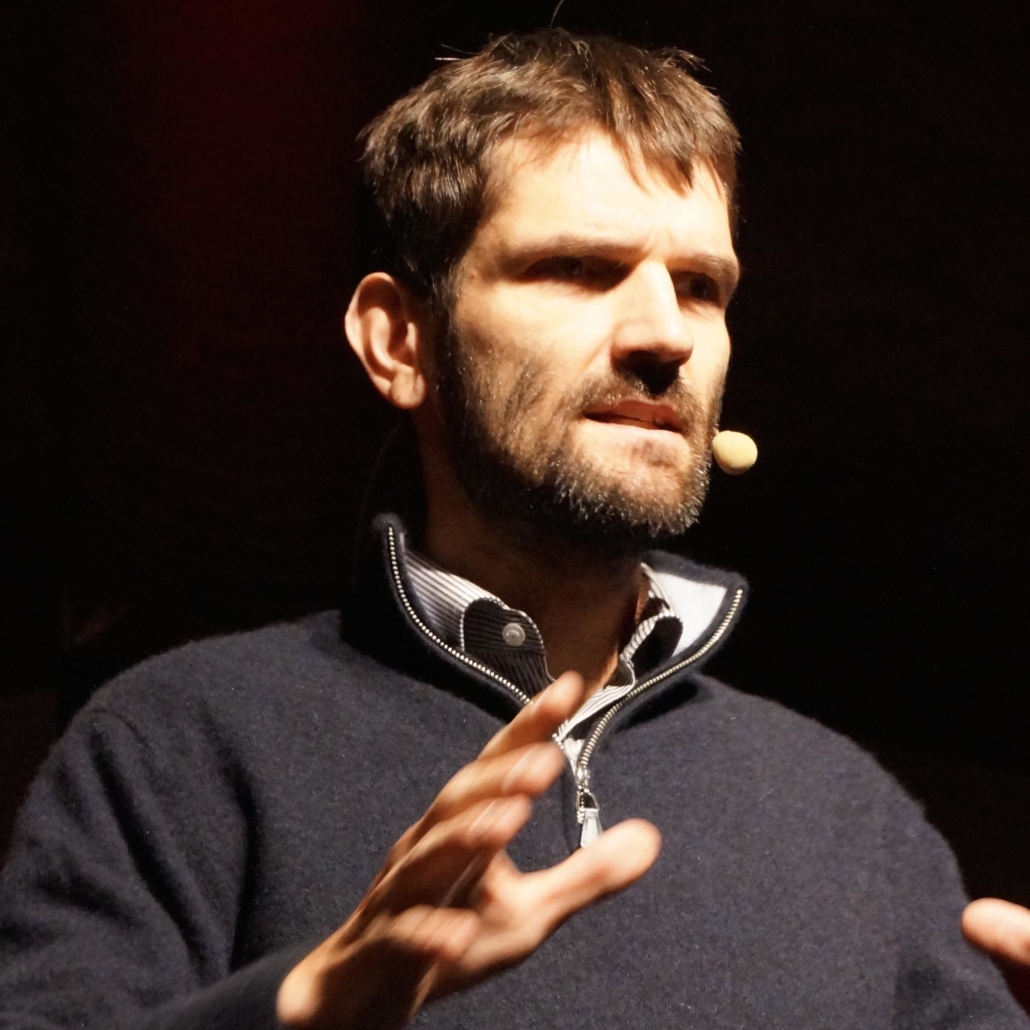


Mario Herger is a technology & trend researcher and consultant living in Silicon Valley. He writes books on technology, innovation and behavioral topics, including Silicon Valley Mindset and Gamification. His next book is about the second car revolution, titled “The last driver license holder”. He has written a number of articles for magazines and given interviews (The Guardian, LA Times, Financial Times, Der Aktionär…). Herger has 15 years of experience in the enterprise software space and worked with SAP in Germany and SAP Labs in Palo Alto as developer, development manager, and senior innovation strategist. He is founder of the boutique consultancy Enterprise Garage .
Digital News: How technology takes over the news industry

The digital era has resulted in a significant shift in consumer behaviour and in particular, how information is received and shared. This is an age in which almost every industry is radically changed as a result of technology and the news industry is no exception to this rule. This report gives you an overview of the most important facts on the vertical of “technology, media and telecommunications” or short TMT.


As news providers shift offerings to meet consumer demands in an increasingly digital world, the largest challenge being faced is to create a profitable business model. Two prominent revenue models within digital news can be observed:


1. Providing Free Content

With the main revenue generation from:

  • Native Advertising
  • Display Advertising

Native advertising is gaining traction, with a predicted annual growth rate of 14.7% (p.a.).

By 2018, the predicted native advertising revenue in the United States is $21 bn.


2. Paywalls

With revenue generated from

  • Subscriptions
  • Payment Per Article


Overall, global paywall revenue is predicted to experience an average growth rate of: 27.5% (p.a) between 2015 and 2019. By 2019, global paywall revenue is predicted to reach: $6.3 bn. Important trends in the outlook of digital news include the following:

  • Mobile
    With users of mobile devices four times more likely to pay for content
  • Social Media
    With social media driving 31.2% of all traffic to news sites in 2014, and increasing year-by-year
  • Quick Consumption
    With 79% of mobile users using their devices for quick news updates only
  • Automation
    With artificial intelligence now capable of both reading and writing news content
  • Paywalls
    With 90% of news content predicted to be behind paywalls by 2019


Especially the trends in digital news regarding the mobile phone are interesting:

  • Within the first 15 minutes of being awake, eight of ten smartphone users check their devices.
  • Smartphone users currently spend 2.2 hours per day consuming media through their devices and this is increasing year-by-year.
  • Mobile and tablets represent 37% of total media consumption, which is also increasing year-by-year.
  • Within this growing sector, around half of the total mobile media consumption is reached through apps


The legal framework of online news is complex, and copyright issues have caused tension between content providers and curators. For more information about this topic you can download the free report on Digital News.

[sociallocker][cta id=’10644′][/sociallocker]

4 tips to attract better deal flow

How can you attract better deal flow as an investor? There is a clear relation between the volume and quality of deal flow a business angel or early stage VC is able to attract and its potential performance. It does not matter how many companies one has founded, how many investments one has made, or how strong investment process or sound risk management is. Even if you are one of those super lucky “hot shots” – having had one or two nice exits, true success over time does strongly depend on the quality of investment opportunities you get your hands on and there are some simple strategies to master the art of attracting the best deal flow possible for your strategy.

Being an investor is hard work. The only difference to classical asset classes – such as equity, fixed-income or fund investments – is the type of work you need to do. Attracting deal flow is the fundament of a solid portfolio and it could be compared to attracting talent by top-tier HR professionals.


Note:
Agreeing on a valuation is one of the most critical point for the investor-startup-relation. We developed a startup valuation tool to help with that.

[hubspot type=cta portal=5314519 id=bc2a7bcd-bcee-4a08-960b-b43a6cea4bfe]


#1 Communicate your Investment Scope

The worst thing, besides attracting any deal flow, is if you only receive application out-of-scope. Every application should be looked into and answered individually, as this will influence your reputation in the community, but you do not want to waste your time and concentrate on time for the right companies, right? The best way to attract a better fit of applications is to publish your investment scope and strategy, where you explain:

  • How much do you invest?
  • How many investments are you willing to make per year?
  • Investment strategy (industry, stages, regions)
  • What type of investor are you? (hands-on, co-invest (syndicator), financial investor …)
  • Investment process: hard criteria (must haves) and soft criteria (nice to haves)
  • Average response-time
  • Current portfolio & track record

Don’t forget to explain who you are and why startups should work with you. Besides the smartness of money – driven by your personal experience, skills, network and such – synergies to other portfolio companies may be highly valuable.

There are multiple ways to publish your investment scope and investors profile. One good starting point is a website of your investment company, if you have enough resources to attract significant traffic. If you are lazy writer, I would recommend occasional blog posts about your experience, latest success storys, digital trends, technologies and startups of interest and personal experiences on platforms like “Medium“, where you profit from a better reach. You may also list yourself at online platforms for deal flow like Dealmatrix, AngelList and Crunchbase. Some of these platforms are free, others offer additional services, like date, process and investment tools, additional deal flow and other management tools to make your life easier at a small cost.


#2 Play your Network

Personal connections are very important, probably even the secret to most successful investors. If you consider building a portfolio, you will always need to partner up with other investors to leverage your personal skills and to diversify you financial risk – and this is the same for all professional investors, therefore they are usually open to talk about co-investments and collaboration on deals. It is smart you surround yourself with top-investors and maintain these relations with heart.

There are many ways to engage and widen your networks. One way is to become a member and attend meetings of local angel groups. Be aware that there are a number of different ways these groups work. Some charge member fees (smaller and higher), others take a success fee at closing of promoted deals and participated in terms of carried interest and others are free in order to foster angel investments within a region.


#3 Be active within your Startup Community

Almost every day there is an opportunity to engage with the startup ecosystems. There are meetups, conferences, demo days of accelerators and incubators, launch events, speakers-nights at co-working centers and investors meetings – there are even so many that you can easily be overwhelmed by the possibilities.

We highly recommend the following events, as we believe they are among the most important ones for business angels, active in the European startup ecosystem (in alphabetic order / not ranking by importance):

Events like those above are always looking for great speakers and judges for pitch or business plan competitions and mentors. Accerlators an incubators tend to work closely as well with investors, as they technically need a great pool of advisors, mentors and early stage investors to work with startups within their programs – it is always worth approaching these organizations and apply for such an active role. Active engagement in the community will build a strong reputations for you and will make to approachable to startups and naturally turnout in better deal flow presented or forwarded to you.


#4 Active Scouting

In case you are interested in true high-tech innovations, I highly recommend to engage with technical and bio-engineering universities (depending on your investment focus) and actively scout for startups through a more specialist environment. Another very European approach is to work closely with state-driven high-tech supporting institutions such as AWS in Austria or KfW in Germany. It is common for investors in this field to approach startups at early stages and pitch them as an investor. Some startups in this field are like raw diamonds and need to be scouted!


Conclusion

If you are transparent about your interests and your offerings, enjoy working with young and hungry entrepreneurs and are willing to spend time and effort within your ecosystem, better deal flow will come to you for a fact.

If you have limited time or simply not focusing solely on startup investments you may participate as a qualified investor from becoming a limited partner (investor) of a venture fund or outsource tasks like screening and transactions to professional service providers such as we are. We are trusted deal flow partners and provide professional analyst services for early stage investors, corporates and SMEs, as well as corporate innovation contests like www.innovation2company.wien, with a very tailored and scouting driven approach to our clients.


Further Readings

Challenge your Startup and get connected with Corporates

(from left: Dalia Preziosa (Österreichische Post AG), Gregor Bierent (New Frontier Group), Hannes Cizek (RZB), Walter Ruck (President of the Vienna Chamber of Commerce), Gerhard Gamperl (Verbund), Maximilian Schausberger (A1), Sabine Toplak (Accor Hotels), Christiane Noll (Microsoft Österreich) and Robert Heinze (Connect Care – Winner of the Microsoft Challenge Season 1 © Florian Wieser / WKW)

Where do think Europe’s biggest Corporate Innovation Challenge is taking place? London? Berlin? Or maybe in Paris? Nope, we are sorry, but this time Vienna is up on top and taking a huge step towards stronger Corporate Startup Engagement (CSE).

Last Friday, season 2 of the “Innovation to Company”-Challenge kicked off, aiming to merge the innovation strength of startups, with international networks, strong market positions and the financial power of large corporations. Working with startups is very beneficial for corporates, far beyond generating a fast and promising innovation flow. We are proud to plan an important role in this initiative, launched by the Vienna Chamber of Commerce, as we are going to scout and analyse the best startups for all seven challenges. Together with excellent mentors, we will actively consult the corporates and startups in order to bring those together who have the best synergies and have the potential to bring the most value for both sides.

We are happy to accept your applications for the competitive challenges of Austrian Telecom (A1), Accor Hotels (Austria), Microsoft (Austria), New Frontier Group, Raiffeisen Zentralbank Österreich AG (RZB Group), Österreichische Post AG and Verbund AG.

How does Innovation to Company work?

If you’re interested in participating, please go to www.innovation2company.wien. You will find detailed descriptions of tasks and rewards offered for the winner of each challenge. If you decide to apply, your data will be processed by our analysts using the professional software solution of dealmatrix.io.

Our team will analyse each and every application carefully and will contact the most promising applicants to learn more and dive even deeper into your business cases. Each challenge will bring out three finalists. Those who make the cut and are invited to meet the corporates will get a chance to pitch and negotiate a potential collaboration, an investment or similar rewards (see challenge description for details).

During the whole process experienced coaches such as Martin Giesswein (Digital City Vienna), Berthold Baurek-Karlic (Managing Partner, Venionaire Capital) and Lorenz Edtmayer (Tailored Media and derbrutkasten.com) guide and support the process between all corporates and startups. All finalists will receive individual pitch training and mentoring sessions in order to land a perfect pitch. Finally, the corporates pick the winners, which will receive their prizes on November at the Mercur Innovation Awards.

“This is a great chance for European startups especially the finalists and winners, as they will have the chance to access global markets, through extremely strong strategic partners and their well established corporate and partnership networks worldwide”, explains Berthold Baurek-Karlic.

Don’t miss this opportunity!
www.innovation2company.wien

Internet of Things (IoT) is changing the Industry

What is IoT? Internet of Things is one of the most trending buzzwords in the venture ecosystem. Sometimes people refer to it as “Internet of Everything” or “connected everything”. Although the word is used in all kind of different contexts, people have still difficulties to understand IoT as a whole. We at Venionaire approached this area through our Insight about Internet of Things with the aim to give a complete overview.


[cta id=”9911″ vid=”0″]


Corporates investing in IoT
But not only the venture ecosystem is ignited by it – corporates are as well heavily focusing on it.  In fact, Cisco began with operations related to IoT in the early 80s and one of the giants, General Electric, committed themselves (through their subsidy GE Digital) to be a “truly” digital industrial company. IoT is actually easy to describe as a network of physical objects, which are able to communicate, sense or interact with each other. In other words: the connectivity is not limited to PCs and mobile phones anymore, but literally every physical object. These connections occur in different contexts. For example: if you start connecting machines in a manufacturing plant, people will refer to it as Industrial IoT, or if you put sensors on your body to track your health condition, people will refer to it as quantified self (sub category of IoT). These examples give you a glance at the importance of IoT in terms of cross-industry applications.


IoT is igniting the tech industry
The borders between the tech and other industries are blurring and IoT is one of the major drivers. Cisco predicted a total impact of IoT by 2022 in 14.4 Trillion Dollars! The thing is, IoT even goes further. It doesn’t only affect traditional industries as illustrated above – it is igniting the tech industry itself. We all talk about big data, machine learning, cybersecurity or enterprise mobile applications. In fact, IoT is building on these tech-sectors. Just take the case of connecting machine in a manufacturing plant. You will need big data software to analyse the flood of data the machines are producing every second. You will eventually need machine learning algorithms to interpret the data and convert into information. You will need cyber security software to enable safe communication and prevent hackers to achieve control over your plant and eventually you will need a mobile application, so the plant manager is able to interact with the system.

These are just few examples of IoT applications using other tech applications. The key in investing into IoT is to understand the different technological layers of it and at the same time mapping the influence of every layer to the different industries (tech included).


[cta id=”9911″ vid=”0″]

Smart Mobility: Is the future really electric?

In the modern age, increasing global awareness of the need to minimise pollution, curb worsening climate change and reduce dependence on oil and petroleum products has begun to fundamentally change the outlook of several key industries such as utility, manufacturing – and mobility.


With this report we want to give you an insight of recent and future developments in the E-Mobility sector. The e-mobility sector can be divided into two main segments:

  • Electronic Vehicle Manufacturing
  • E-Mobility Infrastructure


The largest driver of the e-mobility sector continues to be car manufacturers, with a strong backing by governmental bodies globally, who mostly see e-mobility as part of the solution to reduce global warming. While public sponsorship and financial incentives set by national governments vary country to country, three main cornerstones can be identified as:

  • Direct purchase subsidies
  • Annual or reoccurring fee discounts
  • Income tax incentives


Utilities will play an important role in the provision of infrastructure, and in addition to power management, will likely look to provide the following services to enhance their market position:

  • Installation of public charging stations
  • Installation of private charging stations
  • Value added services


Space providers are the largest supplier of public charging stations, with:

  • 19% found in car parks
  • 13.1% found on public roads


Electronic Vehicles can be divided into four main subgroups bases on their powertrains

  • Hybrid Electric Vehicle (HEV)
  • Fuel Cell Electric Vehicle (FCEV)
  • Battery Electric Vehicle (BHEV)
  • Range extended Electric Vehicle (REEV)


With the market still being in an early stage, the main focus of most car manufacturers remains to be research and development, with:

  • $7 bn
  • Spent on R&D between 2008 and 2014


Batteries are going to be a key driver of future production, with an emphasis on lowering the cost, and increasing the performance. However, the mass consumer remains relatively hesitant to purchase an EV, with decreased convenience, and cost and risk of adoption being major factors.


Situation in Austria

Austria’s regulatory incentive landscape is currently very fragmented. There are only a few approaches which cover all nine federal states. Listed are the top three incentives, which are valid in all federal states of Austria:

  1. Electric vehicles are exempt from fuel consumption tax, monthly vehicle tax, and the 16% acquisition tax
  2. Sponsorship from Kommunalkredit AG of up to EUR 20,000 for the purchase of electric vehicles applicable for companies, entrepreneurs, associations, public regional authorities and confessional bodies until December 31, 2020
  3. Sponsorship from Kommunalkredit AG of up to EUR 20,000 for the purchase of electric vehicles of public interest (such as taxis or car sharing vehicles) for companies, entrepreneurs, associations, public regional authorities and confessional bodies until October 2015

Certain Austrian federal states provide individual tax and fee incentives depending on various circumstances.


If you are interested in knowing more about the situation in Austria, the global comparison of Incentives and the regulations we highly recommend you to download our free report on E-Mobility.

[sociallocker][cta id=’10642′][/sociallocker]

Revolution in Space technology: SpaceX rocket has landed

A major milestone in space travel has just been reached. SpaceX, an American aerospace manufacturer and space transport services company headed by Internet tycoon Elon Musk, successfully landed its powerful Falcon 9 rocket. This achievement is certain to open new doors to space travel by making rockets as reusable as airplanes, in an industry that is seeking to drive down costs and make spaceflight cheaper and more accessible to research institutes and even tourists.

“I still can’t quite believe it. No one has ever brought an orbital class booster back intact.” said Musk in a teleconference after the landing

And Elon Musk is certainly not the only one excited about the big news: both the US Space Agency and NASA applauded the exploit. The stakes were high for SpaceX, which has a $1.6 billion contract with NASA to supply the astronauts living at the International Space Station.

“Congratulations @SpaceX on your successful vertical landing of the first stage back on Earth!” NASA said in a tweet.

The incident which occurred only six months ago, destroying the Falcon 9 about two minutes after launch, along with hundreds of millions of dollars in cargo and equipment, seem now like an old unpleasant souvenir. SpaceX has certainly an interesting future in front of it, one which we will be following closely.


Why the VW Scandal is a Game Changer for E-Mobility

Climate change is one the most pressing issues of the 21st century, and with transportation being one of the largest contributors, it has been a major focus of the European Commission over the past decade. While the e-mobility sector has proven itself as possessing the technology to truly revolutionize transportation into a clean industry, Europe’s focus on incentivising diesel vehicles as the encouraged solution has hindered growth. The recent VW scandal, in which 11 million diesel vehicles were exposed as producing 40 times the amount of harmful Nitrous Oxide in an open road setting than in a testing scenario, has come as a shock to the industry -but is looking like the necessary catalyst to take e-mobility to the next level.


With insights gathered through Venionaire’s recent comprehensive research on e-mobility, this discussion will take a deeper look into the impacts of the recent VW scandal. 


The Conversation of Sustainable Mobility in the EU

Transportation, over the past century, has contributed to the development of society more than almost any other invention – the ability to trade and transport goods defined the 20th century. However, despite the huge economic success the industry has offered, it has also been one of the largest contributors to global pollution. Mobility alone is currently responsible for a quarter of total greenhouse gases in Europe and as a result, the transition to a more sustainable transportation sector has become a major focus of the European Commission over the past decade. Although historically transportation and sustainability were thought of as two contrasting principles, advances in technology have proven that there are viable solutions to significantly decreasing the environmental impact of mobility. Regulatory bodies throughout the EU have begun to put increasing pressure on car manufacturers to adopt better practices by introducing average fleet targets across Europe. It is clear that over the long-term mobility as a whole is going to face extreme transformation in order to meet the gradual introduction of stringent regulations posed by governments. In addition, shifting demands of increasingly environmentally conscious consumers will further push this change.


However, the current conditions are challenging for car manufacturers who face contrasting challenges: meeting the gradual introduction of these new targets set in place by European regulatory bodies, while trying to overachieve these as little as possible to avoid the significant capital required to introduce new technologies. After all, adopting new technologies is expensive – very expensive. While some outliers such as Tesla and BMW have invested significantly in the development of Electronic Vehicles – a technology truly capable of revolutionising the mobility industry – most car manufacturers have focused on downsizing ICE’s (Internal Combustion Engines) and introducing supposedly ‘clean’ diesel driven passenger vehicles. While majority of car manufacturers see the introduction of Electronic Vehicles as part of their long-term strategies, the main focus over the short-to-medium term remains to be fossil fuel based, as the margins involved in the sale of EVs are significantly lower at this stage. This is attributed to the fact that the additional USP for Electronic Vehicles is relatively lower than the additional cost of producing them, and thus manufacturers are only able to pass on a portion of that additional cost to the consumer.


Before electronic vehicles are realised as the mainstream solution to sustainable transportation, there are some barriers that need to be overcome by both manufacturers and service providers. Firstly, the technology in this sector needs to improve in quality and decrease in price. In the current market, electronic vehicles still underperform in both range and convenience, and considering the price premium, only a niche market are both willing and able to opt for one over conventional vehicles in the current market. Furthermore, the infrastructure is still lacking in this sector. While the provision of charging stations are growing throughout both the United States and Europe, we still need to see considerable expansion before the convenience factor of electronic vehicles is able to compete with that of refuelling traditional vehicles. While experts predict that these hurdles will be able to be overcome – an injection of brainpower, resources and capital is what e-mobility needs to make the leap.


How the VW scandal could act as the catalyst to take e-mobility mainstream

The current emissions-fixing scandal surrounding Volkswagen, the world largest car manufacturer, has fundamentally altered the conversation about the future of sustainable mobility. Last month, the German car manufacturer admitted to cheating in diesel emissions tests by installing software to detect when the engines were undergoing testing and respond altering output of nitrous dioxide (NOx). Volkswagen has acknowledged that the software is likely installed in over 11 million cars, most of which are in Europe. While Volkswagen is undoubtedly guilty, new evidence suggests that they may not be the only offenders and that other car manufactures may also be installing software tricks to deceive emission tests. Following the scandal, the EPA is now committed to determining the extent to which this is an industry-wide problem. Shortly after the information on VW was revealed, the EPA confirmed that a BMW diesel car also yielded significantly different results. Peter Mock, ICCT Europe’s managing director further supported this argument, confirming “all measured data suggests that this is not a VW-specific issue”. With uncertainty at an all-time high, and consumers loosing trust in car manufactures we can expect to see a trend towards consumers demanding more transparency. One Startup gaining attention is The Stigg, which allows users to track the real time emissions data of their vehicles, and compares it to the desired values of the car model.


Until recently, diesel vehicles have been pushed by both European car manufacturers as well as government bodies as a supposedly more sustainable alternative to their gasoline counterpart, in addressing both climate change, reduction of CO2 emissions and fuel efficiency. ‘Clean’ diesel vehicles were widely seen by the car manufacturing industry as the solution to meeting pending fleet emissions, and have been a popular choice for European consumers. In contrast to other parts of the world, where the sale of diesel passenger cars are very low, diesel sales currently account for 50% of the European car market.


This focus by regulators has resulted in the adaption electric vehicles being slow in the European region.  However, Tesla CEO Elon Musk expressed that the scandal proves the boundaries of fossil fuel vehicles. „We’ve reached our limit of what’s possible with diesel and gasoline. And so, the time, I think, has come to move to a new generation of technology”. The ‘new generation’ of technology being referred to are Electric Vehicles, and industry experts predict that the downfall of diesel passenger vehicles will bring much needed attention to the e-mobility sector – and they are not wrong. In fact, even Volkswagen is planning to capitalize the opportunity their own diesel scandal has presented. In a recent statement they have indicated they will shift focus to developing electric cars in response to the crises.


So what’s next for e-mobility­?

It is without a doubt that this recent event presents great opportunity for the e-mobility sector. The Volkswagen scandal gives further invitation for innovation to disrupt the automobile industry. As in any industry, the timing of business is one of the most influential factors determining success, and the timing couldn’t be better for those eager to disrupt the market the necessary incentive to step up. While the e-mobility sector has proved itself as having the ability to redefine the transportation industry, the market is still extremely fragmented in terms of both services and stakeholders. We at Venionaire have published an comprehensive research about the dynamics, opportunities and challenges of the e-mobility sector.

For more information, check out our Venionaire Research website.

Corporate Venture – A Survival Strategy for Dinosaurs and Unicorns

The digital era has already managed to sweep away some of the long-established market players, giving birth to new powerful and global acting ventures: From Uber to Tesla via Airbnb – the digital age distinguishes itself by it’s unique potential for scalability. A lesson the media industry learned the hard way. To quote one example: While the over 160 years old newspaper New York Times has a current valuation of about $2 Billion, the nine years old microblogging service Twitter enjoys the fifteenfold of it (about $30 Billion). And other industries are bound to follow. Astonishingly, Innosight estimates that more than two out of three S&P 500 companies will be replaced in the next 12 years. Moreover, the average lifespan of a company listed in the S&P 500 index has already declined by more than 50 years during the last century. So, how do such companies go from most performant or largest in their sector to shutting down completely? Why does it seem to be so difficult for them to implement new business models and foster innovation? The answer lies within the traditional big corporations themselves.


Note:
Agreeing on a valuation is one of the most critical point for a good corporate startup relation. We developed a startup valuation tool to help with that.

[hubspot type=cta portal=5314519 id=bc2a7bcd-bcee-4a08-960b-b43a6cea4bfe]


Shift from innovation to sales

As related by Walter Isaacson, Author of Steve Jobs biography, Apple’s late CEO explained the decline of large corporations as a logic suite of phases which every company is inclined to go through. At first, the company enjoys growth and financial success in a certain field, where some of its products become profitable cash cows. Throughout the years, the power progressively shifts from a product and design centered culture towards a sales driven focus. This inevitably leads to slowly switch off product and design innovation, as their teams feel no longer at the epicenter of the company. Rather than trying to create or add new value, milking the cash cow takes all of the management’s attention.

One day however, markets will change drastically, depriving companies from their main stream of revenue and sentencing them to inevitably fade away until eventually shutting down completely. That day will probably even come sooner than expected, as explained by our Managing Partner Martin Steininger in a previous article on technological innovation. Remember: it took about 2000 years before the Bronze Age was fully replaced by the Iron Age, but not even three hundred years for humanity to transit between the Industrial to the Digital Age!


Corporate Venturing as a corporate survival strategy

In order to prevent such catastrophic scenario to occur, companies have to plan and anticipate early on.  This topic is discussed in details by Richard Foster and Sarah Kaplan in their Business Manual “Creative Destruction”. The authors explain why companies, initially built to last, usually underperform the market. In order to survive, corporates must undertake a transformation process, which holds on three management essentials:

  1. Operations must be run effectively
  2. Businesses that do not meet the firms needs for growth and return should be cut off
  3. Concentrate on creating new businesses which meet customers’ needs

The third point is where Corporate Venturing kicks in. In complement to in-house technology R&D, companies more frequently invest or cooperate with innovative startups in their respective field. In fact, Corporate Venture capital allows companies to gain in flexibility on a small scale, leading to faster innovation, and therefore give big structures a chance to keep up with the market’s paste. Going one step further, some may argue that corporations can even use their venture arms to influence their industry’s ecosystem itself, by identifying new markets and building up their existing businesses.

Far away from a random alternative investment approach, investing in startups is therefore nothing other than a survival strategy for several coporations, in order to face the fast changing market pace. Take the energy sector for example: confronted to several completely disruptive market dynamics, utilities are now forced to rethink their business models from scratch. While this process can’t be undertaken easily, many turn to Corporate Venture, in particular Corporate Accelerators, as one of their main strategies to create products and models which fit their customers’ needs.

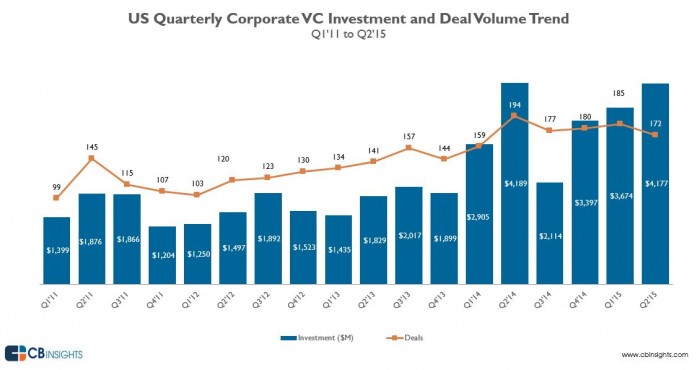
Corporate Venture Investments seem to have bright years in front of them. According to CB Insight, Corporate VCs participated in almost $8B of US-based financings in the first half of 2015, maintaining their investment level into VC-backed companies, taking just under a quarter of total deals for the past four quarters.


cvcoverall


Corporate Venture Programs boost Startups

The classical form of startup investment, Venture Capital, can be described as the capital invested in a project which holds a substantial element of risk in exchange of a portion of equity. This definition perfectly applies to both Corporate and Private Venture. Nevertheless, a significant difference must be drawn regarding the respective objectives of these two forms of funding. While return on investment remains the main objective for both forms of funds, as related in the The Oxford Handbook of Venture Capital by Douglas Cumming, Corporate Venture follows a much more diverse set of objectives than a purely financial exercise.

Corporate Venture is an efficient way for companies to explore potential acquisition targets. Based on Crunchbased data, Rami Rahal, Co-Founder and General Partner of Blue Cloud Ventures, calculated in an article that about one out of three corporate venture-backed startups has been acquired, in comparison to only 10 percent which had managed to raise funding from private venture capital.

Overall, it seems Corporate Venture is not a one-way relationship, but instead a bilateral strategy, both for Dinosaurs and Unicorns.

How new technologies are pressing on European Utilities

Silicon Valleys’ renowned startups and new technology giants are dynamic, creative and uncompromisingly geared towards success. No other industry sector appears to be ahead of this rising competition. Following the exponential and revolutionary growth in the publishing and telecommunications industry, the automotive industry as well as the financial and energy sector are next to see radical changes. Especially in the German-speaking area, the latter have already reacted to increasing innovation pressure by setting up new business segments and creating new business lines without losing sight of their respective core businesses. In industries experiencing such rapid growth and innovation, the coined term survival of the fittest certainly applies – and established, mature corporations need to be aware that the key to their survival lies in the ability to innovate, take balanced risks and be open to new business models. One might say that these corporations recently perform as companies of two speeds.

Decentralised production of energy, for example wind and solar power in combination with increasingly liberalised markets, created a new type of consumer – the so-called ‘Prosumer’. In recent years, the innovation pressure has turned up the heat on once inviolable industries. In the past, tremendous investment costs have been the prime reason for high entry thresholds young companies had to face. Nowadays the focus shifted towards services and applications, which help customers to achieve cost savings, increased efficiency and improved energy understanding. New business applications like electro-mobility, digitalized infrastructure and Smart Homes both offer opportunities and create needs. However, it leads to competition between numerous innovative startups and globally operating corporations to meet those needs and to take those opportunities.


New developments in the field of Smart Home

Over the past several years the increasing trend towards digitalisation of homes can be witnessed. Switching the light on and off automatically and controlling air conditioning and other devices time-dependently is old hat, but what comes next might actually be a lot of fun. The trend clearly points towards interaction and connection of many different systems and platforms. New solutions will allow more personalised comfort while coming hand-in-hand with energy and cost savings. For example German car manufacturer Mercedes Benz co-operates with Google´s ‘Nest’ to enable such features as to automatically inform the air-conditioning at home about your arrival, so your apartment will be comfortable and cool the moment you arrive. Google, as Nest´s parent company, has its usual transparent and easily accessible approach, which enables an uncomplicated integration of Nest in miscellaneous applications.

For those who generate electricity themselves, Tesla will provide an aesthetically pleasing storage solution, which offers considerably improved energy self-sufficiency, decreased electricity procurement costs as well as access to additional budget revenues. That way, solar power generated on private household’s roofs can be feed back into the energy network in times of high prices or can be stored for personal need in times of low feed-in tariffs.


Values from experience for European energy companies

The success of US businesses consists of a combination of good access to finance, a culture of error tolerance, high speed, flexibility as well as the accumulation of talents, which are attracted from all over the world. I am still impressed by the openness and “Beta-Culture” in the US: If a product is ready, it is presented in front of colleagues, customers and sometimes even competitors no matter if it is perfect or not. European companies tend much more to perfectionism, which is slowing down the development process. But this is a deep rooted cultural difference and emphasize how difficult it can be for traditional European corporations to implement the US startup culture. Yet Corporate Venturing may be a working survival strategy for traditional companies in Europe. Read more about this topic in our blog post Corporate Venture – A Survival Strategy for Dinosaurs and Unicorns.

WHERE TO FIND US

VIENNA, OFFICE (HQ)

Babenbergerstraße 9/12,
A-1010 Vienna, Austria (EU)
office@venionaire.com

SAN FRANCISCO, USA

1355 Market St. #488
San Francisco CA 94103
sfo@venionaire.com

NEW YORK CITY, USA

122 East 37th Street
First Floor
New York, NY 10016
nyc@venionaire.com

LONDON, UK

Gable House, 239 Regents Park Road
London N3 3LF
office@venionaire.com

MUNSBACH, LUX

3 rue Gabriel Lippmann
5365 Munsbach
office@venionaire.com

LOOKING FOR FUNDING?

FOR STARTUPS

Venionaire Capital exclusively invests through the European Super Angels Club, for more information and application please go to the website. We do not accept direct investment proposals via this website.